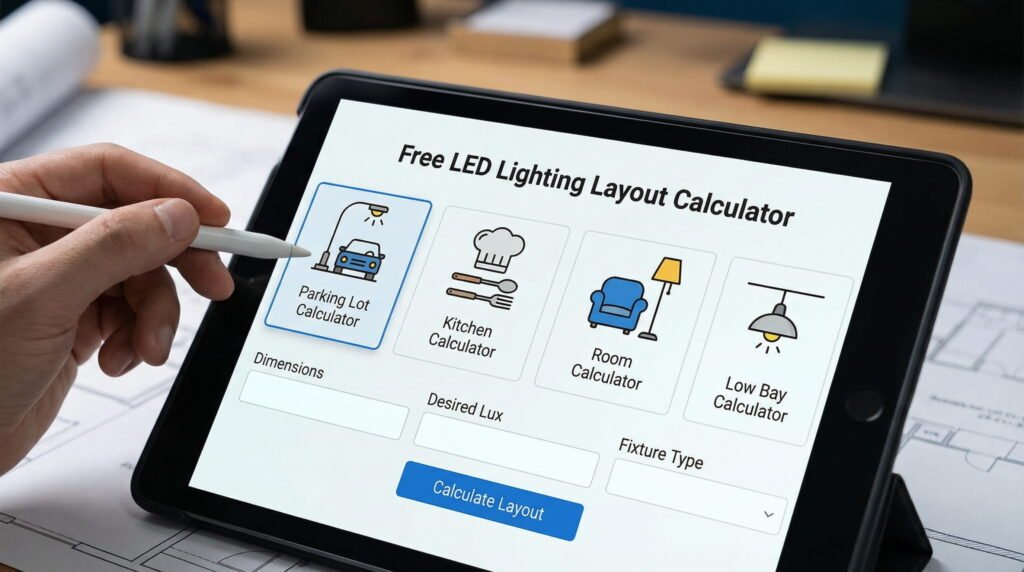
Find the ultimate free LED lighting layout calculator. It’s perfect for planning lighting in parking lots, kitchens, rooms, and more. This tool makes it easy to figure out the right amount of light you need. It helps you save energy and make your spaces brighter.
Use it for parking lots or kitchens, and see how it improves your lighting. Our room and low bay calculators make designing your lighting simple. You’ll get the best results for every space.
Key Takeaways
- This free LED lighting layout calculator is user-friendly and accessible for all types of applications.
- It helps determine the ideal lighting setup for parking lots, kitchens, and more.
- Utilizing specific parameters like lumens and room dimensions maximizes energy efficiency.
- Improved illumination levels lead to better safety and ambiance in environments.
- The tool serves as an efficient planner for various lighting applications, enriching user experience.
Understanding the Importance of Proper Lighting Design
Proper lighting design is key to safety, function, and feel in many places. A well-thought-out lighting plan can change how we see and feel a space. People often don’t realize how good lighting can boost their work and happiness.
Using a lighting layout calculator helps find the best spot and type of lights. This choice greatly affects how well an area works.
Energy efficiency is also vital in lighting design. Choosing energy-saving lights can cut down on electricity bills without losing brightness. This balance between looks and green living is important for both homes and businesses.
Knowing about different bulbs and their energy use helps make better choices. This knowledge is key to picking the right lights.
Adding new tech to lighting design can make spaces more lively. Smart systems and controls let us adjust lights to fit our needs, saving energy. Following lighting codes and standards is also important for the best results and to protect the environment.
Good lighting design does more than just look nice. It also helps the planet, making our lives better for everyone.
Parking Lot Lighting Calculator & Light Spacing Plan
Getting the right light in a parking lot is key for safety and security. An outdoor lighting calculator helps figure out the right light spacing and lux levels. The brightness needed depends on how the space is used, making it important to know about lux levels.
Recommended Lux Levels for Outdoor Areas
For parking lot lights, the needed lux levels change based on their use. Here’s a simple guide:
| Use Case | Required Lux Levels |
|---|---|
| General Parking | 10-20 lux |
| Customer Areas | 20-50 lux |
| Safety and Security | 50-100 lux |
Using a light spacing calculator helps make sure your setup meets these lux levels.
Using the Inverse Square Law for Illumination
The inverse square law is key in understanding how light intensity drops with distance. It shows that moving further from a light source makes the light much dimmer. For example, doubling the distance from a light fixture makes the light four times less bright. This rule is vital for planning light distribution and ensuring good visibility in parking areas.
Free LED Recessed Lighting Calculator (Can Light Layout Tool)
Planning recessed lighting in your space can boost both function and look. A can light spacing calculator helps with fixture layout, ensuring the right brightness and coverage. It guides you on where to place lights for the best look in kitchens and living rooms.
Choosing the Right Fixture Spacing
Getting the spacing right is key for even lighting. Wrong spacing can cause shadows or overly bright spots, ruining your lighting design. Ceiling height and the beam angle of your lights are important for finding the right spacing. A common tip is to multiply the ceiling height by 1.5 to 2 to space fixtures.
Beam Angles and Their Impact on Light Distribution
The beam angle of your recessed lights shapes how light spreads. Narrower angles focus light, great for task lighting. Wider angles give a softer light, perfect for ambient lighting. Knowing your lighting needs helps pick the right beam angle for your fixtures.
| Beam Angle | Light Distribution | Best Use Cases |
|---|---|---|
| 15° – 30° | Focused lighting | Task lighting in kitchens and offices |
| 30° – 45° | Spot lighting | Accent lighting and wall washes |
| 45° – 60° | General illumination | Living rooms and dining areas |
| 60° and above | Wide, diffused light | Ambient lighting in large spaces |
Using a can light spacing calculator and knowing about beam angles are key for the right lighting. Make smart choices based on your space needs for the best look in any area.
Low Bay LED Lighting Calculator for Warehouses
Good warehouse lighting is key for a safe and productive work environment. The low bay calculator helps managers pick the right LED fixtures for areas with ceilings under 20 feet. It’s all about saving energy and keeping everyone safe.
When using the low bay calculator, think about ceiling height and how far apart the lights should be. Placing LED fixtures right can make sure light spreads evenly. This means less shadows and better visibility. A smart lighting plan can cut down on accidents and make work flow better.
LED lights are a big step up from old lighting. They use less power and last longer, saving money on upkeep. Good lighting design in warehouses makes them safer and more efficient.
| Fixture Type | Power (W) | Lumens Output | Efficiency (LM/W) |
|---|---|---|---|
| LED Low Bay | 100 | 14,000 | 140 |
| Traditional Fluorescent | 200 | 16,000 | 80 |
| Metal Halide | 400 | 34,000 | 85 |
Using the low bay calculator lets warehouse managers make their lighting better. This ensures safety for workers and cuts costs with smart warehouse lighting choices.
Lumens to Lux Calculator for Accurate Illumination
A lumens to lux calculator is key for perfect lighting in any space. It changes lumens, which show total light, to lux, which shows light on a surface. This helps make better choices in lights and room setup.
Understanding Lumens and Foot-Candles
In lighting design, knowing lumens and foot-candles is vital. Lumens show the light’s total output. Foot-candles measure light on a surface, affecting how well a space works for tasks like reading or working.
The foot-candle is about light on a square foot. Illumination calculation software makes this conversion easy. It helps turn theoretical light into real plans.
With a lumens calculator room size, you can figure out needed lumens for a certain lux level. This helps understand how different lights change a room’s feel and function. It ensures a space is well-lit for its activities.
Gymnasium Lighting Layout Calculator
The gym lighting calculator is a key tool for improving light in sports areas. It helps get the right light levels for different sports, helping athletes perform better. Places like basketball courts and gymnastics centers need the best lighting.
Good sports facility lighting makes things clearer and boosts the mood. Athletes need steady light to stay safe and perform well. A gym lighting calculator helps find the best layout for this.
Today, saving energy is important in lighting. Using energy-saving lights keeps costs down without sacrificing brightness. LEDs are great for cutting power use, helping the environment and keeping lights bright. This mix of saving energy and keeping lights bright is key for sports facility lighting.
| Sport | Recommended Lux Level | Fixture Type |
|---|---|---|
| Basketball | 300 | LED High Bay |
| Volleyball | 200 | LED Panel |
| Gymnastics | 500 | LED Pendant |
| Badminton | 200 | LED Track Lighting |
Using this gymnasium lighting layout calculator ensures the best light and supports top athletic performance. It helps facilities shine while watching their energy use.
Workshop Lighting Layout Calculator Free
When designing a workshop, it’s key to know about *fixture selection*. A free workshop lighting layout calculator helps find the best mix of high and low bay fixtures. These are chosen based on the tasks and the size of the workspace. The right fixtures make sure work areas are bright, safe, and productive.
Factors Influencing Fixture Selection
Several things help pick the right fixtures for workshops. These include:
- Type of work being performed: Different tasks need different light levels.
- Room dimensions: The size and height of the space affect fixture placement.
- Fixture type: Choosing between high and low bay fixtures greatly impacts lighting.
Maximizing Energy Efficiency in Your Design
Using energy-efficient lighting designs saves money and cuts down on energy use. Strategies include:
- LED fixtures are durable and efficient.
- Layouts that spread light well while using less energy.
- Controls and sensors adjust light levels for different activities.
This method improves visibility and supports sustainable workshop operations.
Room Lighting Calculator: Living Room, Bedroom, Office
Good lighting is key to making spaces in your home or office welcoming and useful. A room lighting calculator helps figure out the right lighting for different areas. This includes living rooms, bedrooms, and offices, each needing its own lighting setup based on size and use.
In living rooms, the mood matters a lot. You need lights that can change to fit various activities, like hosting parties or watching movies. Think about the ceiling height and what lights you choose. Dimmers can be great, making the room cozy for chats or bright for reading.
Bedrooms need a calm and cozy feel. When setting up bedroom lighting, think about where to put lamps or overhead lights. Soft, warm lights help relax, while brighter ones are better for getting ready in the morning. A lighting calculator can help pick the right wattage and types of lights for these goals.
Office lighting needs to be both bright and comfortable. It should cut down on eye strain and help you work better. Bright, even light helps you focus, and using natural light is a big plus. Desk lamps can also help create different work zones. The color of the light bulbs matters too, as it affects how colors look in your office.
Using a room lighting calculator helps pick the right lights and where to put them. This ensures your space looks good and works well.
Outdoor Space and Landscape Lighting Calculator
Creating a welcoming outdoor space starts with good lighting. A landscape lighting calculator helps homeowners figure out the best way to light up gardens, patios, and walkways. The right outdoor lights, like path lights and spotlights, make your space look good and safe.
Getting the light right is key for outdoor lighting. Too little or too much light can ruin the look of your garden. With a good calculator, you can see how light will spread, making sure every area is bright.
Choosing the right outdoor lights is important. Each light has its own job, like showing off special features or lighting up the whole area. Using the right lights makes your outdoor space feel cozy and inviting.
Lighting Layout Calculator: Your Go-To Tool
A lighting layout calculator is key for anyone working on lighting designs. It’s used in homes, offices, and factories. These tools help create good lighting plans by using the right data.
Programs like DIALux and AGi32 make it easier to design lighting. They let users input details like lamp types and room sizes. This helps in making sure the light is right and energy is saved.
Using a photometric calculator is a big help. It lets designers put in data and see how it looks. This makes designing lighting better and more efficient.
Lighting layout calculators are very important. They help choose the right lights and where to put them. This ensures the lighting is just right. Learning to use these tools can really improve how well a place works and feels.
Conclusion
Good LED lighting design is key for making any space better. It improves both looks and function, indoors or outdoors. We’ve talked about tools that help make lighting better.
These tools make it easier to light up areas just right. They help create spaces that meet our needs perfectly.
Using these tips can also save a lot of energy. Choosing the right lights and tools can cut down on energy use. This makes spaces better for living and working.
We encourage you to try out these tools for your lighting needs. Good LED lighting makes spaces safer and more stylish. It shows a care for both looks and the planet.
FAQ
What is the difference between lumens and lux?
Lumens show how bright a light is. Lux shows how much light hits a surface. Think of lumens as the light’s brightness and lux as how it spreads out.
How can I calculate the number of lights I need for a room?
First, find your room’s square footage. Then, multiply it by the needed lux level for the room’s use. For example, 100-500 lux for living rooms. Divide this by the lumens of one light to find how many you need.
What is the importance of the inverse square law in lighting design?
The inverse square law says light gets weaker as distance increases. This affects how you place lights for even lighting. It’s key for good lighting design.
What is the recommended lux level for parking lots?
Parking lots need 10 to 20 lux for low traffic. For more security, 30 lux is better. This ensures drivers and pedestrians can see well.
How can I maximize energy efficiency in my lighting design?
Use LED lights for high energy efficiency. Add motion sensors to save energy when not in use. Also, use a maintenance factor to account for light loss over time.
What factors should I consider when choosing a beam angle for my lights?
Think about room size, lighting purpose, and fixture type when picking a beam angle. Wide angles (120 degrees) are good for general lighting. Narrow angles (30 degrees) are best for focused areas.
How does color temperature affect the mood of a space?
Color temperature, in Kelvin, changes a space’s feel. Cool temperatures (5000K to 6500K) make spaces bright and energizing, great for offices. Warm temperatures (2700K to 3000K) create cozy, welcoming areas, perfect for homes.
What is CRI and why is it important?
The Color Rendering Index (CRI) shows how well a light shows colors compared to natural light. A high CRI (90 and above) is vital for places where color matters, like art studios or shops.