How much does it cost to add a bathroom?

how much does it cost to add a bathroom

Adding a bathroom costs somewhere between $3,000 and $90,000, and the size of that range comes down to one question: are you converting a space that already exists, or building new? Converting a closet or unused room into a half bath sits at the low end. A primary bathroom built as part of a home addition, with new framing and plumbing run from scratch, sits at the high end. Most homeowners land between $20,000 and $40,000.

That’s a wide answer, so it helps to break the cost down by the type of bathroom you’re adding, where it’s going, and what’s driving the price up or down. If you’d rather skip straight to a number for your own project, our bathroom remodel cost calculator will get you there faster than any range on this page.

Cost by bathroom type

Bathroom typeWhat’s includedTypical cost
Half bath / powder roomToilet, sink, no shower or tub$3,000 – $15,000
Full bath, converted spaceToilet, sink, shower or tub, in a closet, basement corner, or unused room$9,000 – $40,000
Full bath, new additionSame fixtures, but built onto the house with new framing and foundation work$20,000 – $55,000
Primary/ensuite bathToilet, double vanity, shower, sometimes a soaking tub, attached to a bedroom$22,000 – $90,000+
Basement bathFull bath below grade, often needs an ejector pump if it’s under the main drain line$10,000 – $25,000

A half bath skips the shower and tub, which cuts both the plumbing work and the fixture cost, so it’s almost always the cheapest way to add a bathroom. A primary bath addition costs the most because it usually comes with a bigger footprint, better finishes, and a longer plumbing run.

Converting a space vs. building new

The single biggest cost driver isn’t the fixtures. It’s whether you’re working inside your home’s existing footprint or adding onto it.

Converting an existing space, like a closet, a corner of a basement, or part of a laundry room, into a bathroom runs about $200 to $250 per square foot and typically totals $5,000 to $25,000. You’re not pouring a foundation or building exterior walls, so a big chunk of the cost disappears.

Building a new addition to house the bathroom runs $20,000 to $75,000, and sometimes more in expensive markets. You’re paying for a foundation, framing, roofing, siding, and a full plumbing and electrical run to a part of the house that didn’t have any before. Per square foot, that typically lands between $150 and $350 depending on finishes.

If your budget is tight, the fastest way to bring the number down is to find unused space that already exists inside your home rather than building outward.

What actually drives the price

Distance from existing plumbing. A bathroom placed on the other side of a wall from an existing bathroom or kitchen can tap into the same supply and drain lines. One placed far from any plumbing needs new lines run under the floor or through the walls, which adds labor and sometimes requires opening up finished spaces.

Where in the house. A basement bathroom below the home’s main drain line usually needs a sewage ejector pump to push waste up to the sewer line, which adds $1,500 to $3,000 or more. An attic or upper-floor bathroom can mean reinforcing floor joists to handle the weight of a tub.

Fixture and finish quality. A basic toilet runs under $200; a comfort-height model with a soft-close lid can run $500 or more. The same spread applies to vanities, tile, and shower systems. Finish choices alone can double a project’s cost without changing the layout at all.

Permits and inspections. Most jurisdictions require permits for new plumbing and electrical work, and fees run anywhere from $500 to $5,000 depending on the city. Skipping a permit isn’t a real way to save money — it becomes a problem when you go to sell the house.

Where you live. Labor rates in the San Francisco Bay Area or New York City metro can run double what they cost in much of the Midwest or South.

Cost breakdown by category

For a typical mid-range full bathroom (converted space, standard finishes):

CategoryTypical cost
Plumbing rough-in (supply, waste, vent)$1,500 – $8,000
Framing and drywall$1,000 – $5,000
Electrical and ventilation (outlets, exhaust fan, lighting)$1,000 – $4,000
Fixtures (toilet, sink, tub or shower, vanity)$1,500 – $8,000
Flooring and wall finishes$500 – $3,000
Permits and inspections$500 – $5,000
LaborUsually 40% – 60% of the total

Plumbing and labor together make up the bulk of the bill on almost every project. Finishes are the part you control most directly, since a $150 toilet and a $900 toilet do the same job.

Two example budgets

Ranges are useful, but seeing the math laid out helps more. Here’s how the numbers actually stack up for two common projects.

Example: converting a closet into a half bath

Line itemCost
Plumbing rough-in$1,200
Framing and drywall$600
Electrical and ventilation$500
Fixtures (toilet, sink, faucet)$700
Flooring and wall finishes$600
Permits$500
Labor$3,200
Total$7,300

This is a short plumbing run off an existing stack, standard fixtures, and no structural work. It lands near the low end of the half-bath range.

Example: full bath in an unfinished basement corner

Line itemCost
Plumbing rough-in (includes an ejector pump)$4,500
Framing and drywall$2,500
Electrical and ventilation$2,000
Fixtures (toilet, sink, shower, vanity)$3,500
Flooring and wall finishes$1,800
Permits$1,200
Labor$9,500
Total$25,000

The ejector pump pushes this toward the top of the basement-bath range, since the room sits below the main drain line and waste has to be pumped up to reach the sewer line.

These are sample budgets built from the cost ranges above, not quotes from a specific job — your own numbers will move with your location, contractor, and finish choices.

Does adding a bathroom pay for itself?

Not fully, but it does more than most renovations. The 2025 Cost vs. Value Report puts the national average recoup rate for a mid-range bathroom addition at around 53% of what you spend. So a $35,000 bathroom addition might add roughly $18,500 to your home’s resale value on paper.

That figure undersells the real benefit, though. A second bathroom changes whether a one-bathroom house is a serious contender for buyers with families, not just how much it appraises for. Real estate data from sites like Opendoor and Zillow has put the resale value bump for a full bathroom addition somewhere in the 5% to 10% range for the whole house, with half baths adding less. The exact number moves with your local market, so treat it as a rough guide rather than a guarantee.

If you’re adding a bathroom mainly to sell the house, run the numbers with a local agent first. If you’re adding it because you’re tired of sharing one bathroom with three other people, the resale math matters less than it seems to.

Ways to bring the cost down

  • Convert a space you already have — a closet, a corner of a basement, unused space under a staircase — instead of building an addition.
  • Put the new bathroom on the other side of a wall from existing plumbing so the runs stay short.
  • Choose a shower instead of a tub-and-shower combo if space or budget is tight; showers are cheaper to install and use less water long-term.
  • Stick with standard-size, in-stock fixtures rather than custom orders, which carry both a price premium and longer lead times.
  • Get quotes from at least three licensed contractors. Bathroom additions have enough variables (plumbing distance, framing needs, local permit costs) that estimates for the same project can differ by thousands of dollars.

Frequently asked questions

Is it cheaper to convert an existing room into a bathroom, or build a new addition?

Converting existing space is almost always cheaper, often by close to half. You skip the foundation, exterior walls, and roofing that a new addition requires.

How much does adding a bathroom increase home value?

Expect to recoup roughly half of what you spend at resale, based on recent Cost vs. Value data, plus a broader boost to how marketable the home is if it only had one bathroom before.

Do I need a permit to add a bathroom?

In almost every U.S. jurisdiction, yes. New plumbing and electrical work requires a permit and inspection. Costs range from about $500 to $5,000 depending on the city.

How long does adding a bathroom take?

A conversion of existing space typically takes two to four weeks. A full addition with new construction can take two to four months, depending on permitting and how backed up local contractors are.

What’s the cheapest type of bathroom to add?

A half bath converted from existing space, like a closet or an underused corner of a room. Skipping the shower or tub removes the most expensive plumbing and fixture costs.

Costs above reflect national averages for 2026 and will vary by region, contractor, and material choices. For a number based on your own square footage and location, run your project through our bathroom remodel cost calculator.
Tiny Bugs in Bathroom: What They Are and How to Get Rid of Them

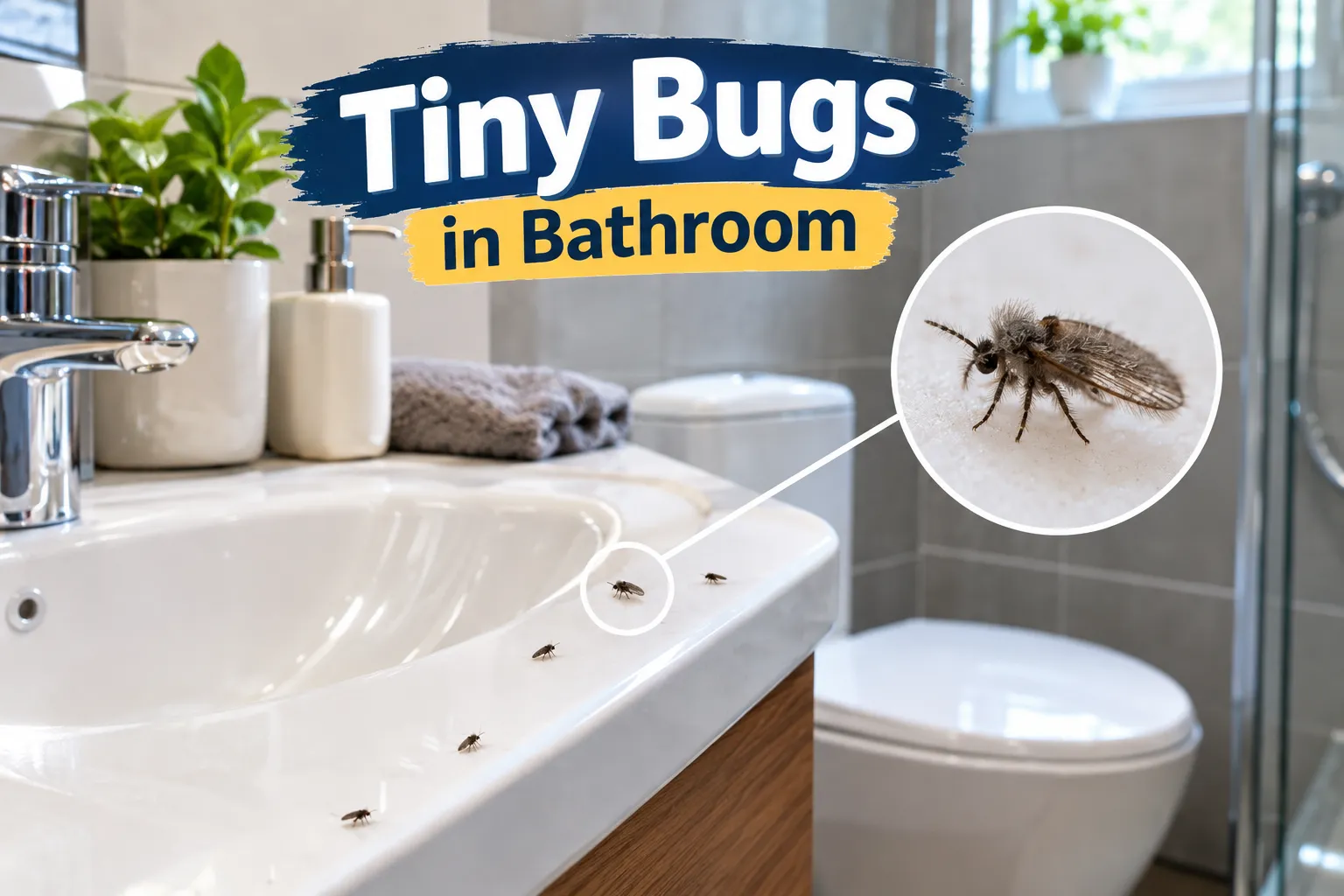
Small fuzzy drain flies on a bathroom sink edge, with a magnified close-up of one insect

Last updated: September 2026

You flip on the bathroom light and something small skitters across the tile. Or hovers near the shower drain. Or clings to the grout like a speck of dirt that just… moved. Tiny bugs in the bathroom are almost never random. They show up because your bathroom is, structurally, the most humid room in your house, and humidity is exactly what six common indoor pests are looking for. None of them bite. Most won’t damage a thing. But figuring out which one you’ve got tells you whether you’re dealing with a slow drain, an overwatered houseplant, or a leak you don’t know about yet.

Quick answer: Tiny bathroom bugs are almost always drain flies, fungus gnats, springtails, booklice, carpet beetle larvae, or mold mites, and every one of them is a moisture signal, not a dirt problem. Sort by movement first (jumps vs. flies vs. crawls), then narrow by color and wings. Fix the humidity and the specific source (drain biofilm, a damp bath mat, a slow leak) and most infestations clear up in one to two weeks without pesticide. A spreading mold patch, an unexplained leak, or fabric damage from larvae is when to call a professional instead of continuing to DIY.

What Are These Tiny Bugs in My Bathroom?

The tiny bugs turning up in your bathroom are almost always one of six species, and each one points to a specific moisture problem:

  • Drain flies (moth flies): fuzzy, mothlike, living in the slime coating your drain pipes
  • Fungus gnats: thin, dark, mosquito-shaped, usually arriving with a houseplant’s soil
  • Springtails: wingless, jump when disturbed, thrive anywhere damp
  • Booklice: pale, wingless, grazing on microscopic mold on walls and wallpaper paste
  • Carpet beetle larvae: fuzzy brown “woolly bears,” feeding on hair, lint, and dead skin
  • Mold mites: nearly invisible, appearing as moving dust on mildewed grout

Quick ID: Sort by Movement, Color, or Wings

By Movement

Movement narrows the field fastest. Only two of these six actually fly: drain flies and fungus gnats. Springtails don’t fly. They spring, using a forked tail-like structure called a furcula that flicks them several inches through the air the second you get close. Booklice and mold mites just crawl, slowly enough that most people mistake them for a stain that’s somehow relocating. Carpet beetle larvae crawl too, but with a visible, bristly texture that reads more like a tiny caterpillar than an insect.

By Color

Color is how a lot of people actually search for this: combined, there are more monthly searches for “black,” “brown,” “grey,” and “white” bathroom bugs than for any single species name. Here’s how the colors sort:

  • Black or dark gray: drain flies, fungus gnats, and springtails, by far the largest color group
  • Brown: carpet beetle larvae, older springtails, some booklice
  • Pale, cream, or nearly clear: booklice, mold mites, young carpet beetle larvae
  • White: mold mite clusters, which read as a patch of moving white dust rather than individual bugs
  • Reddish-brown: certain carpet beetle species, occasionally confused with spider mites

By Wings

Wings split the group cleanly in half. Drain flies and fungus gnats fly, and they’re the ones you’ll find at a window or light fixture after dark. Springtails, booklice, carpet beetle larvae, and mold mites have no wings at all. If what you’re looking at doesn’t take off when you get close, you’ve already ruled out two of the six.

BugMovementColorWingsSizeWhere you’ll find itBite / damage riskDIY or call a pro
Drain fliesFlies, short hopsGray to black, fuzzyYes, mothlike1/16″–1/4″ (poppy seed to rice grain)On walls near drains, active at nightNo bite; nuisance onlyDIY
Fungus gnatsFlies, weak flierDark gray to blackYes, clear and delicate1/16″–1/8″ (fruit-fly size)Near houseplants, not drainsNo bite; nuisance onlyDIY
SpringtailsJumps via furculaDark gray, brown, some whiteNo1/16″–1/8″ (a printed period)Grout lines, caulk, damp baseboardsNo bite, no damageDIY
BookliceCrawls in fits and startsPale tan to nearly clearNo (indoor species)1/25″–1/13″ (a grain of salt)Damp walls, wallpaper, new drywallNo bite; can spot stored paper/foodDIY
Carpet beetle larvaeCrawls onlyBrown, banded, bristlyNo (larval stage)1/8″–1/4″ (a short rice grain)Bath mats, baseboards, lintNo bite; bristles irritate skin, damage fabricDIY, unless spreading
Mold mitesCrawls, barely visibleWhite to tanNo~0.3mm (finer than ground pepper)Directly on mold or mildewNo bite; can worsen allergiesDIY unless mold is extensive

Bug-by-Bug Identification & Fixes

Drain Flies

Drain flies, also called moth flies, run 1/16 to 1/4 inch long with dense, hairy wings that give them a dusty, mothlike look. Ohio State University Extension entomologists note the adults hold those wings roof-style over the body at rest. They don’t breed in standing water you can see. They breed in the gelatinous biofilm that coats the inside of a drain pipe, which is why pouring bleach or a standard liquid cleaner down the drain rarely does anything: both run straight past that film without touching it.

The fix has two parts. First, confirm which drain is the source with a 24-hour tape test, a method Washington State University Extension recommends: press a strip of clear tape, sticky side down, over the drain opening overnight, then check it in the morning for trapped flies. Second, treat the source directly: scrub the upper 6–12 inches of pipe with a stiff brush, then apply an enzymatic gel cleaner (Green Gobbler is a common drugstore option) for several nights running. The bacteria in these gels digest the organic film itself, rather than just flushing water over it.

Fungus Gnats

Here’s the mix-up almost everyone makes: fungus gnats look like they belong in the drain-fly category, but an Ask Extension entomologist puts it plainly: fungus gnats do not come from drains. They breed in damp potting soil, and a bathroom infestation almost always traces back to a houseplant nearby, indoors or recently brought in from outside for the season. Adults measure 1/16 to 1/8 inch, resemble tiny mosquitoes with long legs, and University of Georgia Extension identifies a distinct Y-shaped vein pattern on the wings as a reliable ID feature. They’re weak fliers, drawn to windows and light fixtures.

If you’re seeing them and there’s no plant in sight, check for one just outside the bathroom door, or a bag of potting soil sitting in a closet. The fix is moisture management at the soil level, not the drain: let the top inch or two dry out between waterings, and use a yellow sticky trap to catch adults while the population winds down.

Springtails

Springtails are wingless, 1/16 to 1/8 inch, and get their name from a forked structure at the tip of the abdomen that launches them into short jumps. University of Kentucky Extension entomologists note they’re harmless (no bite, no property damage), but they can show up in genuinely startling numbers. Under ideal moist conditions, populations can reach tens of thousands per cubic foot of organic material, according to extension research on the species. They feed on mold, algae, and fungal film, which means a grout line or a damp baseboard is plenty of habitat.

Their presence is really a moisture alarm. University of Maryland Extension points to plumbing leaks and elevated humidity as the two conditions that reliably bring them indoors. Track down the actual leak (a slow drip at a supply line, condensation pooling on a toilet tank, a worn wax ring under the toilet) and the springtails go with it.

Booklice

Booklice (technically psocids) are pale, wingless, and tiny. Utah State University Extension lists them at 1/25 to 1/13 inch, roughly a grain of salt, visible mainly as small moving specks against a wall. They feed on microscopic mold, which is why they turn up on damp drywall, behind wallpaper, or in new construction where joint compound is still curing and releasing moisture. Penn State Extension is specific about the threshold: keeping relative humidity under 50% stops both the mold and the booklice that depend on it.

They move in a distinctive stop-start pattern rather than a smooth crawl, which is often the tell that separates them from a young carpet beetle larva at a glance. The fix is the same as springtails: find the damp spot, dry it out, and keep humidity below that 50% line with a fan or a small dehumidifier.

Carpet Beetles (Larvae)

Carpet beetles show up in bathrooms as larvae, not adults, and University of Maryland Extension describes them as fuzzy, banded, “woolly bear” shapes between 1/8 and 1/4 inch. They feed on hair, lint, dead skin, and any natural-fiber bath mat or towel left damp on the floor: not fabric in general, just the animal-based fibers and organic debris that accumulate faster in a bathroom than almost anywhere else in the house.

One detail worth knowing: they travel further than people expect. In one case logged with a university extension service, a homeowner kept finding a single larva on a bathroom mat despite there being no other fabric within 20 feet, a reminder that larvae can arrive via wall voids or a forgotten insect nest inside the structure, not just the nearest rug. Their bristly hairs can irritate skin on contact, so handle them with a tissue rather than bare fingers. Wash bath mats and towels on hot weekly, vacuum along baseboards, and if the problem persists despite a clean bathroom, check nearby vents or wall cavities for a dead insect or nest feeding the population.

Mold Mites

Mold mites (commonly Tyrophagus species) are close to invisible on their own, at roughly 0.3mm. Iowa State University Extension groups them with the broader “mold mite” family that includes cheese and grain mites, all sharing one requirement: they only appear where mold or mildew is already established. You won’t spot one mite. What you’ll spot is a faint, moving patch of white or tan dust clustered on a mildewed grout line or a shower corner that never quite dries.

Because they eat mold exclusively, a mold mite cluster is a more reliable mold indicator than the visible staining itself: you can have an active colony well before it’s obvious to the eye. Cleaning the mold thoroughly removes their food source and usually ends the problem in one pass. If the mites keep coming back in the same spot, the moisture behind that mold hasn’t actually been fixed yet.

Tiny Bugs in the Bathroom Sink or Drain, Specifically

Not every tiny bathroom bug comes from the drain, even though it feels that way when you spot one near the sink. Drain flies genuinely do breed inside the pipe. Fungus gnats, despite looking similar at a glance, almost never do. Their source is soil, not plumbing. The tape test above is the fastest way to settle which one you’re dealing with before you spend a week treating the wrong thing.

There’s a second drain-adjacent question worth answering directly: can bugs come up through the toilet? Rarely through the bowl itself, but yes, through a dry P-trap. Every drain relies on a small reservoir of water in its trap to block both sewer gas and small pests from coming back up. In a bathroom that doesn’t get used often (a guest bath, a basement half-bath), that water evaporates over weeks, opening a path that was otherwise sealed. Running water in every drain in the house at least once a week, even ones you don’t use, keeps that seal intact.

Often Mistaken For…

  • Ants: carpet beetle larvae moving along a baseboard get called ants more than any other bug on this list. The giveaway is body shape: ants have a pinched waist, larvae don’t.
  • Fleas: springtails jump, and that single behavior is the top reason people assume fleas. The real difference is bite marks. Fleas need a blood meal and leave itchy welts; springtails don’t bite at all.
  • Roaches: a cluster of drain flies near a floor drain, or a larger carpet beetle larva, sometimes gets reported as “baby roaches.” Roach nymphs have long antennae and move fast; nothing on this list does either.
  • Specks of dirt: this one belongs to booklice and mold mites specifically. Until the “dirt” moves, or you catch it under a phone camera zoomed in, there’s genuinely no visual difference.

Why Your Bathroom Keeps Attracting Them

None of these six bugs showed up because your bathroom is dirty in the usual sense. They showed up because a few specific conditions stack on top of each other in a way that a normal cleaning routine doesn’t reliably reach. Steam from every shower raises humidity well above the rest of the house. Soap scum, skin cells, and hair build an organic film inside drain pipes that no amount of surface wiping touches. An exhaust fan that shuts off the moment the water does, instead of running another 20 minutes, leaves that humidity hanging in the air. And any stray organic material sitting in an already-humid room, a bunched-up damp mat, a stack of magazines, a plant just outside the door, gives one of these species exactly the food source it needs.

How to Get Rid of Tiny Bathroom Bugs for Good

  1. Confirm the source. Run the 24-hour tape test on any suspect drain before treating anything.
  2. Treat drains directly. Scrub the pipe with a brush, then run an enzymatic gel cleaner nightly for about a week if drain flies are confirmed.
  3. Extend your exhaust fan’s run time. A cheap timer switch that keeps it running 20–30 minutes post-shower does more for humidity than almost any other single fix.
  4. Add a small dehumidifier if the bathroom has no window or the fan alone isn’t cutting it. The EPA’s mold guidance targets relative humidity below 60%, ideally between 30% and 50%, the same range that stops springtails, booklice, and mold mites from sustaining a population.
  5. Wash bath mats and towels on hot, weekly, and don’t leave them bunched up damp on the floor.
  6. Address houseplants if fungus gnats are the culprit: let soil dry between waterings, or move the plant out of the bathroom entirely.
  7. Recheck in one to two weeks. Once the moisture source is actually gone, most of these six clear up in that window without any pesticide.

If the moisture problem turns out to be bigger than a fan and a dehumidifier can fix (failing grout, a subfloor that’s staying damp no matter what), that’s a renovation question rather than a pest one. ToolCalc Pro’s bathroom remodel cost calculator is a reasonable place to get a ballpark before calling a contractor.

When to Call a Professional

DIY works for the large majority of tiny bathroom bug problems, but a few signs mean it’s time to bring in someone else:

  • You’re still seeing 10 or more new bugs a day after two full weeks of fixing the moisture and treating the source
  • A mold patch has grown past roughly the size of a sheet of paper
  • Carpet beetle larvae have damaged more than one fabric item, suggesting an established population rather than a stray
  • You’ve run the tape test, checked the obvious spots, and still can’t pin down where they’re coming from

At that point you’re looking at a mold remediation call or a pest control visit, not a bigger bottle of drain cleaner.

FAQ

What are the tiny mites in my bathroom? Almost certainly mold mites, roughly 0.3mm, visible only as a moving patch of dust on an already-mildewed surface. Clean the mold thoroughly and they typically go with it.

What are the tiny, flea-like bugs in my bathroom? Springtails. They jump the way fleas do, but they don’t bite, and they don’t need a blood host to survive. A damp grout line is all they need.

What are the tiny bugs that look like specks of dirt? Booklice or mold mites. Both are pale and nearly motionless until disturbed. If the “dirt” moves when you get close, it’s one of these two.

How do I get rid of little bugs in my bathroom? Identify which of the six it is (movement plus color gets you most of the way), then fix the specific moisture source behind it: drain biofilm, an undersized exhaust fan, or a damp bath mat, rather than reaching for spray first.

Why do I still see bugs after I’ve cleaned? Surface cleaning doesn’t reach inside drain pipes or the interior of a grout line, which is where the actual food source lives. Wiping the counter doesn’t touch it; an enzymatic drain treatment or a dehumidifier does.

Are bathroom bugs dangerous to my health? None of the six bite. Carpet beetle larvae hairs can irritate skin on contact, and mold mites can aggravate allergies since they’re tied to active mold growth, but none of these transmit disease.

Can bugs come up through the toilet? Rarely through the bowl itself, but yes, through a dry P-trap in a drain that doesn’t get used often. Running water in every drain weekly keeps that seal from drying out.

Should I use bug spray on them? Not as a first move. Spray kills the adults you can see but does nothing about drain biofilm or the humidity problem underneath, so the population comes right back within days.

When should I call a professional? When the population hasn’t dropped after two weeks of fixing moisture and treating the source directly, or when there’s a mold patch or a leak you can’t locate on your own.

How to Clean a Bathroom Exhaust Fan (Step-by-Step)

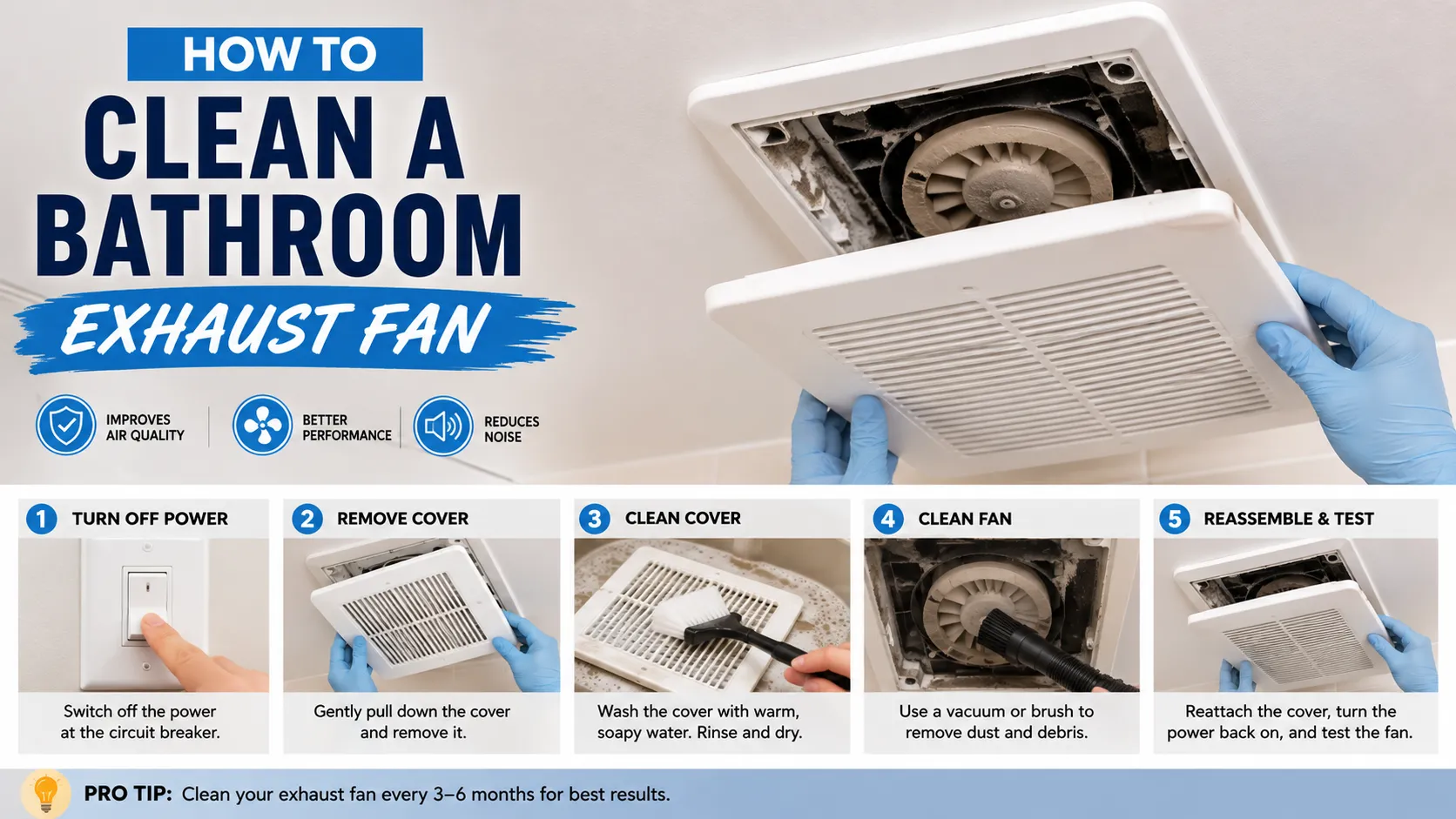
How to Clean a Bathroom Exhaust Fan

Clean a bathroom exhaust fan in under 30 minutes: cut power at the breaker, pull down the vent cover, wash it in warm soapy water, vacuum the fan blades and housing with a brush attachment, then reassemble. Do this every 6–12 months. A dust-clogged fan loses airflow and struggles to clear steam, which is usually the first sign something’s wrong.

Most people ignore this fan until it starts rattling or the bathroom stays foggy long after a shower. By then there’s a felt-like layer of dust on every blade. It’s not a hard job. It’s just one nobody remembers to do.

What You’ll Need

You probably already own most of this.

ToolWhy
Screwdriver (magnetic tip helps)Some covers are screwed in, not clipped
Vacuum with crevice + brush attachmentPulls dust off blades without scratching them
Dish soapCuts through the greasy film that builds up on the cover
Microfiber clothFor wiping parts you can’t submerge
Compressed air canOptional, useful for tight motor housing
Step stoolBathroom fans are almost always out of easy reach

Why Do Bathroom Fans Get So Dirty So Fast?

Steam is the reason. Dust that would just blow off a dry surface elsewhere in the house sticks to a bathroom fan because the air passing through it is damp every single day. That moisture turns loose dust into a paste that clings to the blades and cakes onto the motor housing.

It’s a slow build. You won’t notice it week to week. Then one day the fan sounds different, or the mirror stays fogged for ten minutes after your shower instead of two, and you realize it’s been over a year.

How Often Should You Clean a Bathroom Exhaust Fan?

At least once a year, according to the Home Ventilating Institute. Treat that as a floor, not a target. If the bathroom sees heavy daily use, twice a year is closer to right.

Here’s a faster check than counting months on a calendar. Turn the fan on and hold a single square of toilet paper against the grille. If it stays stuck, airflow is fine. If it drops, the fan is either clogged or the motor’s weakening, and only cleaning it tells you which.

How Do You Clean a Bathroom Exhaust Fan?

  1. Cut the power. Flip the wall switch, then turn off the breaker too. Vent fans wire into the same circuit as bathroom lights more often than people expect, and a stray flip mid-clean isn’t a risk worth taking.
  2. Remove the vent cover. Most pull straight down: squeeze the metal mounting clips on either side and it drops free. Some newer covers use screws or spring-loaded tabs instead, so check the edges before you pull.
  3. Wash the cover, but only if it doesn’t have a light or sensor built in. Soak it in warm water with a few drops of dish soap, scrub with an old toothbrush, rinse, and set it on a towel to dry completely before it goes back on.
  4. Vacuum the fan blades and motor housing. Use the brush attachment. Dust on these blades isn’t loose. It’s often baked on from months of steam, so expect to spend real time here. For grime that won’t lift with the vacuum alone, an old toothbrush or the serrated edge of a plastic knife breaks it loose without scratching the blades. Skip metal scrapers or wire brushes; they’ll gouge the plastic.
  5. Wipe everything down with a damp microfiber cloth. This catches what the vacuum missed.
  6. Reassemble and restore power. Clip or screw the cover back in, flip the breaker, then the switch. Run it for a minute and listen. Quieter is the goal.

Total time, start to finish: about 30 minutes for a fan that hasn’t been touched in a year or two. Budget closer to 45 if the blades are heavily caked, since scrubbing each one by hand can eat 10–15 minutes on its own.

How Do You Clean a Bathroom Exhaust Fan Without Removing It?

You can, but only partway. Run a vacuum with a crevice tool through the grille to pull out loose dust, then wipe whatever surface you can reach with a damp cloth. Run the fan for a few minutes afterward to clear anything you loosened but didn’t fully remove.

This works fine as a quick maintenance pass between real cleanings, say a five-minute touch-up at the three-month mark. What it can’t do is reach the fan blades or the motor housing, where the actual buildup lives. Skip the full teardown every time and you’re managing surface dust while the fan keeps losing airflow underneath it.

Is It Safe to Clean a Bathroom Fan That Has a Light?

Not by submerging it. If your fan cover includes a light, a sensor, or (increasingly) a built-in speaker, water and electronics don’t mix. Disconnect the wiring at the connector before removing the cover, then clean it dry: vacuum first, wipe with a barely damp microfiber cloth second, and let it air dry fully before reconnecting anything.

Plain covers with no light are the only ones safe to soak in the sink.

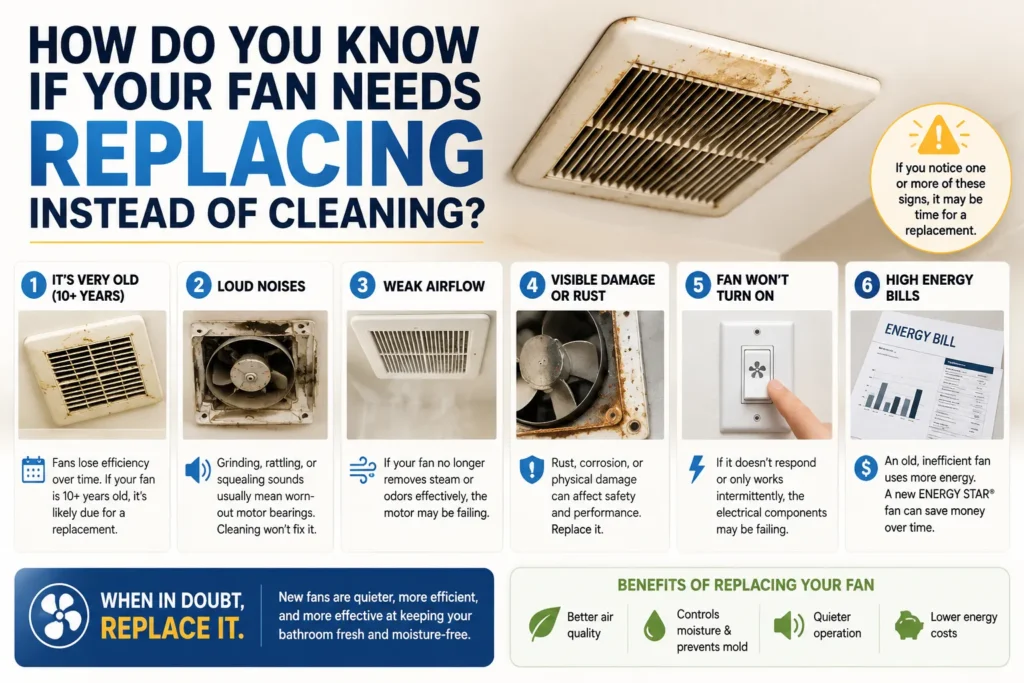
How Do You Know If Your Fan Needs Replacing Instead of Cleaning?

How Do You Know If Your Fan Needs Replacing Instead of Cleaning?

Cleaning fixes airflow. It doesn’t fix a dying motor.

Replace the fan if it’s still loud after a full clean, if you can see damage to the motor housing or blades, or if it’s 10 to 15 years old and still failing to clear steam. A fan that age has usually earned its retirement: a new one is quieter and moves noticeably more air for the same footprint.

A fan that can’t keep up with steam is often the first sign of bigger moisture problems: peeling paint, even mold behind the tile. If you’re already looking at a bigger fix, the Bathroom Remodel Cost Calculator breaks down what that actually runs before you call a contractor.

FAQ

How often should I clean a bathroom exhaust fan?

At least once a year. Twice a year if the bathroom sees heavy daily use.

How do I know if my bathroom fan needs cleaning?

Hold a piece of toilet paper against the running grille. If it doesn’t stay stuck, dust buildup is cutting your airflow.

Can I clean a bathroom exhaust fan without removing it? Partly. Vacuuming through the grille and wiping accessible surfaces works as a maintenance step, but it won’t reach the blades or motor. You still need a full removal every 6–12 months.

Is it safe to clean a bathroom fan that has a light?

Not by soaking it. Disconnect the wiring, then clean the cover dry with a vacuum and a damp cloth.

Can I wash the fan cover in water? Yes, if it’s a plain cover with no light, sensor, or speaker built in. Warm water and a little dish soap is enough.

Why is my bathroom fan still loud after cleaning?

Usually a motor issue, not a dust issue. Loose mounting screws can also cause rattling, so check those before assuming the motor’s failing.

How long does cleaning a bathroom exhaust fan take?

About 30 minutes for a fan that’s gone a year or more without attention. Closer to 45 if the blades are heavily caked.

When should I replace instead of clean my bathroom fan?

If it’s 10 to 15+ years old, still loud after cleaning, or visibly damaged, replacing it makes more sense than continuing to clean it.

How Much Does a New Roof Cost in 2026?

How Much Does a New Roof Cost in 2026?

A new roof costs $5,900 to $46,000, with most homeowners landing around $9,600 for a standard asphalt shingle roof. That number comes from Angi’s survey of over 30,000 homeowners, and it moves up or down based mostly on three things: how big your roof is, what material you pick, and how much labor the job takes.

If you’re staring down a leak or a contractor’s quote that seems way too high, you want a real range before you make any calls. Below, you’ll find that range broken down by size and material, plus a calculator that plugs in your own numbers instead of a national average.

One quick distinction worth making up front: most of the pricing you’ll see, including the numbers here, covers roof replacement, which includes tearing off your old roof. A brand-new roof on new construction, with no tear-off involved, usually costs less.

Get your instant roof cost estimate

Enter your roof’s square footage, material, and number of stories below, and you’ll get a personalized estimate instead of a national average.

[CALCULATOR EMBED: Roof Cost Calculator — inputs: square footage, material, stories/pitch]

National averages are a starting point, not your price. A 3,000-square-foot roof in a high-labor-cost city and a 1,200-square-foot roof in a low-cost region can land on opposite ends of the range above.

New roof cost by size

Roofing contractors price jobs by the “square,” which equals 100 square feet of roof area. Here’s what that looks like across common home sizes, based on Angi’s roofing cost data:

Roof sizeEstimated cost
1,000 sq ft$4,000–$11,000
1,500 sq ft$6,000–$16,500
2,000 sq ft$8,000–$22,000
2,500 sq ft$10,000–$27,500
3,000 sq ft$12,000–$33,000

How to calculate your roof squares

Your roof isn’t the same size as your home’s floor plan. Because of overhangs and slope, roof area typically runs 1.1 to 1.2 times your home’s square footage.

Here’s what that looks like in practice. The median new single-family home in the US is 2,142 square feet, according to Census Bureau data. Multiply that by 1.15, and you get roughly 2,463 square feet of roof, or about 25 squares.

Grab your home’s square footage from a listing, an appraisal, or your county assessor’s site, then run the same math. Or skip the arithmetic and use the calculator above.

New roof cost by material

Material is usually the biggest lever you control. Here’s the installed cost per square foot for common options, based on NerdWallet’s roofing cost breakdown:

MaterialCost per sq ft (installed)Typical lifespan
Asphalt shingles$3–$715–30 years
Architectural shingles$4–$625–30 years
Metal$7–$1340–70 years
Synthetic$5–$1225–50 years
Wood shakes$6–$1330–50 years
Tile$10–$2050+ years
Slate$15–$3075+ years

Asphalt shingles cover most US homes for a reason: they’re the cheapest option that still holds up for decades. Metal and tile cost more upfront but stretch that cost over a much longer lifespan, which matters if you plan to stay in the house.

What affects your total cost?

Size and material set the baseline. A few other factors move the number from there.

Labor and installation

Labor typically makes up 40 to 60% of your total bill, according to Bankrate’s roofing cost breakdown. Steep roofs, multiple stories, and complex rooflines with lots of valleys or dormers all add labor hours, and with them, cost.

Run your roof’s numbers through the Roof Pitch Calculator to see exactly how much pitch adds to your job. A professional roof inspection, which most contractors recommend before you commit to a full replacement, runs $125 to $325.

Permits, tear-off, and other add-ons

Beyond the roof itself, budget for:

  • Permits: $100–$1,400, depending on your city
  • Tear-off and removal of the old roof: $1,000–$3,000
  • Hauling and disposal: $500–$1,500
  • Deck repair, if rot or damage turns up once the old roof comes off

Who installs your roof matters too. Manufacturers like GAF certify contractors at different tiers, and only the top tier can offer their strongest warranties. A cheaper quote from an uncertified installer can mean a weaker warranty on the same shingles.

Does homeowners insurance cover a new roof?

Sometimes, depending on why you need one. If a covered event like a storm or fallen tree damages your roof, your policy typically pays for repair or replacement, minus your deductible.

What you get paid depends on your coverage type. Replacement Cost Value (RCV) pays what it actually costs to replace your roof today. Actual Cash Value (ACV) subtracts depreciation based on your roof’s age, which can mean a payout thousands of dollars lower on an older roof. Many insurers shift policies from RCV to ACV once a roof passes 15 to 20 years old.

Routine wear and tear isn’t covered by either type. If your roof is failing simply because it’s old, that replacement comes out of your own pocket.

How long does a new roof actually last?

Most new roofs are built for about 20 years of service, according to the National Roofing Contractors Association, though your actual lifespan depends heavily on material and climate.

Asphalt shingles, the most common choice, typically last 15 to 30 years. Metal roofs run 40 to 70 years. Tile and slate can outlast both by decades, sometimes topping 75 years, though they cost significantly more upfront.

Climate shortens all of these ranges. Heavy sun, hail, and freeze-thaw cycles wear down any roofing material faster than the manufacturer’s rating suggests.

Bottom line

A new roof costs $5,900 to $46,000 nationally, but your actual number comes down to three things: roof size, material, and labor in your area. Asphalt keeps costs lowest; metal and tile cost more but last two to three times as long.

Before you get quotes, run your own numbers through the calculator above and check whether your roof qualifies for insurance coverage if damage is what’s driving the replacement.

Have a quote in hand already? Drop the details in the comments and we’ll help you figure out if it’s in line.

Cost figures sourced from Angi, HomeAdvisor, NerdWallet, Bankrate, Insurance.com, the National Roofing Contractors Association, and the U.S. Census Bureau. Last updated August 2026.

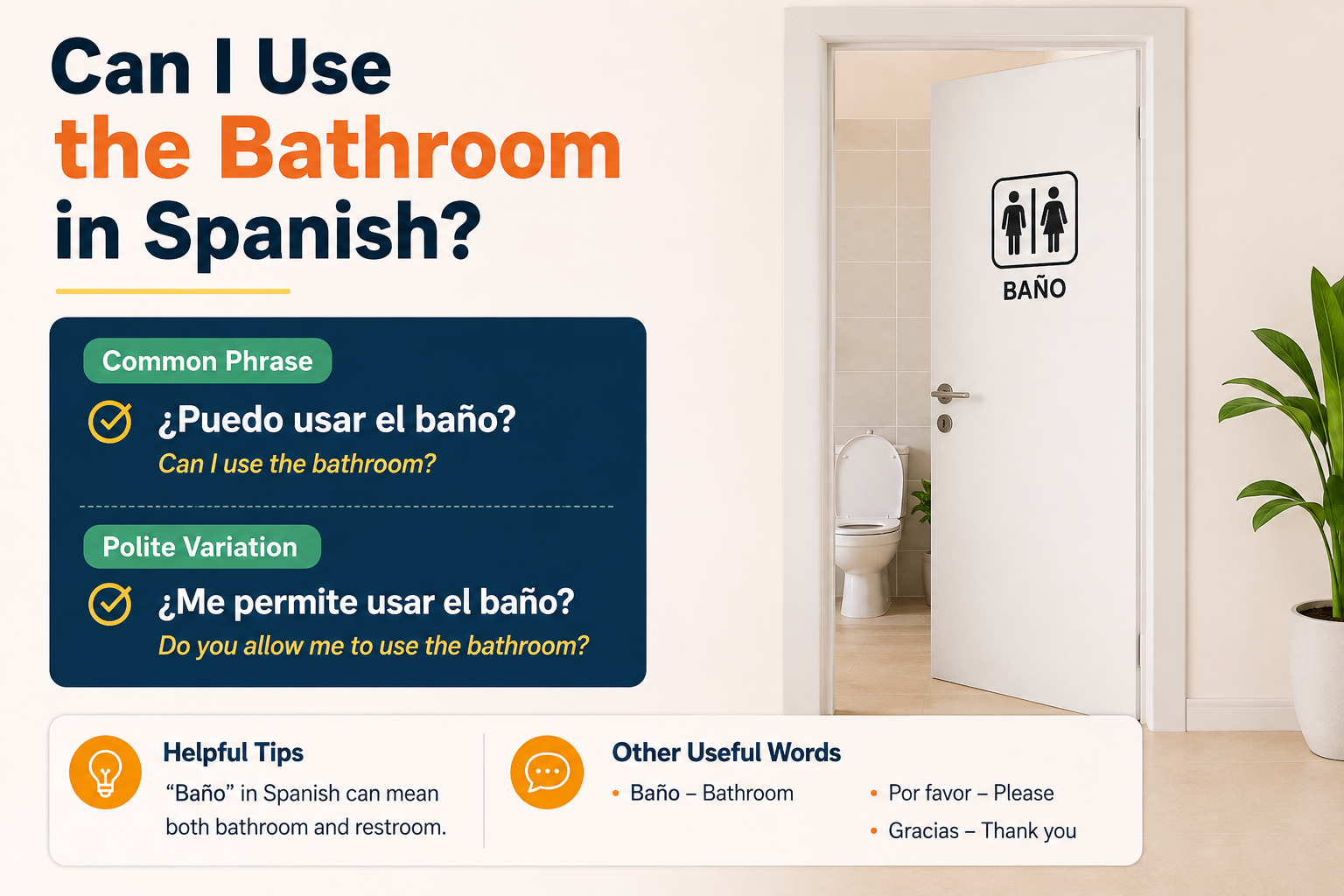
Can I Use the Bathroom in Spanish? 15+ Ways to Ask

Can I Use the Bathroom in Spanish?

“Can I use the bathroom?” in Spanish is ¿Puedo usar el baño? or ¿Puedo ir al baño? — both mean exactly the same thing and are understood everywhere Spanish is spoken. For a more polite or formal version, say ¿Podría usar el baño?

That covers the basics, but which phrase you reach for depends on who you’re asking — a friend, a teacher, or a stranger at a restaurant all call for slightly different wording. Here’s every version you’re likely to need, plus the vocabulary and real-world examples to go with them.

Every Way to Say “Can I Use the Bathroom” in Spanish

Casual and everyday

If you’re talking to a friend, a family member, or anyone you’d address informally, these are your go-to phrases:

  • ¿Puedo ir al baño? — Can I go to the bathroom?
  • ¿Puedo usar el baño? — Can I use the bathroom?

Both are interchangeable. Ir al baño leans slightly more common in everyday speech, but a native speaker won’t blink at either one.

Polite and formal

Talking to someone you don’t know well — a teacher, a shop employee, an older relative, or anyone you’d address as usted — swap puedo for podría:

  • ¿Podría usar el baño? — Could I use the bathroom?
  • Disculpe, ¿podría usar el baño? — Excuse me, could I use the bathroom?

Leading with disculpe (“excuse me”) is a small touch that makes the request noticeably more polite, especially with strangers.

Asking to use someone’s bathroom

Specify whose bathroom you mean by adding a possessive:

  • ¿Puedo usar tu baño? — Can I use your bathroom? (informal — )
  • ¿Puedo usar su baño? — Can I use your bathroom? (formal — usted)

Stating you need to go (not asking permission)

Sometimes you’re not asking — you’re announcing. These work when you need to excuse yourself or explain urgency:

  • Necesito ir al baño. — I need to go to the bathroom.
  • Tengo que ir al baño. — I have to go to the bathroom.
  • Necesito usar el baño urgentemente. — I urgently need to use the bathroom.

Puedo vs. Podría — Which One Should You Actually Use?

Both words come from poder (“to be able to”), but podría is the conditional form, and conditional phrasing softens a request the same way “could I” sounds gentler than “can I” in English.

A simple rule of thumb:

Talking to…Use
A friend, sibling, or close family memberPuedo
Your own kids or people younger than youPuedo
A teacher, a host, a stranger, waitstaff, or anyone older/unfamiliarPodría
Anyone, when you want to sound extra politePodría + disculpe

Neither one is ever “wrong” — puedo isn’t rude — but podría is the safer default any time you’re unsure how formal to be.

“Where Is the Bathroom?” in Spanish

Once you’ve got permission (or just need to find one), here’s how to ask its location:

  • ¿Dónde está el baño? — Where is the bathroom? (the standard, all-purpose version)
  • ¿Dónde están los baños? — Where are the bathrooms? (for public restrooms, which are often plural)
  • Perdón, ¿dónde está el baño? — Excuse me, where is the bathroom?

Adding perdón or disculpe before either question is common courtesy when you’re asking a stranger rather than someone you already know.

What Does “Baño” Actually Mean?

El baño is the universal, safe-everywhere word for bathroom in Spanish — it’s a masculine noun, so it always pairs with el (and un baño pequeño means “a small bathroom,” not “a small bathroom” with a feminine ending). You’ll rarely go wrong defaulting to it, but you’ll also hear regional alternatives depending on where you are:

TermMeaningWhere it’s common
El bañoBathroom (general, universal)Everywhere
El servicioRestroom (public)Spain, especially in restaurants, airports, train stations
El aseoRestroom (public)Spain
El lavaboBathroom / sinkSpain, parts of Latin America
El váterToilet (the fixture)Spain
El inodoroToilet (the fixture)Most Spanish-speaking countries
El sanitarioRestroom (public, more formal)Latin America

Is el baño masculine or feminine? Masculine. It takes the article el, and any adjective describing it should be masculine too — for example, el baño está limpio (“the bathroom is clean”), not limpia.

Bathroom Vocabulary You’ll Actually Need

Asking to use the bathroom is often just step one — here’s the vocabulary that comes up right after:

EnglishSpanish
Toilet paperEl papel higiénico / el papel de baño
SinkEl lavabo
ShowerLa ducha
TowelLa toalla
SoapEl jabón
ToothbrushEl cepillo de dientes
Toilet (fixture)El inodoro
MirrorEl espejo

What Will They Say Back?

Knowing how to ask is only half the exchange — here’s what you’ll likely hear in response:

  • Sí, claro. — Yes, of course.
  • Por supuesto. — Of course.
  • Adelante. — Go ahead.
  • Está al fondo a la derecha. — It’s at the back, on the right.
  • Lo siento, está ocupado. — Sorry, it’s occupied.

Asking in Real Situations

Seeing the phrase in context makes it stick better than a translation table alone. Here are three common scenarios.

In a Spanish class, asking your teacher:

Student: Profesora, ¿puedo ir al baño? Teacher: Sí, pero vuelve rápido — ya casi termina la clase.

(Teacher, can I go to the bathroom? — Yes, but come back quickly, class is almost over.)

As a guest in someone’s home:

You: Perdón, ¿podría usar tu baño? Host: Claro, está al final del pasillo, a la izquierda.

(Excuse me, could I use your bathroom? — Of course, it’s at the end of the hallway, on the left.)

While traveling, at a restaurant:

You: Disculpe, ¿podría usar el baño? Soy cliente. Waiter: Sí, está al fondo, pasando la barra.

(Excuse me, could I use the restroom? I’m a customer. — Yes, it’s in the back, past the bar.)

FAQ

How do you say “may I use the bathroom” in Spanish?

“May I use the bathroom?” translates to ¿Puedo usar el baño? in most everyday situations, or the more formal ¿Podría usar el baño? when speaking with someone you don’t know well, like a teacher or a shop employee.

Is “puedo” or “podría” more polite?

Podría is the more polite of the two. Puedo is perfectly correct grammar, but podría — the conditional form of poder — softens the request, the same way “could I” sounds gentler than “can I” in English.

What’s the difference between “baño” and “servicio”?

Baño is the all-purpose word for bathroom and works almost anywhere in the Spanish-speaking world. Servicio specifically refers to a public restroom — think airports, restaurants, or train stations — and is heard far more often in Spain than in Latin America.

How do you say “toilet,” “restroom,” or “washroom” in Spanish?

All three are usually translated as el baño in casual speech. For the toilet fixture itself, speakers use el inodoro (most countries) or el váter (Spain). In a formal or public setting, “restroom” is often el servicio or los aseos.

Is “el baño” masculine or feminine?

Masculine — it takes the article el, and any adjective describing it should also be masculine, as in un baño pequeño (“a small bathroom”).

Gray Bathroom Ideas: How to Do 2026’s Most Debated Neutral Right

Gray bathroom ideas used to mean one thing: cool-toned tile, white grout, chrome fixtures, done. That formula is exactly what a growing number of designers are walking away from this year. Gray isn’t dead in the bathroom. The flat, icy version of it is.

If you’re planning a repaint or a full gut job, the shade of gray you pick — and what you pair it with — matters more in 2026 than it did five years ago. Here’s how to get it right, what it costs, and where the color still earns its spot.

Is Gray Still a Good Bathroom Color in 2026?

Yes, with a catch: warm and layered grays are in, flat cool grays are out. Several interior designers have called icy, sterile gray schemes dated this year, pointing homeowners toward greige, taupe-gray, and gray paired with texture instead of one cool slab of it.

That’s not a rejection of gray as a color. It’s a rejection of how it got used during its decade-long run as the default neutral — same undertone, same finish, everywhere. One Northern Virginia-based designer put it plainly this year: gray had its moment, and now it feels stale mostly because it’s been seen in so many homes, not because the color itself is the problem. The fix isn’t abandoning gray. It’s choosing a warmer version of it and giving it something to sit next to: wood, brass, a patterned tile, anything with grain or shine.

How to Choose the Right Shade of Gray

Every gray paint color has an undertone, and that undertone is the difference between a bathroom that feels current and one that reads like 2015. Warm grays lean beige or brown. Cool grays lean blue or green. Neither is objectively better, but pull the wrong one into a small, low-light bathroom and it looks muddy or flat instead of calm.

A quick way to check before buying a sample pot: hold the paint chip next to a plain white sheet of paper, in the room’s actual light, morning and evening. Warm undertones show a faint beige or pink cast. Cool undertones show blue or green. Bathrooms with north-facing windows or mostly artificial light tend to look better in warm grays, since there’s rarely enough daylight to balance out a cool tone.

Best Gray Paint Colors for Bathrooms

ColorBrand & CodeUndertoneBest For
Agreeable GraySherwin-Williams SW 7029Warm greigeThe safest pick — works in almost any light
Repose GraySherwin-Williams SW 7015 (LRV 58)WarmMidtone walls that hold up under artificial light
Iron OreSherwin-Williams SW 7069Warm charcoalVanity, accent wall, or cabinetry, not full walls in a small room
Revere PewterBenjamin Moore HC-172Warm greigePairing with wood vanities and warm brass
Chelsea GrayBenjamin Moore HC-168Medium warm grayVanities and cabinets — reads gray without going brown
Stonington GrayBenjamin Moore HC-170Cooler, versatileBathrooms with strong natural light

Test two samples before committing to one. Gray shifts more under typical bathroom lighting, usually a mix of a vanity fixture and an overhead can light, than almost any other color family.

Gray Bathroom Ideas by Room Size

Small Bathrooms and Powder Rooms

A powder room under 25 square feet can carry a darker gray than most people expect. There’s no daylight competing with it and no long sightline making the walls feel like they’re closing in, so a deep charcoal like Iron Ore, paired with one brass or unlacquered-brass fixture, can look intentional instead of cramped. Where small bathrooms actually go wrong with gray is choosing a cool, flat mid-tone with nothing else in the room to break it up. Add one warm surface — a wood shelf or a cane mirror frame — and the same gray reads considered instead of dated.

Full and Primary Bathrooms

Bigger bathrooms can afford to layer more than one gray without it turning chaotic. Try a warm greige on the walls and a slightly darker gray on a floating vanity, then let the floor tile do the connecting work instead of matching either wall color exactly. This is where the “gray is dated” criticism usually applies in real life: a primary bath painted a single flat, cool gray floor to ceiling with no material variation. Vary the sheen and the texture. Then add one warm accent color.

Gray Color Pairing Ideas

Gray’s whole selling point is that it plays well with almost anything. A few pairings that hold up specifically in 2026:

  • Gray + wood. The single most effective way to keep a gray bathroom from feeling cold. A stained wood vanity or wood-look tile on the floor does most of the work.
  • Gray + warm white. Skip stark white. A warm white with a hint of cream keeps the contrast soft instead of clinical.
  • Gray + black. Matte black fixtures against a warm mid-tone gray wall is one of the few high-contrast pairings that hasn’t gone out of favor, mostly because black reads as a material choice, not a color trend.
  • Gray + one saturated color. Sage green, deep navy, terracotta, or dusty pink shows up through a hand towel or a small piece of art, and keeps a gray bathroom from feeling like a hotel corridor.

Gray Tile Ideas

Gray tile is where a lot of bathrooms actually live or die, since walls get repainted every few years but tile sticks around for a decade or more. A few things worth knowing before picking one out:

Large-format gray porcelain, 12×24 or bigger, on the floor makes a small bathroom feel wider, since fewer grout lines mean fewer visual breaks. Textured or lightly veined gray tile photographs better and ages better than a flat matte gray, which shows water spots and scratches more obviously over time.

Here’s the detail almost nobody mentions: grout color matters as much as tile color. White grout next to gray tile looks crisp on day one and gray or pink by month six, especially around the shower floor. A charcoal or medium-gray grout hides daily grime and mildew shadowing far better, and most people won’t consciously notice the grout as a design choice. They’ll just notice the bathroom looks cleaner longer.

What a Gray Bathroom Actually Costs

The scope of the project matters more than the color does. Repainting is cheap. Retiling is a real investment. A full remodel is a different budget conversation entirely.

ProjectTypical Cost RangeNotes
Paint refresh (walls only)$150–$500Small powder room on the low end, primary bath on the high end. DIY cuts this to roughly $15–$40 per gallon of paint
Tile refresh (floor or shower)$250–$2,500Small bathroom, 25–50 sq ft. Ceramic runs $10–$45 per sq ft installed, vinyl-look options run lower
Full bathroom remodel$6,500–$18,000National average lands around $11,000. Labor alone typically runs 40–65% of the total

If you’re weighing a repaint against a full remodel just to update the color story, paint almost always wins. A $300 paint job with the right warm gray and one new fixture does more visual work than most people expect. Save the full remodel budget for when the layout or fixtures actually need to change, not just the color.

FAQ

Does gray grout work with white tile, or only gray tile?

Both. Gray grout on white tile is one of the more practical combinations — it hides everyday grime far better than white-on-white while keeping the tile itself bright.

Will a gray bathroom make a small space feel cold?

Only if it’s a single flat, cool-toned gray with nothing else in the room. Add a warm undertone, one wood or brass element, and a lighter ceiling, and the same square footage feels warm instead of clinical.

What’s the difference between gray and greige for a bathroom?

Greige is gray with a beige undertone built in, making it the warmer, more forgiving option for bathrooms with limited natural light. Straight gray with no warm undertone can look colder and more institutional in a small, artificially lit room.

Can I mix a warm gray and a cool gray in the same bathroom?

Generally, no. Side by side, the two undertones clash and read as a mistake rather than a design choice. Pick one undertone family for the room, then let tile, wood, and metal finishes provide the contrast.

Does a gray bathroom hurt resale value?

Not on its own. Buyers respond more to condition and layout than color, and a well-executed warm gray remains one of the safer, broadly appealing choices a seller can make. Flat, cool gray with no texture is the version that reads dated to buyers now.

Cozy Bathroom Ideas That Actually Work, By Budget

cozy-bathroom-ideas

Every “cozy bathroom” list on the internet says the same five things: candles, plants, fluffy towels, warm lighting. None of them tell you what any of it costs, or whether it survives a room that doubles as a daily steam bath. This one does both, split into three budgets: free to $50, $50 to $500, and $500-plus for anyone ready to touch the plumbing.

We built it this way on purpose. Every ranking article on this topic is a flat numbered listicle, 10 ideas, 15 ideas, 30 ideas, in no particular order and with no sense of what any single idea actually costs to pull off. That works fine if you’ve got an unlimited weekend and an unlimited budget. Most people don’t, so the budget tier you’re in should decide where you start reading, not the order some blogger happened to type ideas into a draft.

What Makes a Bathroom Feel Cozy?

Most of that advice isn’t wrong. It’s just incomplete. A single candle next to a bare bulb and a cold tile floor doesn’t do much on its own. Real bathroom coziness, the hygge-for-a-bathroom version, comes from layering four things at once: warm light, soft texture underfoot and on skin, low-effort scent, and a layout that doesn’t feel like a hospital supply closet.

A cozy bathroom combines warm-toned lighting (2700K-3000K bulbs, not the blue-white 5000K kind), soft textiles like plush towels and a bath mat, decluttered counters, and at least one humidity-tolerant plant or diffused scent. None of it requires a remodel. Most of it costs under $50 and takes an afternoon.

If you’re searching “cosy bathroom ideas” instead, same list applies. It’s a spelling difference, not a different room.

Two things get left off most lists entirely: floor temperature and sound. Cold tile at 6am undoes every candle you own in about four seconds, which is exactly why heated flooring shows up later in this guide as the highest-impact remodel-level upgrade. And a bathroom with hard tile everywhere bounces sound in a way that reads as sterile even when the lighting is warm. A thick bath mat and a fabric shower curtain absorb some of that; a fully tiled, rug-free bathroom won’t feel cozy no matter what color the walls are.

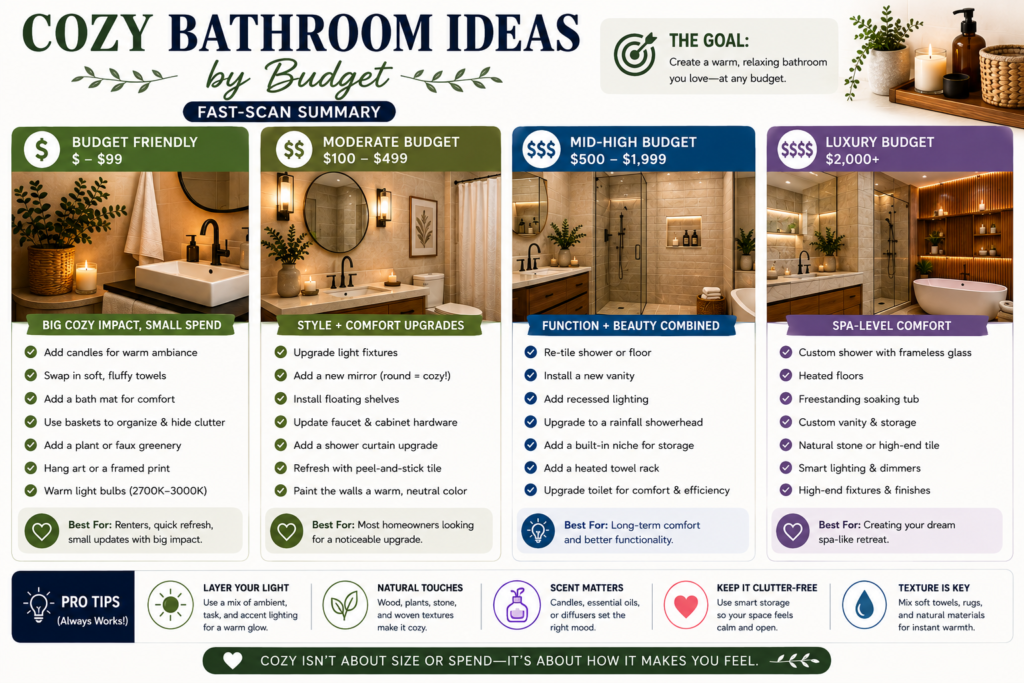
Cozy Bathroom Ideas by Budget — Fast-Scan Summary

Cozy Bathroom Ideas by Budget — Fast-Scan Summary

A cozy bathroom setup runs anywhere from $0, using what’s already in the linen closet, to $8,000-plus if you’re pulling in a heated floor or a custom shower. Run your own numbers through the bathroom remodel cost calculator any time you want figures specific to your layout. Here’s how the three tiers break down.

Budget TierWhat You GetTypical CostBest For
Free to $50Textiles, scent, decluttering, lighting swaps$0 – $50Renters, first-time cozy-ers
$50 to $500Dimmers, warm bulbs, hardware, mirror, curtain$50 – $500Owners wanting a weekend refresh
$500+Heated flooring, soaking tub, walk-in shower, smart toilet$500 – $8,000+Anyone already planning a remodel

Jump to whichever tier matches your actual budget this month. There’s no rule that says you have to work through them in order, and most people land somewhere in the middle: a few free swaps now, a mirror and a dimmer next paycheck, the walk-in shower whenever the current one finally fails.

Free to $50: Textiles, Scent, Light, and Decluttering

This is the saturated part of the internet, so we’ll move through it fast.

Swap your towels for something with real weight. Cotton at 600 GSM or higher runs $30-$50 for a two-pack, and hanging them on an open hook beats folding them into a cabinet every time. A bath mat with some pile, not the flat rubber kind, does more for the “feels cozy” factor than almost anything else on this list, and a decent one is $15-$25.

For scent, skip the plug-in air freshener. It just adds more moisture to a room that already has too much. A reed diffuser, an essential oil diffuser, or a beeswax candle ($10-$20) holds up better against bathroom humidity than a spray ever will. Keep any lit candle on a shelf away from the tub edge and the shower curtain, not balanced on the corner of the tub itself. It’s an easy detail to overlook until a curtain brushes against it.

Light is the cheapest fix with the biggest payoff. Cozy bathroom lighting comes down to color temperature more than fixture style. If your fixture takes a standard bulb, swap it for a 2700K warm LED ($3-$8 each). That one change outperforms any candle.

Then declutter. Three bottles on the counter reads as spa-like. Twelve reads as clutter, no matter how nice the bottles are. Move the rest into a woven storage basket under the sink, and add a small folded throw over a stool or hamper if you want texture without buying anything new.

Towel storage matters more than most guides give it credit for. A wall-mounted ladder rack ($20-$40) does two things a closet can’t: it keeps towels visible, so they actually get used instead of hoarded, and rolled towels on a ladder rack read as “boutique hotel” in a way that folded stacks in a cabinet never will. Layer a smaller bath mat inside a larger one at the tub’s edge if you want the same layered-texture look higher-end bathrooms use, without paying for a second full-size mat.

Renter-Safe Cozy Ideas (No Drilling Required)

This matters most in a cozy apartment bathroom, where every fixture belongs to the building and nothing gets touched without a fight over the security deposit.

Tension rods solve most storage and privacy problems that would otherwise need a drill. A second rod over the shower curtain rod holds a second curtain, which blocks drafts and adds texture. A tension rod mounted inside a cabinet doubles shelf space instantly. Command hooks handle towel bars, robe hooks, and small shelves, but check the label: bathroom-rated hooks are built for humidity, and standard ones aren’t.

Peel-and-stick removable wallpaper is the closest thing to a real transformation a renter can pull off. Stick to a small accent area, behind a mirror or on the lower third of one wall, rather than the whole room. Full-room peel-and-stick fights bathroom humidity constantly and tends to lift at the seams within a year.

Battery-powered LED puck lights along a mirror edge or under a cabinet add warm light without touching a single wire. A bath caddy or tub tray adds a spa-like shelf for a book and a candle without a single screw.

If the bathroom window looks straight into a hallway or a neighbor’s window, static-cling privacy film ($15-$30) fixes that without touching the glass permanently. It also softens harsh daylight into something closer to the warm, diffused light the rest of this list is built around, which is a side benefit most renters don’t expect until they’ve already put it up.

What Not to Alter in a Rental

  • Don’t paint tile or grout, even with “tile paint.” It chips, and most leases charge you for the repair.
  • Don’t drill into tile walls for shelving. Adhesive-mount shelves rated for at least 5 lbs hold more than people expect.
  • Photograph the bathroom’s original condition before adding anything, including adhesive hooks. Residue disputes are the most common security-deposit fight.

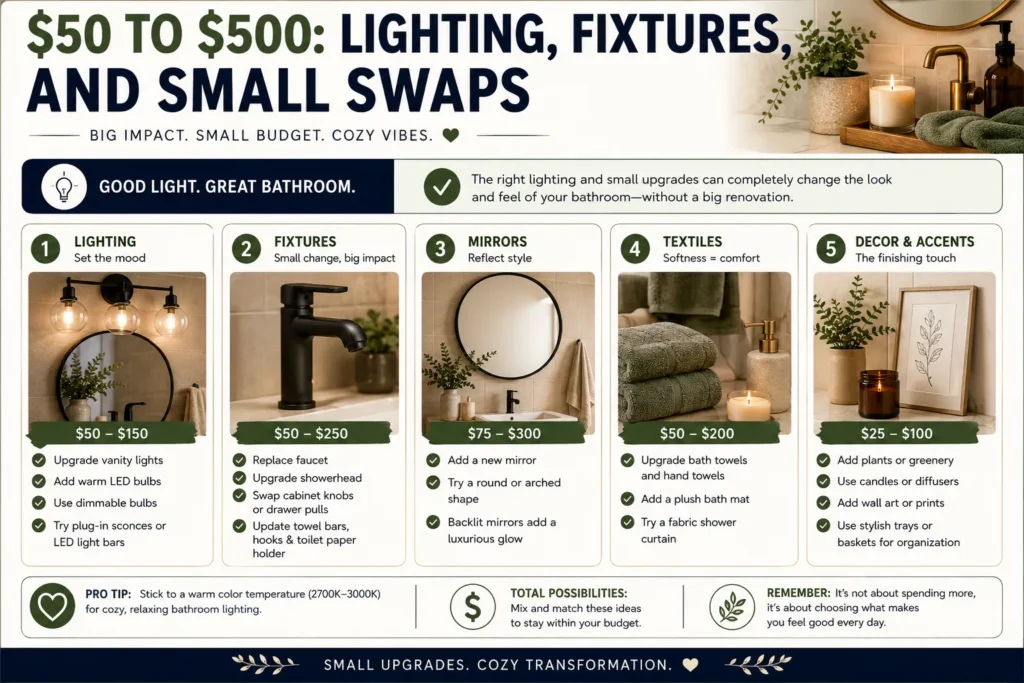
$50 to $500: Lighting, Fixtures, and Small Swaps

$50 to $500: Lighting, Fixtures, and Small Swaps

Past $50, the upgrades start changing actual fixtures instead of just accessories.

A dimmer switch is the single best sub-$500 upgrade in this whole guide. The part itself runs $15-$40. If you’re not comfortable with the wiring, an electrician typically charges $100-$200 for the swap. Pair it with warm-toned bulbs and one switch takes a bathroom from clinical to spa-like.

Cabinet hardware is next. Swapping builder-grade chrome knobs for warm brass or matte black pulls runs $50-$150 for a full vanity, and it’s a 20-minute job with a screwdriver.

A framed mirror swap ($100-$300) does more visually than almost anything else here, especially in a small bathroom where the mirror is doing double duty as a light-bounce tool. A heavier shower curtain and liner set ($40-$80) holds up better than thin vinyl and won’t billow when the water’s running, which matters more than it sounds like it should.

If there’s room for one splurge in this tier, make it a rain or waterfall showerhead ($40-$120). It doesn’t change how the room looks. It changes how the room feels to use, which is arguably the actual point of “cozy.”

A plug-in towel warmer rack ($80-$200) is the other contender for that splurge slot. It needs an outlet, not an electrician, so it stays in this tier instead of the next one, and it solves the cold-towel problem the same way heated flooring solves the cold-floor problem, just for less money.

$500+: Remodel-Level Cozy

Past $500, you’re not accessorizing anymore. You’re changing the bones of the room, and that’s where it’s worth pulling real numbers instead of guessing. “Get a heated floor” means something very different at $800 than it does at $3,000.

What Each Upgrade Actually Costs

UpgradeTypical CostWhat It Changes
Heated flooring$800 – $1,800Removes the cold-tile-at-6am problem entirely
Freestanding or soaking tub$1,000 – $5,000The single biggest “spa” signal in any bathroom
Custom tiled walk-in shower$3,500 – $8,000Replaces a tub/shower combo with an open, warmer-feeling space
Smart or bidet toilet$700 – $2,200A heated seat alone changes the daily routine more than people expect

These numbers assume typical labor rates and mid-range materials. Your actual cost depends on your layout, your local labor rates, and what’s already behind the walls.

Heated flooring and a walk-in shower both usually need a permit and a licensed electrician or plumber in most municipalities, even if you’re doing some of the demo yourself. A freestanding tub is the one item on this table a confident DIYer can sometimes handle solo, since it’s often a drop-in replacement for an existing tub rather than a full re-plumb. Check your local codes before assuming either way.

Run your specific project through the cost calculator before you call a contractor. It breaks the estimate down by scope so you know which of these four is actually driving the total, whether that’s the freestanding tub, the walk-in shower, or the cozy bath upgrade nobody budgeted for.

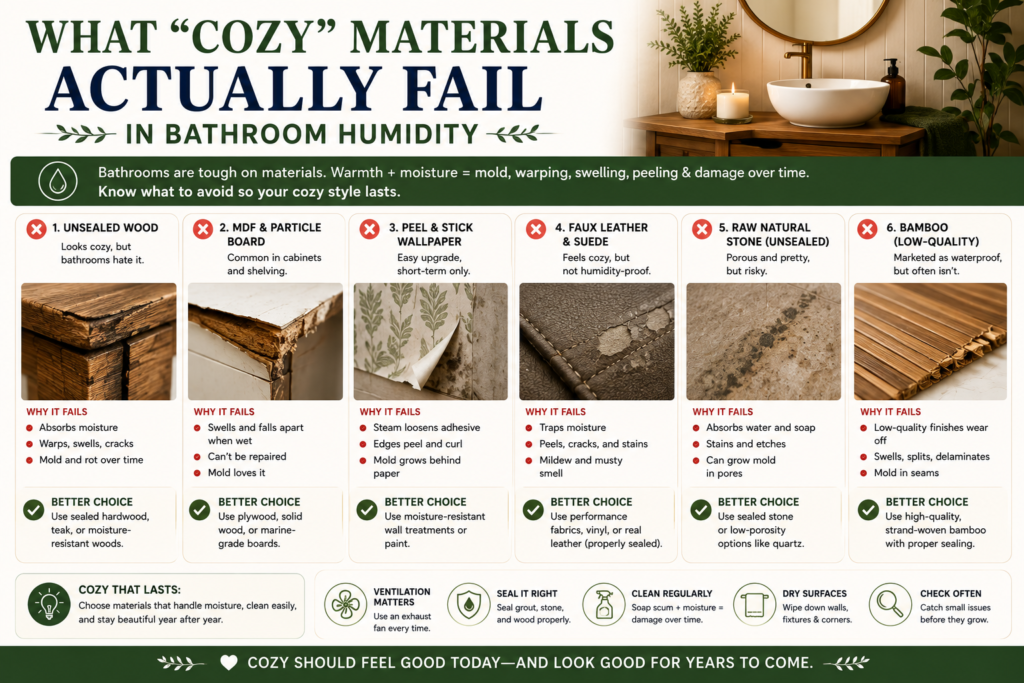
What “Cozy” Materials Actually Fail in Bathroom Humidity

What "Cozy" Materials Actually Fail in Bathroom Humidity

None of the competing “cozy bathroom” articles we checked mention this, and it’s a real gap. Half of what shows up on a cozy-bathroom mood board doesn’t survive an actual bathroom.

Unsealed wood accents are the biggest offender. Open shelving, a wood stool, a live-edge shelf, they all photograph warm and then swell, crack, or grow mold in a working bathroom. The EPA’s guidance on indoor moisture is specific about the window: dry a wet or damp material within 24-48 hours and, in most cases, mold won’t grow. Past that window, it usually does. A bathroom with a shower running daily rarely gets that dry-out unless it’s sealed or well-ventilated, which is also why the EPA recommends running the bathroom fan or cracking a window during showers, and keeping indoor humidity under 60% where possible. If you want the wood look, use marine-grade sealed teak (shower stools and bath mats made from it are built for this exact environment) or fully seal any porous wood with polyurethane, reapplied yearly.

Matte, non-mold-resistant paint is the second offender. It photographs better than eggshell or satin, but standard matte finishes trap moisture in the surface texture, and that’s exactly where mold takes hold first. Mold-resistant paint in a satin or eggshell finish costs a little more upfront and saves a repaint two years later. Our guide to small bathroom paint colors covers which finishes and LRV ranges actually hold up in a working bathroom, including the specific mold-resistant line we recommend.

Not every plant survives, either. Ferns and pothos genuinely like bathroom humidity. Succulents and cacti don’t. They’re built for dry air, and a humid bathroom will rot them from the roots up within weeks.

Fabric shower curtains without a liner mildew fast, usually within a month of daily use. Keep the plastic liner behind the fabric one and wash both monthly if you want the fabric look without the maintenance headache.

Unsealed grout and particleboard vanities round out the list, and they’re both easy to miss because the damage happens where you’re not looking. Grout that hasn’t been resealed in a couple of years absorbs water instead of shedding it, which is how tile floors that look fine start smelling musty. A quick yearly grout sealer application ($15-$25 for enough to cover an average bathroom) heads that off. Particleboard vanity cabinets, the kind under most builder-grade sinks, swell at the base the first time a sink overflows or a plumbing line sweats, so if a vanity swap is anywhere in your plans, solid wood or moisture-resistant MDF is worth the upcharge.

Frequently Asked Questions

How do you make a bathroom feel cozy?

Layer warm-toned lighting (2700K-3000K bulbs or a dimmer), soft textiles like plush towels and a bath mat, a decluttered counter, and a low-maintenance plant or diffused scent. All four together create the effect. Any one alone falls a little flat, which is the most common mistake: buying one nice candle and expecting it to carry the whole room.

How can I make a small bathroom feel cozy?

Small bathrooms fail on clutter and light more than layout, so fix those two first before spending on anything else:

  • Use one focal light source at eye level, not just an overhead fixture
  • Choose a mirror that reflects light back into the room
  • Keep the color palette to two tones, max
  • Use vertical storage instead of floor-standing pieces
  • Add one plant, not three

How much does it cost to make a bathroom cozy?

Between $0 and $8,000-plus, depending on how far you go. The textile-and-lighting basics run under $50 and take about an afternoon. Fixture swaps land in the $50-$500 range and usually take a weekend. Structural changes like heated flooring or a new tub start around $800, involve a contractor, and can run past $5,000. See the budget breakdown above for the full split.

Can a rental bathroom be cozy without breaking the lease?

Yes. Stick to changes that come off as cleanly as they went on:

  • Use tension rods and command hooks instead of drilling
  • Add peel-and-stick wallpaper only on a small accent area
  • Stick to plug-in or battery-powered lighting, not hardwired fixtures
  • Photograph the original condition before adding anything adhesive

What plants survive bathroom humidity?

Pothos, snake plant, Boston fern, and ZZ plant all tolerate or actively prefer bathroom humidity, as long as there’s some indirect light. Succulents and cacti are the wrong choice here. They need dry air and will rot in this environment.

The Bottom Line

Cozy doesn’t have to mean expensive, but it also doesn’t mean a candle and calling it done. Start with the free-to-$50 tier if you’re renting or just testing whether you like the look. Move to the $50-$500 tier for a weekend refresh. And if you’re already planning to touch plumbing or flooring, run your numbers through our remodel calculator first, so you know whether that $800 heated floor is really $800 once labor and your specific layout get factored in.

Skip the materials that photograph well and fail fast: unsealed wood, matte non-mold-resistant paint, fabric curtains without a liner. Everything else on this list is a matter of picking the tier that matches what you’re actually willing to spend this month, not the tier a blogger with an unlimited renovation budget assumed you had.

Shower Niche Height and Placement: Why the “Standard” Number Keeps Changing

Shower Niche Height and Placement: Why the "Standard" Number Keeps Changing

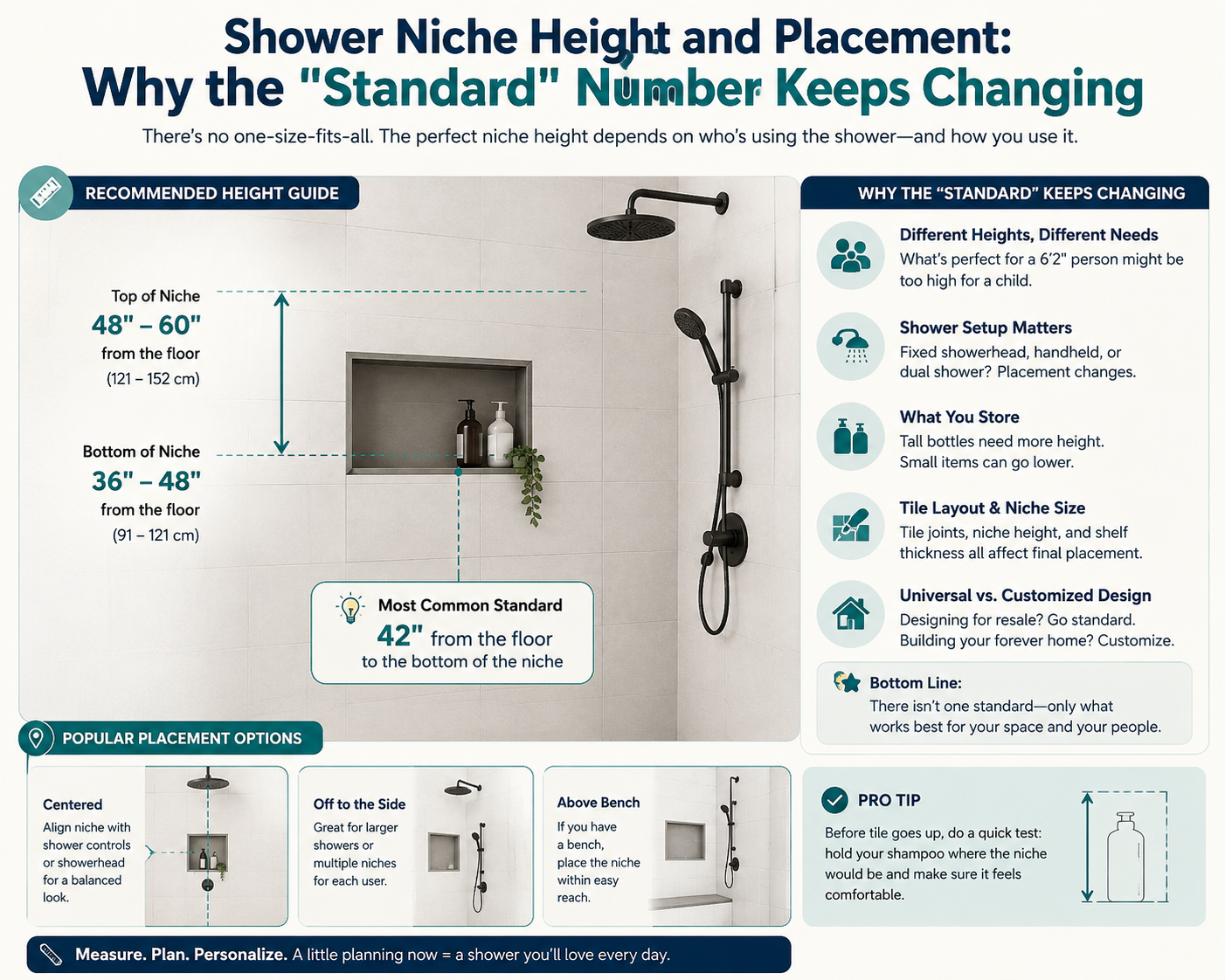
Look up “shower niche height” and you’ll get answers ranging from 36 inches to 60 inches, all labeled “standard.” None of them are wrong. They’re answering a slightly different question than the one you’re asking.

A niche height that works comes down to three things: who’s using the shower, how they bathe, and which wall can structurally take a cutout in the first place.

Below is the height range for your actual situation, a three-question test for the placement half of the equation, and what a shower niche costs once it’s time to budget.

Why “standard” shower niche height ranges from 36″ to 60″

Every “standard” height you’ve seen is correct for a specific bathroom. None of them are wrong on their own, but stacked together they read like nobody agrees.

ScenarioHeight from floorWhy
Standing shower, adults, eye-level use48″–60″Chest-to-eye height for most adults; keeps items out of direct spray
Mixed-height or family shower36″–48″Splits the difference across shorter and taller users
Tub-shower combo, seated bathing22″–30″ from the tub deckReachable without leaning while seated
Bench-seated or accessibility-focused15″–48″ (NKBA and ADA reach range)Matches the range used in accessible design
Kids’ niche24″–30″Independent reach, no step stool needed

The 36″–40″ figure you’ll see on some contractor sites comes from tub-shower installs, where the niche sits close to the tub deck rather than the floor. The 48″–60″ range comes from standing-shower-only projects, a taller, different measurement entirely.

NKBA’s bath planning guidelines recommend keeping frequently used storage between 15 and 48 inches off the floor, the same reach range the ADA’s accessible design standard uses. That overlap is why 15″–48″ shows up as the go-to number for bench-seated and multi-generational bathrooms specifically, not showers in general.

The 3-question wall test: where a niche can (and can’t) go

Before you pick a wall because it “looks right,” run it through three questions. Get any one wrong, and you’re either paying for extra framing or gambling on a leak.

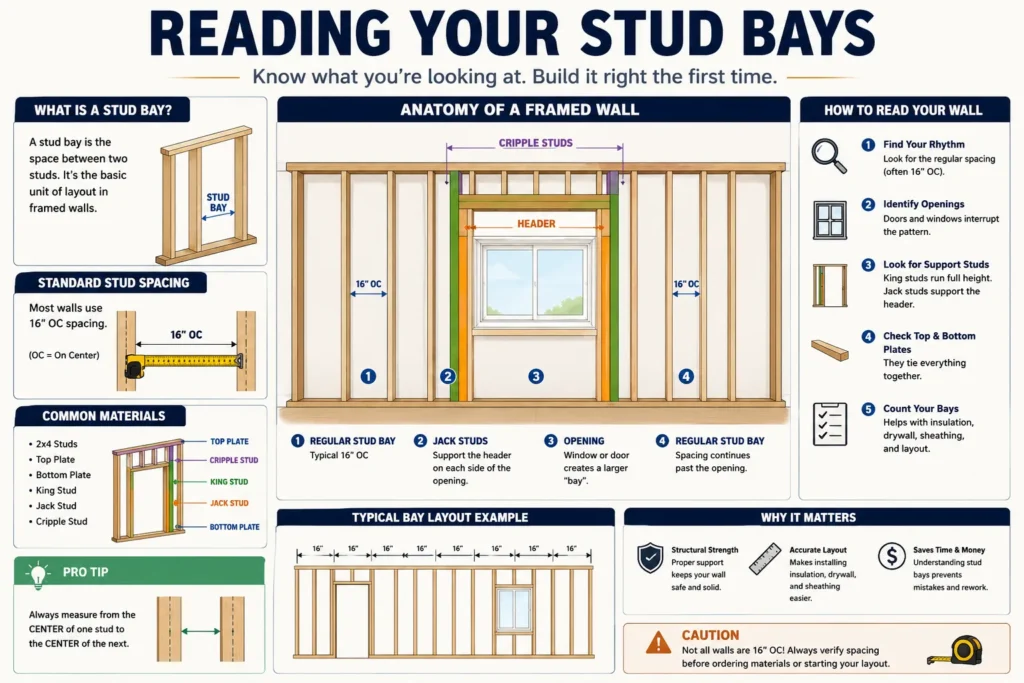
Reading your stud bays

Reading your stud bays

Walls are framed with studs spaced 16 inches apart, center to center, leaving an open bay a little under 14.5 inches wide. A standard niche fits inside one bay with no structural work, which is why most prefab niches run 12 to 14 inches wide.

Want it wider than that? You’re cutting a stud and adding a header above the opening to carry the load — a job for a framer, not a weekend project. Fin Home Contracting’s 2026 walk-in shower cost guide puts the standard bay at roughly 14.5 inches; go wider and budget for the extra labor.

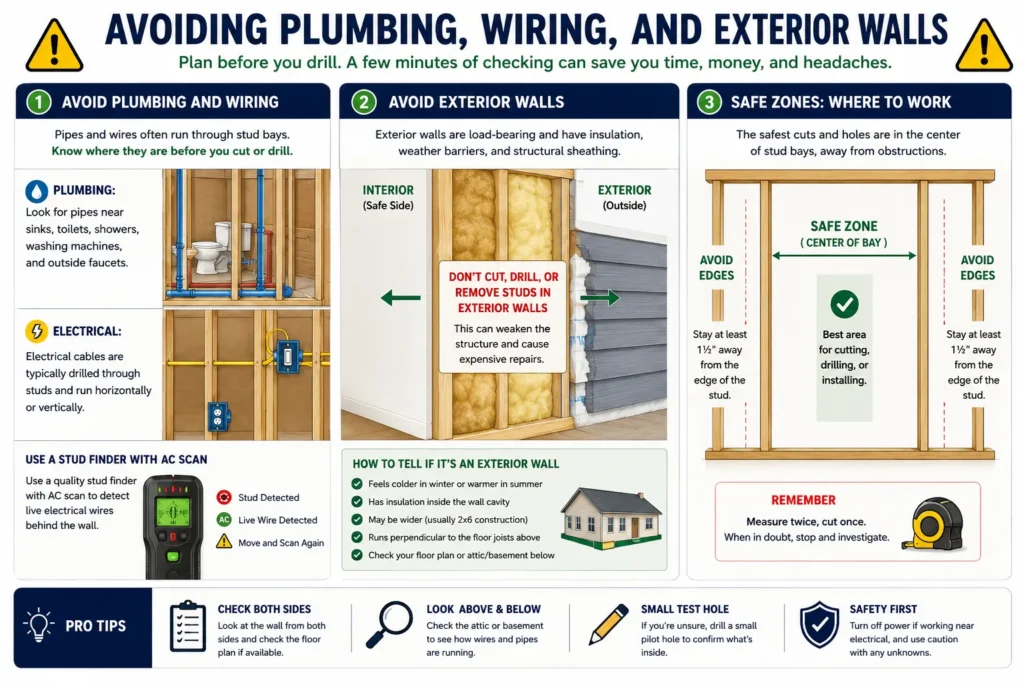
Avoiding plumbing, wiring, and exterior walls

Avoiding plumbing, wiring, and exterior walls

Some stud bays are already spoken for. Water supply lines, drain stacks, and electrical runs can sit inside a wall, and cutting into one means rerouting it, which is a plumber’s bill, not a tile bill.

Exterior walls add a second problem: insulation. A niche eats into the wall’s insulation depth, and less insulation behind a wet, temperature-swinging surface sets up condensation and mold.

Exterior walls are still possible with the right contractor, one who’ll rebuild the insulation and vapor barrier around the cutout properly, something most interior-wall niches never have to deal with.

Waterproofing matters wherever the niche goes. A bonded membrane meeting the ANSI A118.10 standard, installed per the TCNA Handbook’s shower methods, is the difference between a niche that lasts and one that shows up as a stain on the ceiling below.

Splash zone vs. opposite wall: placement that stays dry

Horizontal placement matters as much as height. The wall directly under the showerhead gets soaked every time you shower, which means a permanently wet bottom shelf, soap dissolving into mush, and a higher chance of water working its way behind the tile. None of that is a great outcome for a wall you paid to waterproof.

The wall opposite the showerhead solves most of that problem. It’s the wall you’re facing, or standing with your back to, when the water’s running, so it takes a fraction of the direct spray.

That’s the practical reason it’s the most common niche placement. If your shower has a control wall, the one with the valve and handle, it’s often a solid second choice: less direct water, and usually within easy reach without turning around.

Sizing it right: depth, width, and shelf height

Standard dimensions

Depth follows your wall. A standard 2×4 wall gives you about 3.5 inches of depth, enough for bottles and a razor; frame with 2×6 or build out the wall, and you can go to 5.5 inches for bulkier products.

Width follows the stud bay math above: 12 to 14.5 inches for a single-bay niche, 28 to 30 inches if you’re spanning two studs with a header.

Shelf height for what you store

This is the one number almost nobody talks about: the space between shelves inside the niche, not the niche’s height off the floor. Standard shampoo and conditioner bottles need 8.5 to 10 inches of clearance; pump bottles and bulk sizes need 12 to 13 inches.

Measure your tallest bottle before finalizing the shelf spacing. A niche that’s the right height on the wall but too short between shelves is still an annoyance you’ll deal with every day.

Personalizing placement to your household

Dominant hand and bathing style

Two people can use the same shower and reach for a niche completely differently. If you’re left-handed, a niche to the left of the showerhead, or center-left on the back wall, is a more natural reach than one built with a right-handed household in mind.

Bathing style matters too. Someone who showers standing wants eye-level placement; someone who bathes seated, on a bench or in the tub, wants the niche 12 to 18 inches above where they’re sitting, well below the standing-shower number.

Planning for how your needs will change

A niche installed today doesn’t move without a sledgehammer. If you’re renovating a bathroom you plan to stay in for a decade or more, it’s worth going a few inches lower than feels ideal right now, since mobility changes gradually and a niche built for a 40-year-old’s reach isn’t automatically right for the same person at 65.

This isn’t a hypothetical. It’s one of the more common regrets contractors hear from repeat clients: a beautifully placed niche that stopped being convenient once bathing needs changed.

What a shower niche costs and where it fits your remodel budget

A single niche adds $200 to $600 to a standard shower remodel, according to Fin Home Contracting’s 2026 cost data — that figure covers framing, the waterproofing membrane, and tile labor for a standard 12-by-24-inch niche. Larger or multiple niches push that toward $1,200, per USA Cabinet Store’s 2026 shower remodeling breakdown.

Going the prefab route, a foam niche form or a finished stainless insert instead of a fully tiled build, brings the low end down to $50 to $150 for the unit itself, before installation. It’s a small line item next to the rest of the remodel, but it’s easy to forget when you’re budgeting the big-ticket items like the shower unit and tile.

Waterproofing is where niche costs quietly climb if you’re not careful. The membrane and labor alone run $450 to $750 for a standard shower, and skipping a properly sealed membrane on the niche doesn’t save that cost — it shows up later as a repair bill instead.

None of this happens in isolation from the rest of your remodel budget. If you’re still nailing down the bigger numbers, tile, the shower unit, labor, run the numbers on your full bathroom remodel before your contractor starts framing the niche.

What is the standard height for a shower niche?

There isn’t one single number; it depends on how the shower gets used. Standing showers typically run 48 to 60 inches from the floor. Tub-shower combos with seated bathing run 22 to 30 inches from the tub deck, and bench-seated or accessibility-focused bathrooms fall within the 15-to-48-inch reach range used in NKBA and ADA guidelines.

Can a shower niche go on an exterior wall?

Yes, but it’s the riskier option. Cutting a niche into an exterior wall reduces the insulation behind it, raising the chance of condensation and mold inside the wall cavity. It’s doable with a contractor who properly rebuilds the insulation and vapor barrier around the cutout, but it’s not the default choice when an interior wall is available.

How far should a niche be from the tub?

For a tub-shower combo where someone bathes seated, aim for 22 to 30 inches above the tub deck, roughly 5 to 12 inches above the rim of the tub itself. That range keeps the niche reachable without leaning forward or standing up mid-bath.

Can you add a niche to an already-tiled shower?

Yes, but it’s a bigger job than it sounds. You’re cutting into existing tile and waterproofing, framing the opening, re-waterproofing, and re-tiling around it, closer to a mini-remodel than a simple upgrade. If you’re not already planning a shower renovation, a surface-mounted corner shelf gets most of the storage without opening the wall.

There’s no universal shower niche height. There’s a height that fits your shower, your household, and how you bathe.

Start with the scenario table, run your wall through the three-question test, and confirm the stud bay and plumbing before anyone picks up a saw. Budget-wise, a niche is a small line item, $200 to $1,200 depending on size and finish, next to the rest of a bathroom remodel.

If you’re still working out the bigger numbers, the Bathroom Remodel Cost Calculator breaks down cost by size and finish level so the niche isn’t a surprise line item once your contractor’s quote comes in. Got a specific wall or bathroom layout you’re trying to figure out? That’s usually where the real decision gets made.

Small Bathroom Color Ideas: What Actually Works in 2026

Small Bathroom Color Ideas

Most small-bathroom color advice stops at “go light, it’ll look bigger.” That’s true about half the time, and it’s the least useful half. The colors that actually change how a cramped bathroom feels aren’t about light versus dark. They’re about contrast, light reflectance value (LRV), and whether the room has a window at all. A windowless powder room painted white often looks worse than the same room in a confident navy, because there’s no daylight to make the white look bright in the first place. Below is a working list of named colors from Sherwin-Williams, Benjamin Moore, Dunn-Edwards, and Farrow & Ball, sorted by the situation you’re actually painting for, plus the finish, ceiling, and budget questions that most guides skip.

Fast-Scan Summary

If your bathroom is…TryLRVFinish
Small with a windowSherwin-Williams Alabaster (SW 7008)82Satin
Small and windowless, used dailyBenjamin Moore White Dove (OC-17)85Satin or semi-gloss
A windowless powder roomBenjamin Moore Hale Navy (HC-154)6Satin, matte if well-ventilated
Looking for a soft color, not whiteSherwin-Williams Sea Salt (SW 6204)63 Satin

Why Some Colors Make a Small Bathroom Feel Bigger (and Some Don’t)

Light bounces off high-LRV colors and gets absorbed by low-LRV ones. That’s really the whole mechanism. A wall painted at LRV 80+ reflects most of the light hitting it, which softens shadows and blurs the corners where walls meet, so the room reads as more open. A wall at LRV 10 does the opposite: it eats the light and the corners stay sharp and visible. Neither effect is “better.” It depends on whether you want the room to disappear or to feel intentional.

Light, Low-Saturation Colors and How They Reflect Light

Warm whites and pale neutrals in the LRV 70-85 range are the safest pick when a bathroom gets real daylight, because that daylight is doing half the work already. The color just needs to get out of the way. This is also where low contrast matters more than color choice: painting the walls, trim, and ceiling within a few LRV points of each other removes the visual “stop signs” that make a small room look boxy. A bright white wall next to bright white trim reads as one continuous surface. A bright white wall next to stark white trim with visible shadow lines reads as a small room with a lot of edges.

The Dark-Color Myth: When Deep, Saturated Colors Actually Work

The “dark paint shrinks a room” rule assumes the room has competing light sources for the dark color to lose contrast against. Take away the window and that assumption falls apart. In a windowless powder room, a saturated navy or charcoal absorbs the artificial light evenly instead of bouncing it unevenly off four close walls, which is what makes small bright rooms look washed out and flat under a single overhead fixture. Design blogs call this “color drenching”: the same color on walls, trim, and ceiling, so there’s no line for the eye to catch on. It’s counterintuitive and it’s also the single most common professional pick for tiny powder rooms right now.

Best Small Bathroom Colors With Natural Light

Best Small Bathroom Colors With Natural Light

Warm Whites and Light Neutrals

ColorBrandCodeNotes
AlabasterSherwin-WilliamsSW 70082016 Color of the Year, still the most-cited small-bathroom white among designers
Swiss CoffeeBenjamin MooreOC-45A New Jersey stylist’s go-to for small baths; also sold under the same name by Behr (code 12)
Cotton FieldDunn-EdwardsDE 6253Warm light gray, one designer’s default greige for small spaces
Cloud WhiteBenjamin MooreOC-130Softer and warmer than Alabaster, less likely to read stark under LED bulbs

Codes and formulas get updated by manufacturers periodically.

Soft Pastels: Blue, Green, and Gray-Blue

If straight white feels sterile, the next safest step down isn’t a bold color, it’s a desaturated one. Sherwin-Williams Sea Salt (SW 6204) is the most-cited light green for small bathrooms in current design coverage, showing up as the pick from two separate designers in the same year. Benjamin Moore Healing Aloe (1562) is a lighter, slightly warmer alternative. For blue-gray instead of green-gray, Benjamin Moore Boothbay Gray (HC-165) reads as pale blue in daylight and pulls gray under artificial light, which is worth knowing before you commit, since your bathroom probably runs on both at different times of day.

Best Colors for a Small Windowless Bathroom or Powder Room

Can you paint a small windowless bathroom a dark color? Yes, and it frequently looks better than white does in that specific room, because white needs daylight to look “bright” and a windowless room can’t supply that. A deep, confident color reads as a choice. A pale color with no daylight to activate it can read as dim instead of airy.

Why Powder Rooms Can Go Bold

A powder room is used for minutes at a time, not hours. That changes the math on bold color completely: you’re not living in the space long enough for a dark wall to feel heavy, and the drama that would be exhausting in a primary bathroom reads as hospitality-grade design in a half bath guests see for ninety seconds. This is the one room in most houses where a professional would actively encourage you to ignore “resale-safe” advice, within reason (more on that below).

Best Dark and Jewel-Tone Picks

ColorBrandCodeLRV
Hale NavyBenjamin MooreHC-1546
NavalSherwin-WilliamsSW 62444
Iron OreSherwin-WilliamsSW 70696
CaponataBenjamin MooreAF-650N/A
Hague BlueFarrow & BallNo. 30N/A

Best Whites for Windowless Baths That Need to Feel Bright, Not Stark

For a full bathroom without a window, one you actually get ready in every morning, you usually want the opposite move: the highest-LRV white you can find, so the bulbs are doing maximum work.

ColorBrandCodeLRV
White DoveBenjamin MooreOC-1785
AlabasterSherwin-WilliamsSW 700882
Shoji WhiteSherwin-WilliamsSW 704274

One thing that trips people up here: in a windowless room, your light bulb is doing the job daylight normally does. A soft-white bulb (2700K) will pull warm whites toward yellow. A daylight bulb (5000K) keeps them true but can make the same white look slightly blue and clinical. Check your paint sample under the exact bulb that’ll be in the fixture, not under a showroom light or your phone flashlight.

What Paint Finish to Use in a Small Bathroom

This is the gap in most bathroom color guides: they’ll name twelve colors and never mention that the wrong sheen will fail in a bathroom regardless of which color you picked.

FinishMoisture resistanceBest forWatch out for
Flat / matteLow, unless it’s a bath-specific formulaCeilings, very low-use powder rooms with a fanRegular matte will show water spotting and is hard to wipe clean
EggshellModeratePowder rooms with minimal splash exposureStill not built for a shower wall or sink backsplash
SatinGoodGeneral bathroom walls, the default pick for most jobsShows roller marks more than matte if application is uneven
Semi-glossBestTrim, doors, and any wall inside splash range of a sink or tubHighlights wall imperfections; patch and sand first

If you’re set on a true matte look in a bathroom that actually gets steam, buy a formula built for it rather than fighting a standard flat paint. Benjamin Moore’s Aura Bath & Spa line is a matte specifically engineered for mildew resistance in humid rooms, which is different from asking a regular flat wall paint to do a job it wasn’t built for.

The Ceiling, Trim, and “Fifth Wall”

Should a small bathroom ceiling match the walls? More often than not, yes. A stark white ceiling against a colored wall draws a hard horizontal line right where the room is shortest, which visually caps the height. Painting the ceiling the same color as the walls, or a version a couple of shades lighter in the same family, removes that line and lets the eye travel up without hitting a stop. This is the same color-drenching logic from the windowless-bathroom section, just applied to a bathroom that does have a window. It works in both cases for the same reason: fewer visual breaks read as more space, not less.

How to Test a Small-Bathroom Paint Color Before You Commit

Skipping this step is the single most common reason a color that looked perfect on the chip looks wrong on the wall.

  1. Buy a real sample, not just a chip. A 2-inch paper swatch under store lighting tells you almost nothing about how a color behaves in a 5×8 room with one bulb.
  2. Paint two coats on white foam board, not directly on the wall. A movable board lets you check the color in every corner and against every fixture instead of committing to one patch.
  3. Let it cure for 24 to 48 hours before judging it. Wet paint and freshly dried paint both read differently than fully cured paint, especially with darker colors.
  4. Check it at the times you’ll actually use the room. Morning grooming light and evening bath light can make the same wall look like two different colors, particularly under mixed bulb temperatures.
  5. Hold the board against your actual tile, grout, and vanity top. Undertones that look neutral on their own can clash hard once they’re next to fixtures you can’t easily change.

How Much Paint (and Budget) a Small Bathroom Needs

A typical 5×8 small full bathroom has roughly 170 to 190 square feet of paintable wall once you subtract the door and the mirror or vanity backsplash area. Quality interior paint from Sherwin-Williams or Benjamin Moore covers 350 to 400 square feet per gallon, per coat {{VERIFY: coverage rate varies by product line and wall texture}}. That means one gallon is usually enough for two coats on the walls, with enough left over for touch-ups or a same-color ceiling.

On price, expect roughly $40 to $90 per gallon for a quality interior paint from either brand as of 2026, with specialty bath-and-spa formulas landing toward the top of that range {{VERIFY: current price at your local store, pricing varies by region and ongoing sales}}. For a full 5×8 bathroom, that puts paint alone somewhere around $45 to $100, before primer, tape, or a sprayer rental.

If you’re weighing a full remodel against just repainting, our bathroom remodel cost calculator breaks out where paint sits against tile, vanity, and labor costs, so you can see the whole budget in one place instead of guessing.

Original Analysis: Ranking Every Color in This Guide by Actual LRV

Marketing copy calls a color “light” or “dramatic,” but those words mean different things across brands. To make an honest comparison, we pulled the published Light Reflectance Value for every color named above straight from each manufacturer’s technical data sheet and ranked them on one scale.

Rank (lightest to darkest)ColorBrandLRV
1White Dove (OC-17)Benjamin Moore85
2Alabaster (SW 7008)Sherwin-Williams82
3Shoji White (SW 7042)Sherwin-Williams74
4Bella BlueBenjamin Moore17.5
5Blue SpruceBenjamin Moore16.81
6Stormy SkyBenjamin Moore13.75
7Hale Navy (HC-154) / Iron Ore (SW 7069)Benjamin Moore / Sherwin-Williams6
8Naval (SW 6244)Sherwin-Williams4

The gap between rank 3 and rank 4 is the real story here: there’s no “medium” option on this list. Every color that shows up repeatedly in small-bathroom recommendations sits either above LRV 70 or below LRV 20. Nobody is putting a mid-tone gray-beige at LRV 45 on a “best small bathroom colors” list, and once you see the ranked numbers, it’s obvious why: a mid-LRV color gets the worst of both effects, not enough reflectance to open the room and not enough saturation to read as a deliberate choice. {{VERIFY: LRV figures against current manufacturer data sheets before publishing, as formulas are periodically updated}}.

Where This Doesn’t Apply

  • You’re selling within the next 12 to 18 months and your local buyer pool skews conservative. A jewel-tone or near-black powder room can photograph beautifully and still cost you showings. Repainting one small room neutral before listing is cheap insurance most competitors won’t tell you to consider.
  • Your bathroom has poor or no exhaust fan. Skip flat and matte finishes entirely, and think twice about a dark, low-sheen ceiling. Trapped humidity shows water spotting on dark flat paint faster than it does on a lighter satin.
  • You’re renting. A dramatic powder room repaint is a common source of security-deposit disputes in small spaces. Check the lease before you buy the navy.

FAQ

What colors make a small bathroom look bigger?

Light, high-LRV colors (roughly 70 and up) like warm whites and pale neutrals reflect more light and blur the line where walls meet the ceiling, which reads as more space. The bigger factor is actually contrast: keeping walls, trim, and ceiling within a few shades of each other removes the visual breaks that make a small room look boxy.

Can you paint a small bathroom a dark color?

Yes, and in a windowless powder room it often looks better than white does, since there’s no daylight to make white look bright in the first place. A deep, saturated color absorbs artificial light evenly instead of bouncing it unevenly around four close walls, which reads as intentional rather than dim.

What is the best paint color for a small bathroom with no windows?

It depends on how the room is used. For a full bathroom used daily, a high-LRV white like Benjamin Moore White Dove or Sherwin-Williams Alabaster keeps it feeling clean under artificial light. For an occasional-use powder room, a deep tone like Benjamin Moore Hale Navy or Sherwin-Williams Iron Ore turns the missing window into a design choice instead of a limitation.

What paint finish should I use in a bathroom?

Satin or semi-gloss for anything near water. Satin works for general walls, and semi-gloss is worth using on trim and any surface within splash range of a sink or tub. Flat and matte finishes struggle with humidity unless they’re a specialty bath-and-spa formula built for it.

Should a small bathroom ceiling be the same color as the walls?

Usually, yes. Matching the ceiling to the walls, or using a slightly lighter version of the same color, removes the hard line where they meet, which makes a cramped room feel taller instead of boxed in. A stark white ceiling against colored walls does the opposite: it draws attention to exactly how low the ceiling is.

The Bottom Line

If your bathroom gets daylight, start with a high-LRV white like Alabaster and keep the ceiling and trim close to the same shade. If it doesn’t and it’s used daily, go with an even higher-LRV white like White Dove and get the bulb temperature right before you blame the paint. If it’s a powder room nobody spends more than two minutes in, skip the safe choice: Hale Navy or Iron Ore will do more for the room than another coat of white ever could. Test on foam board first, use satin or semi-gloss, and budget one gallon for the walls of a typical small bath.

About the author: Hussnain Mustafa covers home-improvement cost and planning content, including the calculator tools on toolcalcpro.com. LinkedIn

Roofing Basics: Parts, Types, Materials & Costs

Roofing Basics

“Roofing basics” covers the parts, styles, and materials that make up a residential roof, along with how to judge its condition, estimate cost, and know when to call a professional. The frame is rafters or trusses topped with decking. Underlayment and a finish material (shingles, metal, tile) form the weather barrier. Pitch, flashing, and ventilation decide how long the whole system lasts.

That’s the one-paragraph version. Below is the long one: anatomy, styles, materials, cost, and the checklist you’d want before signing a contract with anyone.

Roof Anatomy: The Parts of a Roof, Visualized

Most roofing quotes and inspection reports assume you already know this vocabulary. Here’s the diagram most contractor sites skip, followed by what each part actually does.

Roof Anatomy: The Parts of a Roof Cross-section (left) and hip-roof plan view (right) Attic space Ridge Dormer Flashing (at chimney) Drip edge Fascia Gutter Soffit Eave Shingles Underlayment Decking Rafters Wall (exterior) Roof plan view (hip roof, from above) Ridge Hip Valley Shingles / roof covering Underlayment Decking (sheathing) Rafters / trusses Flashing Gutter / downspout Valley (dashed = roof plan lines) toolcalcpro.com — for reference only; consult local code for structural specifics.

Rafters and Trusses

These are the skeleton. Rafters are individual angled beams cut and installed on site; trusses are pre-built triangular frames trucked in as a unit. Trusses went mainstream in the 1960s because they’re faster to install and use less lumber. Most production homes built after that use them.

Decking (Sheathing)

Plywood or OSB panels nailed across the rafters or trusses. This is the surface everything else attaches to. Soft, spongy decking under your feet during an inspection is a bigger red flag than worn shingles. It usually means water’s been getting in for a while.

Underlayment

A water-resistant layer stapled or nailed directly to the decking, under the shingles. Think of it as the backup plan for when wind-driven rain gets past the shingles themselves, which happens more than you’d think.

Flashing

Thin metal (usually aluminum, steel, or copper) installed anywhere the roof plane is interrupted: chimneys, skylights, vent pipes, walls. Flashing failures cause a disproportionate share of “mystery leaks,” because the surrounding shingles look fine while the seal underneath has failed.

Drip Edge

A metal strip along the eaves and rakes that directs water away from the fascia and into the gutters instead of behind them. Skipping it is one of the most common corner-cuts on cheap re-roofs, and it’s the reason some fascia boards rot within a few years.

Ridge

The horizontal peak where two roof planes meet at the top. On most homes this is also where ridge ventilation gets installed.

Valley

The internal angle where two roof planes meet and funnel water downward. It’s the opposite of a ridge, and it sees more water volume than any other section of roof, which is why valley flashing and shingle overlap matter more here than anywhere else.

Hip

An external angle where two roof planes meet, sloping away from each other (common on hip and dutch-hip roofs). Structurally, hips shed wind better than a gable end, which is one reason hip roofs show up more often in hurricane-prone regions.

Eaves

The lower edge of the roof that overhangs the exterior wall. Eave length affects both drainage and how much shade your walls and windows get in summer.

Soffit and Fascia

Soffit is the underside of the eave (often vented); fascia is the vertical board that caps the rafter ends and holds the gutters. Rot here is usually a symptom of a drip edge or ventilation problem upstream, not a standalone fascia issue.

Dormers

A vertical, roofed structure that projects from a sloped roof, usually housing a window. Every dormer adds roof-to-wall intersections. More of those means more flashing seams, and more places for a leak to start.

Common Roof Types and Styles

Roof style affects drainage, attic space, and wind performance. It also affects cost, since style changes total surface area and complexity. Here’s how the main styles compare.

StyleShapeDrainageBest For
GableTwo sloped sides meeting at a ridge, triangular endsGood, but end walls are exposed to windMost climates; simplest and cheapest to build
HipFour sloped sides meeting at a ridge or pointExcellentHigh-wind and hurricane-prone regions
Dutch HipHip with a small gable at the peakExcellentAdds attic ventilation to a hip roof’s wind resistance
GambrelTwo slopes per side, steeper below, shallower above (barn-style)GoodMaximizing usable attic/loft space
MansardFour sloped sides, nearly vertical lower slope, flat or low-slope topGood, but complex flashingAdding a full upper floor without raising the roofline
Skillion (Shed)Single flat plane at an angleDepends entirely on pitchAdditions, modern builds, garages
FlatNearly level, with slight slope for drainageRequires membrane systems, not shinglesCommercial buildings, modern residential, additions

Roofing Materials Compared (With Lifespan)

Material choice drives most of what a roof costs, both up front and over its lifetime.

$–$

MaterialAvg. LifespanRelative CostBest For
3-Tab Asphalt Shingles15–20 years$Budget re-roofs, rental properties
Architectural Asphalt Shingles25–30 years$$Most single-family homes (current default choice)
Metal (standing seam/panel)40–70 years$$$$Long-term owners, wildfire-prone areas, steep pitches
Wood Shake20–30 years$$$Historic or rustic-style homes (check local fire codes first)
Slate75–100+ yearsHistoric homes, buyers who plan to never do this again
Clay or Concrete Tile50–100 years$$$$Hot, dry climates (Southwest, coastal Southeast)
Composite/Synthetic30–50 years$$$Homeowners who want a slate or shake look at a lower weight and cost
TPO / PVC / EPDM (flat membrane)20–30 yearsFlat and low-slope roofs only

Asphalt still covers the large majority of U.S. residential roofs, mostly because it’s the only category that’s cheap, fast to install, and available from nearly every contractor. Metal has been the fastest-growing category over the past decade, largely on longevity and insurance incentives in wildfire and hail zones.

Understanding Roof Pitch & Slope

Pitch is written as a ratio, like 6/12, 8/12, or 10/12. It means the roof rises that many inches for every 12 inches of horizontal run. A 6/12 roof climbs 6 inches for every foot you move toward the ridge. Low-slope roofs run roughly 2/12 to 4/12; steep-slope starts around 7/12 and up.

Pitch isn’t cosmetic. It determines which materials you’re allowed to use (most shingle manufacturers won’t warranty a roof under 2/12–4/12, because water doesn’t shed fast enough), how much a roofer will charge for the same square footage of ground-plan area (steeper roofs take longer and need more safety gear), and how much actual material you need. A steep roof has more surface area than its footprint suggests.

Roof Ventilation and Fire Ratings

Why Ventilation Matters

An attic without enough airflow traps summer heat against the underside of the decking, which shortens shingle life from the inside. In cold climates, the same lack of airflow lets warm indoor air melt roof snow unevenly, creating ice dams that back water up under the shingles. Most manufacturer warranties actually require a minimum level of ventilation to stay valid. A lot of homeowners find that out only after a claim gets denied.

Common vent types: ridge vents (run the length of the peak), soffit vents (intake, low on the eave), gable vents, powered attic fans, and off-ridge/box vents. The best-performing setup pairs continuous ridge venting with continuous soffit intake, so air actually flows from low to high instead of just sitting in the attic.

Fire Ratings

Roofing materials carry a Class A, B, or C fire rating based on standardized testing (ASTM E108 / UL 790). Class A offers the highest resistance to fire exposure and is required or strongly recommended in many wildfire-prone jurisdictions; most metal, tile, and slate roofs qualify, and asphalt shingles typically achieve Class A when installed over compliant underlayment. Check the manufacturer spec, though, not just the material category.

Signs Your Roof Needs Repair or Replacement

Age is the first filter. But a roof’s condition matters more than its birthday.

  • Granules in the gutters: asphalt shingles shed protective granules as they age; heavy buildup signals the shingles are past their functional life
  • Curling or cupping shingle edges: a sign of age, heat damage, or ventilation problems
  • Daylight through the attic roof boards: check on a sunny day with the attic light off
  • Sagging roof deck: often structural, not cosmetic; get this looked at quickly
  • Missing or cracked shingles after a storm: isolated damage is usually repairable; widespread damage usually isn’t
  • Moss or algae streaking: cosmetic at first, but moss holds moisture against the roof surface over time
SignalUsually MeansRepair or Replace?
A few missing shingles, roof under 15 years oldIsolated wind or impact damageRepair
Granule loss across most of the roofShingles at end of lifeReplace
One active leak, roof under 10 years oldFlashing or vent-boot failureRepair
Multiple leaks, visible saggingWidespread deck or structural issueReplace
Roof over 20 years old (asphalt)Approaching or past expected lifespanReplace, even if it “looks fine”

How to Inspect Your Roof (DIY Checklist)

Skip the ladder for this one. Most of what you need to see is visible from the ground with binoculars, or from inside the attic.

Safety note: don’t walk a roof yourself unless you’re experienced with fall protection. Most residential roof injuries happen during casual inspections, not professional work.

  • From the ground: look for missing, curling, or discolored shingles; sagging ridgelines; damaged flashing around chimneys and vents
  • In the attic: check for daylight, water stains on the underside of the decking, and damp or matted insulation
  • Gutters: check for granules (asphalt shingles shedding) and confirm they’re draining away from the foundation
  • After any hailstorm or major wind event: photograph visible damage immediately, even minor-looking dents, for insurance purposes

Roof Maintenance Basics

A roof mostly fails at its weak points, like flashing seams, valleys, and penetrations, rather than across its whole surface at once. Maintenance is about protecting those points before small problems become tear-off-sized ones.

  • Clear gutters and downspouts at least twice a year (spring and fall), more often under heavy tree cover
  • Trim overhanging branches back at least a few feet. They scrape shingles in wind and drop debris that holds moisture
  • Remove moss and debris promptly rather than letting it accumulate through a full season
  • Schedule a professional inspection twice a year and after any major storm, even if nothing looks obviously wrong

What Does a New Roof Cost?

National averages for a full asphalt-shingle roof replacement land somewhere between $8,500 and $12,000 for a typical single-family home, though quotes commonly range from roughly $5,500 on the low end to $14,000 or more depending on size, material, and region. cross-check against 2–3 current national cost aggregators before publishing — this range moves with material and labor pricing and shouldn’t be presented as fixed.Premium materials push well past that: metal, tile, and slate roofs regularly run $20,000–$50,000+ on the same size home.

Cost DriverWhy It Matters
MaterialBiggest swing factor: asphalt vs. metal vs. slate can mean a 5–10x difference
Roof size (in squares)Priced per 100 sq. ft.; a 2,000 sq. ft. home often has 2,200–2,600 sq. ft. of actual roof surface once pitch is factored in
PitchSteeper roofs cost more per square: slower installation, more safety gear needed
Tear-offRemoving existing layers (and disposing of them) adds cost beyond a straightforward overlay
RegionLabor rates and material shipping costs vary significantly by market
Roof complexityValleys, dormers, and chimneys all add labor and flashing material

For a number specific to your home, use the {{LINK: Roof Replacement Cost Estimator}}. It accounts for size, material, and pitch instead of relying on a single national average.

Roof Permits and Insurance: What to Know

Permits. Most jurisdictions require a permit for a full roof replacement, though rules vary by city and county; some exempt like-for-like repairs under a certain size. A licensed roofing contractor typically pulls the permit as part of the job; if a contractor tells you a permit “isn’t needed” for a full tear-off, that’s worth double-checking independently before you sign.

Insurance claims. Storm and hail damage are usually covered under standard homeowners policies, but wear-and-tear and age-related failure typically aren’t. If you suspect storm damage: photograph everything before any repairs happen, get an independent roof inspection (not just the insurer’s adjuster), and get repair estimates in writing before accepting a settlement. Filing too fast, before documenting the damage, is one of the most common reasons claims get underpaid.

Choosing a Roofing Contractor

  • License and insurance: confirm both general liability and workers’ compensation coverage, not just a business license
  • Local track record: recent reviews from your specific area, not just an aggregate star rating
  • Written, itemized estimate: material brand and line, tear-off scope, disposal, and timeline should all be spelled out, not bundled into one number
  • Warranty terms: manufacturer warranties (materials) and workmanship warranties (installation) are separate. Ask for both in writing, and check how long the workmanship warranty actually runs
  • Payment structure: be cautious of any contractor asking for full payment up front, before materials are delivered

Frequently Asked Questions

How do I know how old my roof is? Check your home’s purchase disclosures, permit records with your local building department, or (for asphalt shingles) look for a manufacture date code stamped on the underside of a shingle tab.

How long does a roof usually last? It depends entirely on material: 15–20 years for basic asphalt, 25–30 for architectural shingles, and 40+ years for metal, tile, or slate. Climate and ventilation quality shift these ranges in both directions.

How many layers can a roof have before it needs a full tear-off? Most building codes cap it at two layers of asphalt shingles; beyond that, the extra weight and heat retention become a structural and warranty concern.

What’s the difference between a “low-slope” and “steep-slope” roof? Low-slope generally means under 4/12 pitch and requires membrane roofing (TPO, PVC, EPDM) instead of standard shingles. Steep-slope starts around 7/12 and can use any standard material.

Can you put a new roof over an old one? Sometimes. It’s called an overlay, and it’s cheaper than a tear-off. But it only works over a single existing layer in reasonable condition, and it hides the decking, so any existing rot goes undetected until the next replacement.

How often should a roof be inspected? Twice a year as routine maintenance, plus immediately after any hailstorm, major wind event, or fallen tree limb.

ToolCalcPro Footer Preview