Adding a bathroom costs somewhere between $3,000 and $90,000, and the size of that range comes down to one question: are you converting a space that already exists, or building new? Converting a closet or unused room into a half bath sits at the low end. A primary bathroom built as part of a home addition, with new framing and plumbing run from scratch, sits at the high end. Most homeowners land between $20,000 and $40,000.
That’s a wide answer, so it helps to break the cost down by the type of bathroom you’re adding, where it’s going, and what’s driving the price up or down. If you’d rather skip straight to a number for your own project, our bathroom remodel cost calculator will get you there faster than any range on this page.
Cost by bathroom type
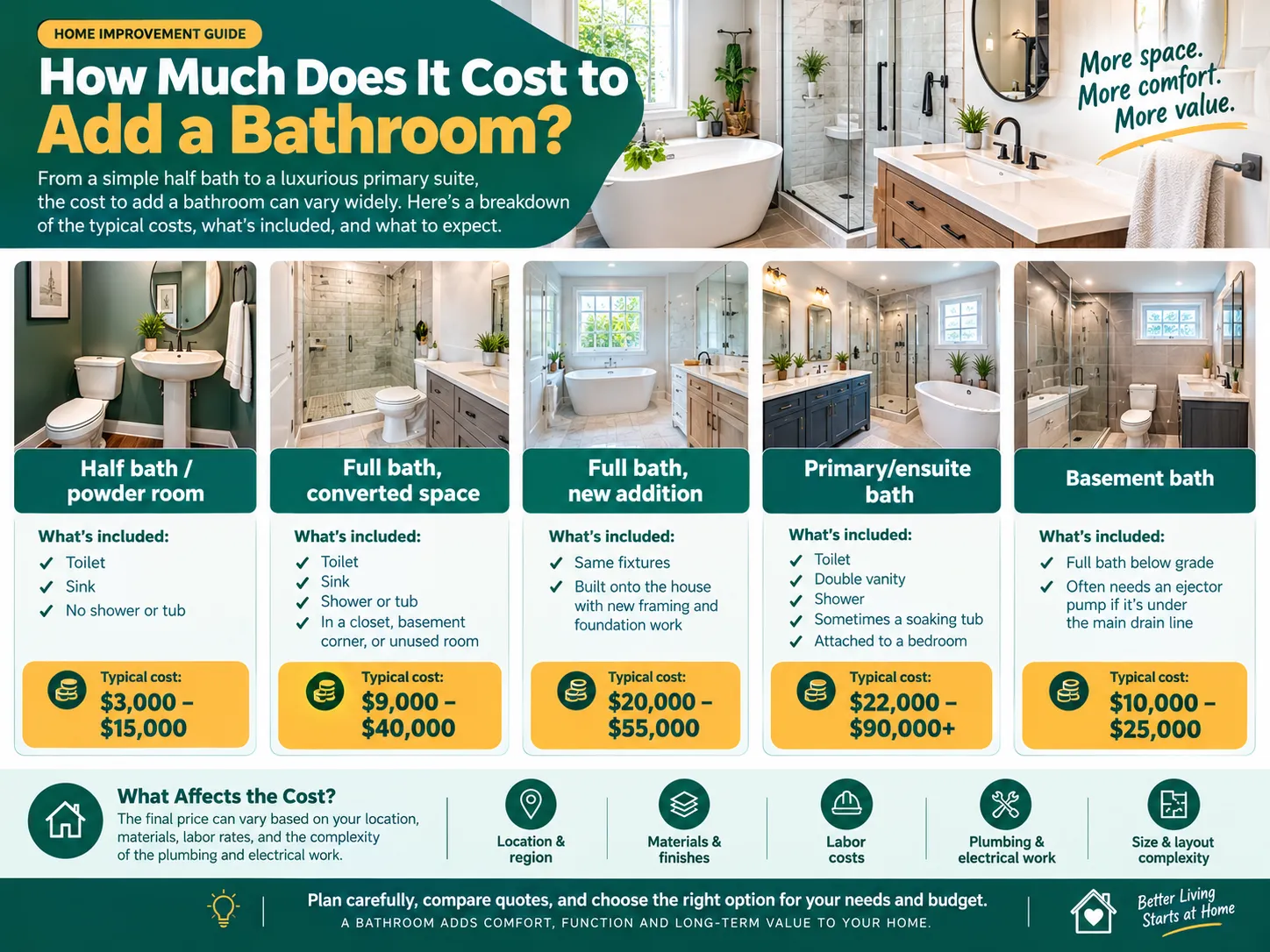
| Bathroom type | What’s included | Typical cost |
|---|---|---|
| Half bath / powder room | Toilet, sink, no shower or tub | $3,000 – $15,000 |
| Full bath, converted space | Toilet, sink, shower or tub, in a closet, basement corner, or unused room | $9,000 – $40,000 |
| Full bath, new addition | Same fixtures, but built onto the house with new framing and foundation work | $20,000 – $55,000 |
| Primary/ensuite bath | Toilet, double vanity, shower, sometimes a soaking tub, attached to a bedroom | $22,000 – $90,000+ |
| Basement bath | Full bath below grade, often needs an ejector pump if it’s under the main drain line | $10,000 – $25,000 |
A half bath skips the shower and tub, which cuts both the plumbing work and the fixture cost, so it’s almost always the cheapest way to add a bathroom. A primary bath addition costs the most because it usually comes with a bigger footprint, better finishes, and a longer plumbing run.
Converting a space vs. building new
The single biggest cost driver isn’t the fixtures. It’s whether you’re working inside your home’s existing footprint or adding onto it.
Converting an existing space, like a closet, a corner of a basement, or part of a laundry room, into a bathroom runs about $200 to $250 per square foot and typically totals $5,000 to $25,000. You’re not pouring a foundation or building exterior walls, so a big chunk of the cost disappears.
Building a new addition to house the bathroom runs $20,000 to $75,000, and sometimes more in expensive markets. You’re paying for a foundation, framing, roofing, siding, and a full plumbing and electrical run to a part of the house that didn’t have any before. Per square foot, that typically lands between $150 and $350 depending on finishes.
If your budget is tight, the fastest way to bring the number down is to find unused space that already exists inside your home rather than building outward.
What actually drives the price
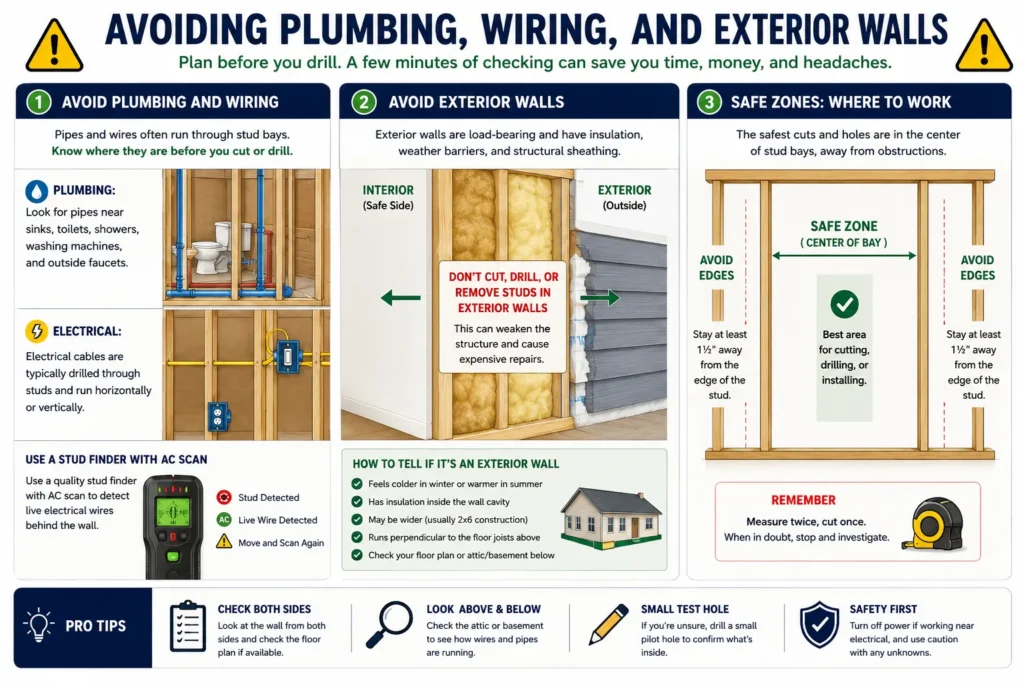
Distance from existing plumbing. A bathroom placed on the other side of a wall from an existing bathroom or kitchen can tap into the same supply and drain lines. One placed far from any plumbing needs new lines run under the floor or through the walls, which adds labor and sometimes requires opening up finished spaces.
Where in the house. A basement bathroom below the home’s main drain line usually needs a sewage ejector pump to push waste up to the sewer line, which adds $1,500 to $3,000 or more. An attic or upper-floor bathroom can mean reinforcing floor joists to handle the weight of a tub.
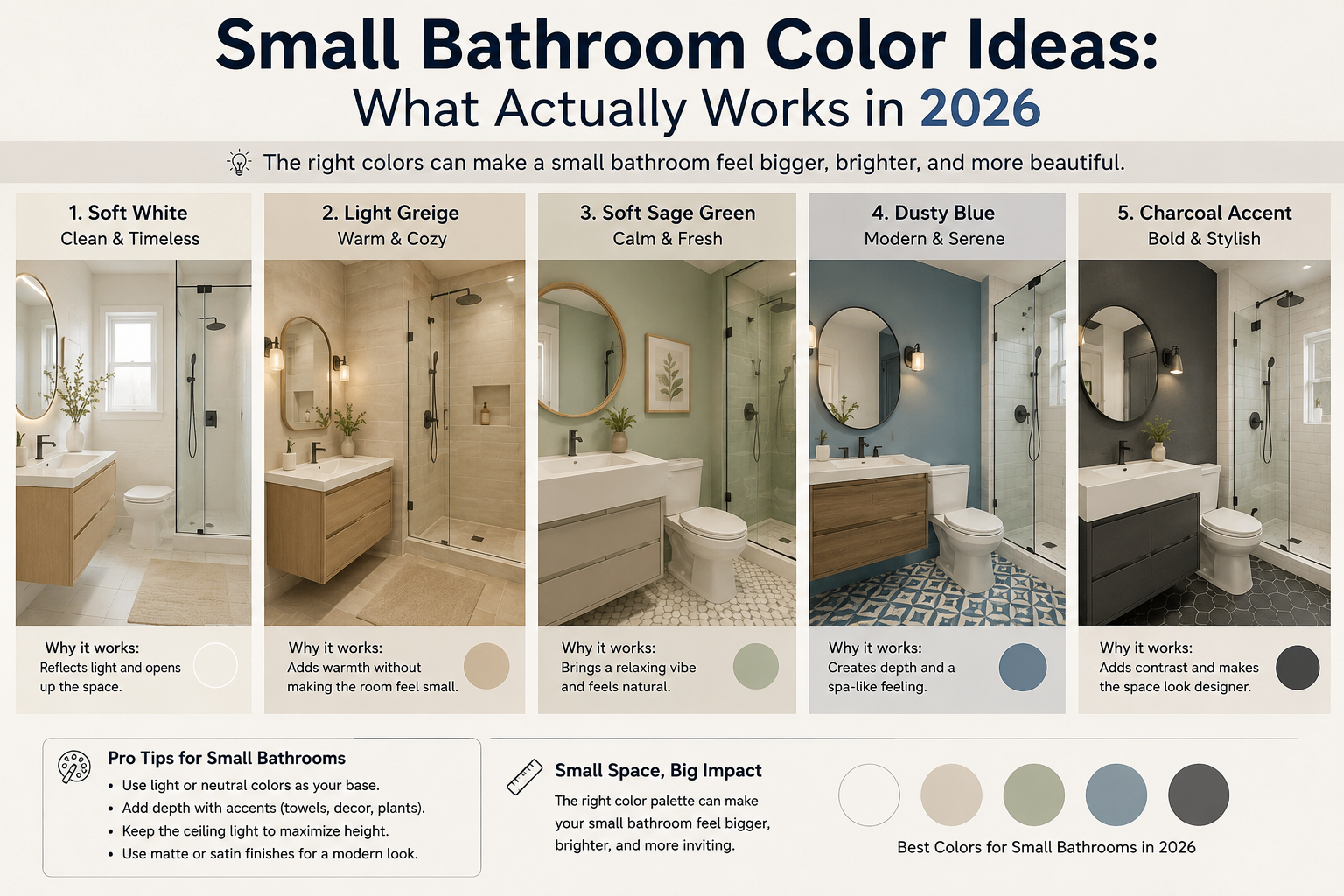
Fixture and finish quality. A basic toilet runs under $200; a comfort-height model with a soft-close lid can run $500 or more. The same spread applies to vanities, tile, and shower systems. Finish choices alone can double a project’s cost without changing the layout at all.
Permits and inspections. Most jurisdictions require permits for new plumbing and electrical work, and fees run anywhere from $500 to $5,000 depending on the city. Skipping a permit isn’t a real way to save money — it becomes a problem when you go to sell the house.
Where you live. Labor rates in the San Francisco Bay Area or New York City metro can run double what they cost in much of the Midwest or South.
Cost breakdown by category
For a typical mid-range full bathroom (converted space, standard finishes):
| Category | Typical cost |
|---|---|
| Plumbing rough-in (supply, waste, vent) | $1,500 – $8,000 |
| Framing and drywall | $1,000 – $5,000 |
| Electrical and ventilation (outlets, exhaust fan, lighting) | $1,000 – $4,000 |
| Fixtures (toilet, sink, tub or shower, vanity) | $1,500 – $8,000 |
| Flooring and wall finishes | $500 – $3,000 |
| Permits and inspections | $500 – $5,000 |
| Labor | Usually 40% – 60% of the total |
Plumbing and labor together make up the bulk of the bill on almost every project. Finishes are the part you control most directly, since a $150 toilet and a $900 toilet do the same job.
Two example budgets
Ranges are useful, but seeing the math laid out helps more. Here’s how the numbers actually stack up for two common projects.
Example: converting a closet into a half bath
| Line item | Cost |
|---|---|
| Plumbing rough-in | $1,200 |
| Framing and drywall | $600 |
| Electrical and ventilation | $500 |
| Fixtures (toilet, sink, faucet) | $700 |
| Flooring and wall finishes | $600 |
| Permits | $500 |
| Labor | $3,200 |
| Total | $7,300 |
This is a short plumbing run off an existing stack, standard fixtures, and no structural work. It lands near the low end of the half-bath range.
Example: full bath in an unfinished basement corner
| Line item | Cost |
|---|---|
| Plumbing rough-in (includes an ejector pump) | $4,500 |
| Framing and drywall | $2,500 |
| Electrical and ventilation | $2,000 |
| Fixtures (toilet, sink, shower, vanity) | $3,500 |
| Flooring and wall finishes | $1,800 |
| Permits | $1,200 |
| Labor | $9,500 |
| Total | $25,000 |
The ejector pump pushes this toward the top of the basement-bath range, since the room sits below the main drain line and waste has to be pumped up to reach the sewer line.
These are sample budgets built from the cost ranges above, not quotes from a specific job — your own numbers will move with your location, contractor, and finish choices.
Does adding a bathroom pay for itself?
Not fully, but it does more than most renovations. The 2025 Cost vs. Value Report puts the national average recoup rate for a mid-range bathroom addition at around 53% of what you spend. So a $35,000 bathroom addition might add roughly $18,500 to your home’s resale value on paper.
That figure undersells the real benefit, though. A second bathroom changes whether a one-bathroom house is a serious contender for buyers with families, not just how much it appraises for. Real estate data from sites like Opendoor and Zillow has put the resale value bump for a full bathroom addition somewhere in the 5% to 10% range for the whole house, with half baths adding less. The exact number moves with your local market, so treat it as a rough guide rather than a guarantee.
If you’re adding a bathroom mainly to sell the house, run the numbers with a local agent first. If you’re adding it because you’re tired of sharing one bathroom with three other people, the resale math matters less than it seems to.
Ways to bring the cost down
- Convert a space you already have — a closet, a corner of a basement, unused space under a staircase — instead of building an addition.
- Put the new bathroom on the other side of a wall from existing plumbing so the runs stay short.
- Choose a shower instead of a tub-and-shower combo if space or budget is tight; showers are cheaper to install and use less water long-term.
- Stick with standard-size, in-stock fixtures rather than custom orders, which carry both a price premium and longer lead times.
- Get quotes from at least three licensed contractors. Bathroom additions have enough variables (plumbing distance, framing needs, local permit costs) that estimates for the same project can differ by thousands of dollars.
Frequently asked questions
Is it cheaper to convert an existing room into a bathroom, or build a new addition?
Converting existing space is almost always cheaper, often by close to half. You skip the foundation, exterior walls, and roofing that a new addition requires.
How much does adding a bathroom increase home value?
Expect to recoup roughly half of what you spend at resale, based on recent Cost vs. Value data, plus a broader boost to how marketable the home is if it only had one bathroom before.
Do I need a permit to add a bathroom?
In almost every U.S. jurisdiction, yes. New plumbing and electrical work requires a permit and inspection. Costs range from about $500 to $5,000 depending on the city.
How long does adding a bathroom take?
A conversion of existing space typically takes two to four weeks. A full addition with new construction can take two to four months, depending on permitting and how backed up local contractors are.
What’s the cheapest type of bathroom to add?
A half bath converted from existing space, like a closet or an underused corner of a room. Skipping the shower or tub removes the most expensive plumbing and fixture costs.
Costs above reflect national averages for 2026 and will vary by region, contractor, and material choices. For a number based on your own square footage and location, run your project through our bathroom remodel cost calculator.