Getting the right feel in your home can be tricky. You want it to be cozy and still work well for everyday activities. A recessed lighting calculator helps you find the perfect balance of light and shadow.
Many people have trouble with the placement of lights. They might put them too far apart or too close together. This tool takes away the uncertainty by giving you exact measurements based on your ceiling and room size. Proper planning makes sure every part of your space gets the right amount of light.
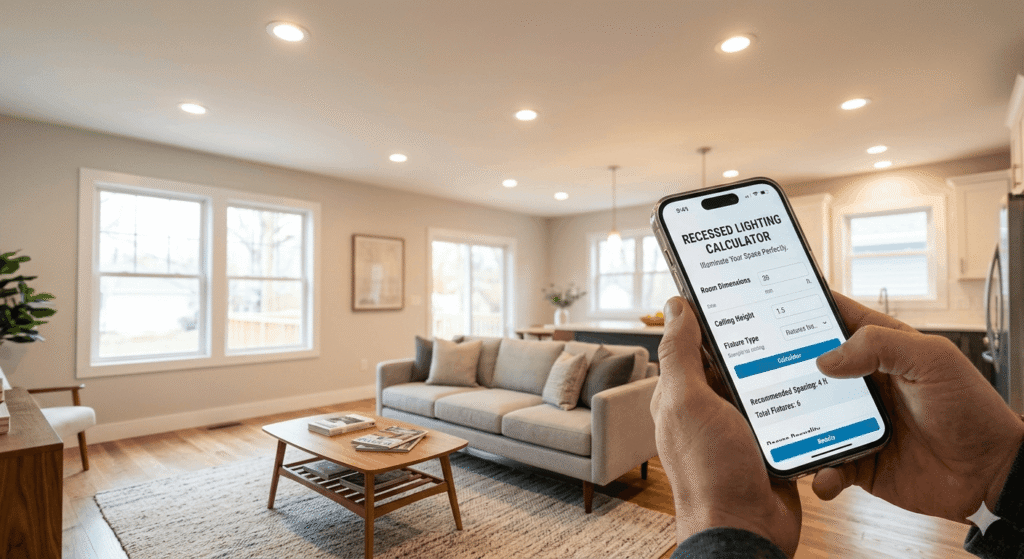
Using a recessed light calculator makes designing your space much easier. Just enter your room’s details, and you’ll feel sure about your choices before you start drilling. This smart way saves time, cuts down on waste, and makes your space look professional without much effort.
Key Takeaways
- Proper fixture placement prevents dark spots and glare.
- Calculators help determine the exact number of units needed.
- Room dimensions and ceiling height are critical data points.
- Strategic planning improves both energy efficiency and aesthetics.
- Digital tools eliminate common installation errors for DIY projects.
Understanding the Basics of Recessed Lighting
Knowing the basics of recessed lighting is key for homeowners. It helps them improve their homes with modern, efficient lighting. Recessed lighting, also called can lighting, is popular for its sleek look.
It offers focused light without the mess of old lighting. This makes it great for many rooms. To see why recessed lighting is valuable, you need to know its parts and how they work together.
The Role of Can Lights in Modern Home Design
Can lights are big in modern design for their clean look. They fit into the ceiling, making it smooth. This is why they’re loved in kitchens, living rooms, and hallways.
Can lights are also flexible. They can be for general or task lighting, based on where they’re placed and the bulb used. This flexibility is why they’re so common in homes today.
Key Components of a Recessed Lighting System
A recessed lighting system has a few main parts: the housing, trim, and bulb. The housing is inside the ceiling and holds the electrical stuff. It’s important to pick a housing that fits your ceiling and can handle the right bulb.
The trim is what you see and touches the room. It comes in many styles, like baffle and reflector, so you can change the look. The bulb is what lights up and can be picked for its color and brightness.
Knowing how these parts work together is key for a good lighting plan. Using a recessed lighting layout calculator or recessed light layout calculator can help plan your lighting well.
How a Recessed Lighting Calculator Works
A recessed lighting placement calculator helps light up your space right. It makes finding the perfect number and spot for recessed lights easy. This ensures your room is well-lit for its needs.
First, you put in the room’s size and ceiling height. This is key for the calculator to figure out the room’s volume. It also looks at how the ceiling height affects light spread.
Inputting Room Dimensions and Ceiling Height
Start by entering the room’s length, width, and ceiling height into the calculator. These numbers are important. They help the calculator know the room’s size and how much light it needs.
- Length and Width: These help figure out the room’s square footage. This is crucial for knowing how many lights you need.
- Ceiling Height: This impacts how light spreads. Taller ceilings might need stronger lights or different spacing for the right light.
Determining Desired Light Intensity and Lumens
After putting in the room’s size, decide on the light intensity you want. This is measured in lumens. Different rooms need different light levels based on their use.
Kitchens need bright lights (more lumens) for tasks. Living rooms might need softer light. The calculator helps pick the right lumen output for your recessed lights.
- Think about the room’s purpose and what you do there.
- Choose how bright you want the light to be.
- Let the calculator suggest the lumen output for your recessed lights.
By following these steps and using a recessed lighting calculator, you can make a lighting plan. It will be both useful and look good, improving your space’s feel and function.
Calculating the Number of Lights Needed
Getting the right number of recessed lights is key to a well-lit home. It’s not just about looks; it’s about function and saving energy too. You need to think about your space’s size and the lighting you want.
Two main things matter when figuring out recessed lights: your room’s square footage and how much light you need. Knowing these helps you set up the perfect lighting.
The Formula for Square Footage and Light Coverage
To figure out how many lights you need, use a simple formula. It considers your room’s size and how bright you want it. Here’s how:
- First, find your room’s square footage by multiplying its length by its width.
- Then, decide how many lumens you need based on the room’s use and brightness you want.
- Finally, divide the total lumens needed by each light’s output to find how many you need.
For example, a 200 square foot living room needing 20 lumens per square foot needs 4000 lumens total. With 500 lumen lights, you’ll need 8 of them.
Adjusting for Task Lighting Versus Ambient Lighting
The kind of lighting you want—task or ambient—changes how many lights you’ll need. Task lighting focuses on areas where you do things, like kitchen counters or reading spots. Ambient lighting lights up the whole room.
Task Lighting needs more lumens in certain spots, so you might use fewer but more intense lights. Ambient Lighting needs lights spread out evenly across the room, so you might need more lights with less lumens each.
To get a good lighting mix, use both task and ambient lighting. This makes your space more functional and adds beauty.
By carefully figuring out how many recessed lights you need and what kind, you can make your home bright and welcoming. A free recessed lighting calculator can help make this easier, ensuring your lighting is just right.
Mastering Recessed Lighting Placement Calculator Techniques
To get the best light in your space, learning about a recessed lighting placement calculator is key. You need to know how far apart the lights should be and how close to walls and corners.
A good recessed lighting setup makes your room look better. It also makes sure the light works well for your space.
Calculating Spacing Between Fixtures
The space between recessed lights is important for even light. A simple rule is to split the ceiling height by two. For example, an 8-foot ceiling means lights should be 4 feet apart.
- For exact spacing, think about the light type (task, ambient, or accent).
- The room’s size and layout also affect spacing.
- A recessed lighting calculator makes it easier. It considers room size and light intensity.
Maintaining Distance from Walls and Corners
The distance of recessed lights from walls and corners is also key. The first row of lights should be 1.5 to 3 feet from walls.
- For corners, lights should be the same distance from both walls for balance.
- The wall distance changes with light type; task lights can be closer.
- A recessed light calculator helps find these distances. This makes your lighting both useful and nice to look at.
Learning these methods and using a recessed lighting placement calculator leads to a well-lit, welcoming space.
Factors Influencing Your Lighting Layout
Several key factors affect your recessed lighting layout. These factors impact your space’s ambiance and function. A thoughtful approach to these factors is crucial for a well-designed lighting plan.
Accounting for Furniture Placement and Room Usage
Furniture placement is key in recessed lighting layout. The type and position of furniture influence light distribution and room illumination. For example, in a living room, seating and table placement is important for lighting planning.
Room usage also matters. Different rooms need different lighting. A home office might need bright, focused light. A bedroom might prefer softer, ambient light.
Dealing with Obstructions Like Ceiling Fans and Beams
Obstructions like ceiling fans and beams can affect your lighting layout. They can cast shadows or block light from recessed fixtures. This impacts the lighting quality.
To deal with these issues, plan recessed light placement around obstructions. You might adjust spacing or choose different locations to reduce obstruction impact.
Common Obstructions and Their Impact on Lighting Layout
| Obstruction | Impact on Lighting | Potential Solution |
| Ceiling Fans | Can create moving shadows | Adjust light placement around the fan |
| Beams | Can block or redirect light | Use beam-friendly recessed lighting fixtures |
| Furniture | Can affect light distribution | Plan furniture placement with lighting in mind |
By considering these factors and adjusting your recessed lighting layout, you can create a more effective and appealing lighting design.
Choosing the Right Trim and Bulb Type
The right trim and bulb can greatly improve your recessed lighting. When using a recessed light layout calculator, think about the trim and bulb type. This will help you get the lighting effect you want.
Baffle Versus Reflector Trims
There are two main trim types: baffle and reflector trims. Baffle trims help soften the light and reduce glare. They’re great for general lighting. Reflector trims, on the other hand, direct light downwards. This makes them perfect for task lighting.
“The choice between baffle and reflector trims largely depends on the specific lighting needs of the room.”
In a living room, baffle trims work well for ambient lighting. But, for kitchens or reading nooks, reflector trims are better for task lighting.
Selecting Color Temperature for Different Rooms
The color temperature of the bulb is also key. Bulbs range from warm white (2700K-3000K) to cool white (3500K-5000K) and daylight (5000K-6500K). Choose based on the room’s purpose and the mood you want.
Warm white light is cozy for bedrooms and living rooms. Cool white or daylight is better for kitchens, bathrooms, and workspaces. It’s brighter and more energizing.
By picking the right trim and bulb, you can make your recessed lighting better. It will meet your needs and preferences.
Utilizing a Free Recessed Lighting Calculator Effectively
To get the most out of a free recessed lighting calculator, it’s key to know how to read the results. A recessed lighting placement calculator helps find the best spots and number of lights for your area.
When using a free recessed lighting calculator, you’ll need to enter details like room size, ceiling height, and light intensity. The calculator then tells you how many lights you need and where to put them.
Interpreting Results for Optimal Illumination
Understanding the results of a recessed lighting placement calculator means knowing the suggested lighting setup. This setup should match your needs. For example, it might suggest how many lights and their spacing for even light.
Remember, “Lighting is not just about visibility; it’s about creating an ambiance that enhances the overall aesthetic of a room.” So, think about the light’s quality and how it spreads out.
Common Mistakes to Avoid When Using Online Tools
Even though a free recessed lighting calculator is useful, there are mistakes to steer clear of. One big mistake is putting in wrong data, which can mess up the results.
- Make sure to measure your room and ceiling height right.
- Think about the room’s purpose and the lighting you need (task, ambient, etc.).
- Remember any room features or obstructions that might change where lights go.
By avoiding these mistakes and knowing how to read the results, you can use a free recessed lighting calculator well. This helps get the best light in your space.
“The key to successful lighting design is not just about the number of lights, but their strategic placement and the overall effect they create.”
Advanced Considerations for Recessed Light Layout Calculator Projects
For a top-notch lighting design, you need to think about more than just the basics. Moving past simple recessed lighting calculations opens up new ways to improve your space’s look and feel.
One key idea is layering light. This means mixing different light sources and controls for a smart lighting setup. Layering light lets you change the mood and task lighting for various activities.
Layering Light with Dimmers and Smart Controls
Using dimmers and smart controls is key for layering light. These tools let you change the light’s brightness and color. Dimmers help save energy by reducing light when it’s not needed.
Smart controls make lighting even more flexible. You can control your lights with phones or voice assistants. This makes your lighting system more convenient and useful. For example, you can set lights to change automatically with the time or when someone enters the room.
Integrating Recessed Lighting with Existing Fixtures
Another important part of advanced recessed lighting is blending new fixtures with what you already have. You need to look at your current lighting setup and see how recessed lights can improve it. This way, you get a lighting scheme that works well together.
To make sure everything fits together, think about your current lights. For example, if you have a chandelier, recessed lights can add more task lighting. This layered approach makes your space more interesting and balanced.
By planning and using these advanced ideas, you can create a recessed lighting design that looks great and works well. Starting with a recessed lighting calculator is a good first step. Adding these advanced techniques ensures your lighting design fits your needs and tastes.
Safety and Installation Best Practices
Recessed lighting is important for safety and looks. It makes a room look better and work better. But, if not installed right, it can be dangerous.
Knowing about IC-rated and non-IC rated housings is key. They decide how the light works with insulation and materials.
Understanding IC-Rated Versus Non-IC Rated Housings
IC-rated housings work with insulation. They are safe for areas with insulation. Non-IC rated housings need space from insulation to avoid fires.
Electrical Code Requirements for Recessed Lighting
Electrical codes for recessed lighting vary. But, the National Electric Code (NEC) is common. It sets rules for housings, wiring, and safety.
Check local codes or get a licensed electrician. They know what’s needed in your area. This keeps you safe and avoids legal trouble.
Following these guidelines makes recessed lighting safe and useful. It’s good for your home and your safety.
Troubleshooting Common Lighting Design Issues
Even with the best tools, like a recessed lighting placement calculator, problems can still happen. A good lighting plan is key for both looks and function. We’ll look at common issues and how to solve them.
Fixing Uneven Light Distribution
Uneven light can make a room feel cold. To fix it, change the space between your recessed lights. A recessed light layout calculator can help find the right distance.
If some areas are too dark, you might need more lights or adjust their spots. Here’s a simple table to show how spacing affects light:
| Spacing Between Lights | Effect on Light Distribution |
| Too far apart | Uneven, with dark spots |
| Optimal spacing | Even, with minimal dark spots |
| Too close together | Overly bright, potentially causing glare |
Addressing Glare and Shadow Problems
Glare and shadows can be fixed by picking the right trim and bulb. Baffle trims absorb light to reduce glare. Reflector trims direct light better.
The color of your bulbs also matters. Warm white bulbs (2700K-3000K) are cozy for living areas. Cool white bulbs (3500K-5000K) are better for kitchens.
Conclusion
Creating a good recessed lighting layout is key for the best light in any room. Using a recessed lighting calculator helps homeowners and designers plan well. This makes the room look better and work better too.
A well-thought-out recessed lighting setup makes a room look great. It also gives enough light for different activities. The calculator is a big help, figuring out how many lights, where to put them, and how far apart.
When planning, think about the room’s size, ceiling height, and how bright you want it. This way, you can make a lighting plan that fits your needs. Using a recessed lighting calculator helps make a layout that looks good and works well.
FAQ
What is the primary benefit of using a recessed light calculator?
A recessed light calculator makes home improvement easier. It figures out how many lights you need for your space. Just enter your room’s size and ceiling height to get balanced lighting.
How does a recessed lighting layout calculator determine the spacing between fixtures?
A recessed lighting layout calculator uses a simple rule. For an 8-foot ceiling, lights should be 4 feet apart. It also looks at the room’s size to make sure the light spreads right.
Why should I use a recessed lighting placement calculator for my kitchen remodel?
Kitchens need both ambient and task lighting. A calculator helps place lights over work areas. It also makes sure lights aren’t too close to cabinets to avoid shadows.
Can I find a free recessed lighting calculator online?
Yes, many websites offer free recessed lighting calculators. Companies like Lithonia Lighting and Visual Comfort & Co. let you create a digital plan and schedule for free.
What information do I need to provide to a recessed light layout calculator?
To use a recessed light layout calculator, you need your room’s dimensions and ceiling height. Also, think about the bulb’s lumen output and the room’s use. For example, a home theater or laundry room.
How do I account for obstructions like ceiling fans when using a layout tool?
When using a tool, mark where ceiling fans or vents are. A good layout keeps lights away from fan blades. This prevents a “strobe effect” when both are on.
What is the difference between IC-rated and non-IC rated housings in a lighting plan?
IC-rated housings can be in contact with attic insulation. Non-IC housings need a gap. Check your ceiling’s insulation. Brands like Progress Lighting have IC-rated options for safety and code compliance.
How do I choose between baffle and reflector trims for my recessed lights?
Baffle trims absorb excess light and are popular for living areas. They reduce glare. Reflector trims focus light and are best for high ceilings or task areas.
Can I integrate smart dimmers with my recessed lighting layout?
Yes, most recessed systems work with smart dimming. Use Lutron Caséta or Leviton smart switches. They let you adjust light levels for different times or activities.
How far should recessed lights be from the wall?
Place lights 2 to 3 feet from walls. This avoids “scalloping” and gives even lighting. It’s a rule used by any calculator.