Last Updated: June 2026 Expert-Reviewed · 2,800 Words · Beginner to Intermediate
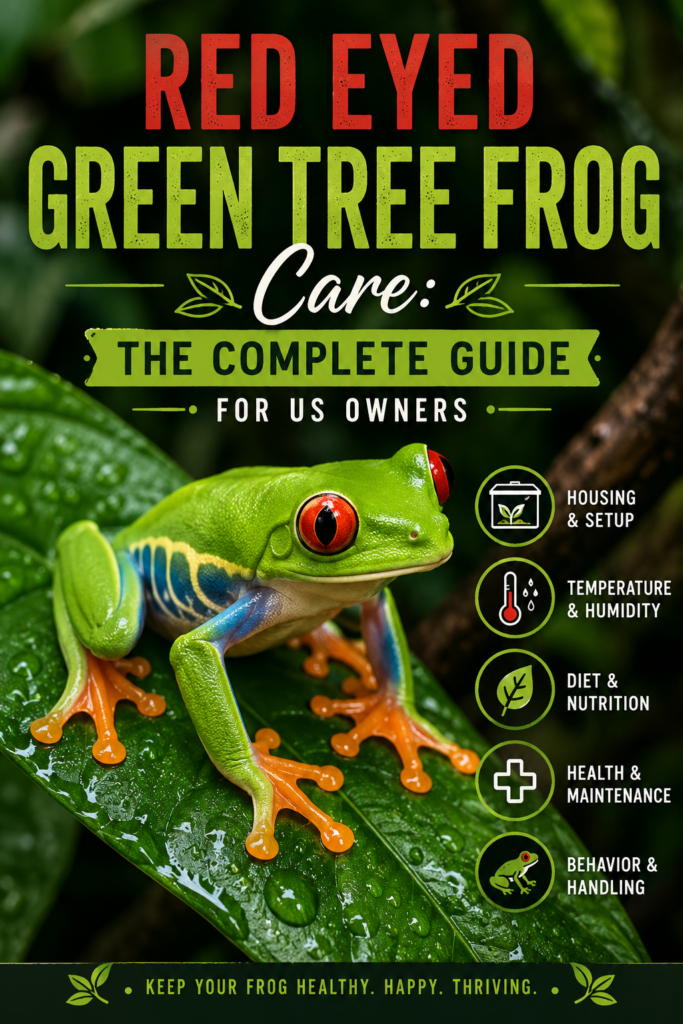
The red eyed green tree frog (Agalychnis callidryas) is arguably the most recognizable amphibian on the planet. With its vivid emerald body, flame-orange toes, electric-blue flanks, and those unmistakable ruby-red eyes, it looks like something conjured from a tropical fantasy — yet it is very much real and widely available to US hobbyists. Understanding proper red eyed green tree frog care is the difference between a thriving, decade-long companion and a heartbreaking loss within months.
This guide pulls together the latest veterinary guidance and hobbyist best practices to give you everything you need: enclosure setup, temperature and humidity targets, feeding schedules, supplementation, handling tips, common health problems, and more — all tuned for US keepers.
🐸 Red Eyed Green Tree Frog — At a Glance
Scientific NameAgalychnis callidryas
Adult Size2–3.5 inches (females larger)
Lifespan5–10 years (with good care)
Experience LevelIntermediate
TemperamentDocile, display animal
DietInsectivore
Daytime Temp75–85 °F
Humidity70–80 %
Min. Enclosure18″L × 18″W × 24″H
OriginCentral America & Colombia
📋 Table of Contents
- Species Overview
- Enclosure Setup
- Temperature & Lighting
- Humidity & Misting
- Substrate & Décor
- Diet & Feeding Schedule
- Supplements
- Handling & Enrichment
- Common Health Problems
- Buying a Red Eyed Tree Frog in the US
- Frequently Asked Questions
1. Species Overview
Native to the tropical lowland rainforests stretching from southern Mexico through Central America into Colombia, the red eyed green tree frog has been captive-bred in the United States and Europe for over 30 years. Most animals available from US breeders and retailers originate from Costa Rican or Nicaraguan bloodlines — the two most commonly traded locales, each with subtly distinct coloration. Nicaraguan specimens tend toward a bluer-green hue with very bright orange feet, while Costa Rican frogs sport a more saturated lime green with bold blue-purple side banding.
As strictly nocturnal, arboreal frogs, red eyed tree frogs spend their days pressed flat against large leaves or cork bark, eyes shut, using camouflage as their primary defense strategy. When disturbed, they flash their vivid red eyes and blue flanks in a startle display called “deimatic behavior” — designed to confuse predators, and endlessly fascinating for keepers.
Their IUCN conservation status is currently Least Concern, and because captive-bred specimens are abundant in the US hobby, there is no need or ethical justification for purchasing wild-caught animals.
2. Enclosure Setup
Getting the enclosure right is the single most critical step in red eyed green tree frog care. These are arboreal animals — height trumps footprint. A vertically oriented terrarium allows climbing, natural postural behavior, and a meaningful temperature gradient from top to bottom.
Minimum Enclosure Dimensions
| Number of Frogs | Minimum Size | Recommended |
|---|---|---|
| 1 adult | 18″L × 18″W × 24″H | 18″L × 18″W × 36″H |
| 2 adults | 18″L × 18″W × 24″H + 10 gal | 24″L × 18″W × 36″H |
| 3–4 adults | 20+ gallons total | 36″L × 18″W × 36″H |
⚠ Important
Never house male and female red eyed tree frogs together unless you actively intend to breed them. Mixed-sex groups will attempt to breed year-round under captive conditions, stressing the female.
The enclosure must have a secure, well-ventilated screen top — these frogs are escape artists and will exploit any gap. Many US keepers use glass terrariums with front-opening doors (such as Exo Terra or ZooMed Naturalistic Terrariums), which facilitate access without stressing the frogs from above.
3. Temperature & Lighting
Red eyed green tree frogs are ectothermic — they rely on external heat sources to regulate body temperature. In much of the US, room temperature during warmer months is sufficient; supplemental heating becomes essential when ambient house temperatures dip below the recommended range.
Temperature Targets
| Zone / Period | Temperature |
|---|---|
| Daytime ambient | 75–85 °F (24–29 °C) |
| Basking spot (over branch/leaf) | ~84 °F (29 °C) |
| Nighttime low | 66–72 °F (19–22 °C) |
| Absolute maximum | 85 °F — never exceed |
Provide heat using a low-wattage white heat bulb positioned over a basking branch or large artificial leaf at the top of the enclosure. Do not use ceramic heat emitters, deep heat projectors, or colored bulbs as a primary source — these are less effective and can disrupt the frog’s natural nocturnal behavior. If extra nighttime heat is needed, a red nocturnal bulb or heat pad mounted on the side (never the bottom) of the glass is acceptable.
UVB Lighting
A low-level UVB bulb (2.0 or 5.0) is strongly recommended. Red eyed tree frogs use UV exposure to synthesize vitamin D3 in their skin, which enables calcium absorption. Without adequate UVB, frogs are at elevated risk of metabolic bone disease — one of the most common preventable conditions in captive amphibians. Run UVB on a timer for 10–12 hours daily, mimicking a natural tropical photoperiod. Replace bulbs every six months, even if they still emit visible light, as UV output fades before the visible spectrum does.
🚫 Never Do This
Do not leave white lights on 24 hours. Red eyed green tree frogs are nocturnal; continuous light disrupts their sleep cycle, suppresses feeding behavior, and significantly shortens lifespan. Always switch to darkness or a red/nocturnal bulb after 10–12 hours.
4. Humidity & Misting
Humidity is not optional — it is a core life-support parameter for red eyed green tree frog care. These frogs absorb water directly through their permeable skin, which means they can rapidly dehydrate in a dry enclosure and just as quickly suffer fungal or bacterial issues in a waterlogged one.
Humidity Targets
| Condition | Target Range |
|---|---|
| Average daytime humidity | 60–80 % |
| Post-misting spike (normal) | Up to 100 % |
| Minimum acceptable | 60 % |
Mist the enclosure twice daily — once in the morning and again at night, ideally timed with lights-off. Focus the spray on the substrate, glass walls, and plants rather than directly on the frogs. Always use dechlorinated or RO-filtered water. Tap water that contains chlorine or chloramines can absorb directly through the frog’s skin and cause toxicity. Never use distilled water, as it lacks the mineral content frogs need to maintain electrolyte balance.
Monitor humidity daily with a digital hygrometer, probe placed at mid-enclosure height. Automated misting systems (such as the MistKing or Exo Terra Monsoon) are a popular upgrade among US keepers who want consistent humidity without daily manual effort.
💡 Pro Tip
Always provide a shallow water dish with dechlorinated water at the bottom of the enclosure. While red eyed tree frogs are poor swimmers, a large shallow dish raises ambient humidity, gives the frogs an emergency soak option if overheated, and supports any live plants you include.
5. Substrate & Décor
Substrate
Choose a moisture-retentive substrate that holds humidity without becoming waterlogged or moldy. Popular choices in the US hobby include:
- Coconut fiber (coco coir) — excellent moisture retention, affordable, readily available
- ABG (Atlanta Botanical Garden) mix — preferred for bioactive setups; supports beneficial microfauna
- Orchid bark + sphagnum moss combo — great drainage layer, widely available at US garden centers
- Layered bio setup — drainage layer (LECA or hydroballs), mesh barrier, ABG mix, leaf litter on top
Lay substrate to a depth of 3–5 inches. Avoid substrates that can cause impaction if accidentally ingested, such as gravel or sand.
Décor & Climbing Structures
Red eyed tree frogs are happiest in a lush, vertical environment that mimics their rainforest home. Build the interior upward:
- Cork bark rounds and flat sheets — essential hides at both warm and cool zones
- Diagonal branches and driftwood — arrange from floor to top to encourage natural climbing
- Broad-leafed live plants (Pothos, Philodendron, Bromeliad) or high-quality artificial equivalents
- Sphagnum moss pockets — for moisture retention and resting spots
- Leaf litter on the substrate floor — provides microfauna habitat in bioactive setups
Always provide at least two hides — one on the warmer side of the enclosure and one on the cooler side — so frogs can thermoregulate without feeling exposed.
6. Diet & Feeding Schedule
Red eyed green tree frogs are obligate insectivores. In the wild they ambush prey from leaf perches at night; in captivity they should be offered a variety of appropriately sized, gut-loaded insects. Feeding the same prey item every day leads to nutritional imbalances — variety is essential.
Recommended Prey Items
- Crickets — the staple; gut-load 24–72 hours before feeding
- Dubia roaches — excellent nutritional profile, easy to keep, highly recommended
- Hornworms — high moisture content, good for hydration; use as a supplement
- Silkworms — soft-bodied, nutritious, a great rotation item
- Earthworms — suitable for adults; high protein
- Waxworms — high fat; use only as an occasional treat
- Mealworms — occasional treat only; their hard chitin exoskeleton risks intestinal impaction if fed frequently
🌿 Gut-Loading Rule
Gut-load all feeder insects 24–72 hours before offering them to your frog. Feed insects a nutritious diet of leafy greens, squash, sweet potato, and commercial gut-load mix. This “double nutrition” strategy is the single most impactful thing you can do for your frog’s long-term health.
Feeding Schedule by Age
| Age / Size | Frequency | Quantity per Feeding |
|---|---|---|
| Juveniles | Daily | 3–6 insects |
| Adults under 3 inches | Every 1–2 days | 3–6 insects |
| Adults over 3 inches | Every 2–3 days | 5–8 insects |
Always size prey so that no food item is wider than the frog’s head. Feed at night when the frogs are naturally active. Remove uneaten prey within a few hours to prevent stress and substrate contamination.
7. Supplements
Dusting feeder insects with supplements is non-negotiable for long-term red eyed green tree frog care. The two essentials are:
- Calcium + Vitamin D3 powder — supports bone density and prevents metabolic bone disease. Adults: 1–2× per week. If proper UVB lighting is provided, frogs produce D3 naturally and you can use plain calcium (no D3) for most dustings.
- Reptile/amphibian multivitamin — covers trace minerals and vitamins. All ages: once weekly.
To dust insects efficiently, place them in a small zip-lock bag or deli cup with a pinch of supplement powder and gently shake before offering to the frog.
8. Handling & Enrichment
Red eyed green tree frogs are primarily display animals, not hands-on pets. Their skin is highly permeable and absorbs oils, salts, and bacteria from human hands, which can cause serious irritation or illness. Minimize handling to necessary maintenance tasks only.
When handling is unavoidable — enclosure cleaning, veterinary exams, transport — always wet your hands with dechlorinated water first or wear clean, powder-free vinyl gloves. Never handle a red eyed tree frog with bare, unwashed hands, and avoid handling immediately after applying lotions, sunscreen, or insect repellent.
These frogs derive enrichment from environmental complexity — climbing branches, hunting live prey, and exploring their enclosure at night. A well-planted, bioactive setup provides far more enrichment than direct human interaction.
9. Common Health Problems
Even with attentive care, red eyed green tree frogs can develop health issues. Knowing the signs early gives you the best chance of a positive outcome. Always consult a reptile/amphibian veterinarian (find one at arav.org) if you suspect illness.
Metabolic Bone Disease (MBD)
Caused by insufficient calcium and/or UVB exposure. Signs include lethargy, tremors, limb deformities, and inability to grip branches. Caught early, MBD is treatable with corrected supplementation and UVB lighting. Advanced cases may be irreversible.
Red Leg Disease (Bacterial Dermatosepticemia)
Recognizable by reddening of the skin on the thighs and belly, lethargy, and weight loss. Caused by the bacterium Aeromonas hydrophila, which can lie dormant in the frog and activate under stress. Treatment requires veterinary-prescribed antibiotics and an immediate improvement in enclosure hygiene.
Oodinium (Velvet Disease)
Appears as small white or gray spots on the skin, most common in frogs kept in dirty enclosures. Early-stage oodinium can often be resolved by a thorough tank clean and temporarily housing the frog in clean, dechlorinated water. Severe cases require veterinary treatment.
Chytrid Fungus (Batrachochytrium dendrobatidis)
A devastating amphibian disease spread via contaminated water and surfaces. Signs include abnormal skin shedding, lethargy, and loss of righting reflex. Prevention is paramount: quarantine all new frogs for 30–60 days, sterilize equipment between enclosures, and source animals only from reputable captive breeders.
Obesity
Overfeeding is a common mistake with red eyed tree frogs. Obese frogs display fat rolls behind the arms and around the neck. Reduce feeding frequency and replace calorie-dense prey (waxworms) with lower-fat alternatives.
⚠ Water Quality Warning
Never use unfiltered tap water, distilled water, or water that has not been dechlorinated. Chlorine, chloramines, and heavy metals absorb directly through the frog’s skin. Use a reptile-safe dechlorinator or aged RO water for all misting and water dishes.
10. Buying a Red Eyed Tree Frog in the US
Always choose captive-bred specimens. Wild-caught animals are highly stressed, often harbor internal parasites, and adapt poorly to captivity. Captive-bred red eyed tree frogs are widely available in the US through:
- Reputable exotic breeders (search MorphMarket.com, US-based reptile expos)
- Major US retailers including Petco and Chewy-affiliated partners
- Local herpetological societies and amphibian rescue organizations
When selecting a frog, look for: bright, clear eyes; active alert posture at night; no visible wounds, spots, or abnormal skin texture; healthy body weight without visible bones or excessive fat rolls; and confirmation of captive-bred status from the seller.
Quarantine all new frogs for a minimum of 30–60 days in a separate, simple enclosure before introducing them to an established setup or existing animals.
11. Frequently Asked Questions
How long do red eyed tree frogs live?
With proper red eyed green tree frog care, these frogs typically live 5–10 years in captivity. Some well-kept individuals live beyond 10 years. Lifespan is closely tied to diet quality, consistent humidity, and appropriate UVB exposure.Are red eyed tree frogs good pets for beginners?
They are best categorized as intermediate-level pets. Their strict humidity and temperature requirements, sensitivity to water quality, and preference for minimal handling make them less forgiving than beginner species like White’s Tree Frogs. First-time frog keepers may want to start with a hardier species before graduating to red eyed tree frogs.Can red eyed tree frogs be kept together?
Yes — they are a social species that does well in same-sex groups or all-female groups. Add 5–10 gallons of space per additional frog. Avoid mixed-sex cohabitation unless actively breeding. Never overcrowd the enclosure, as this elevates stress and disease risk.How do I know if my red eyed tree frog is healthy?
A healthy frog will: grip branches firmly, have clear bright eyes, maintain a healthy body weight (no visible hip bones, no excess fat rolls), shed skin normally, and actively hunt prey at night. Any prolonged refusal to eat (beyond 2 weeks), unusual skin spots, lethargy during active hours, or difficulty gripping warrants a vet visit.Do red eyed tree frogs need UVB lighting?
Yes — a low-level UVB bulb (2.0 or 5.0) is strongly recommended. UVB enables frogs to synthesize vitamin D3 in their skin, supporting calcium metabolism and bone health. Without it, the risk of metabolic bone disease increases significantly. Run UVB for 10–12 hours daily on a timer.What water should I use for misting and water dishes?
Use dechlorinated tap water or RO-filtered water. A reptile-safe dechlorinator (e.g., ReptiSafe) makes tap water safe. Never use distilled water (lacks essential minerals) or straight tap water (chlorine/chloramines absorb through skin). Change water dishes daily