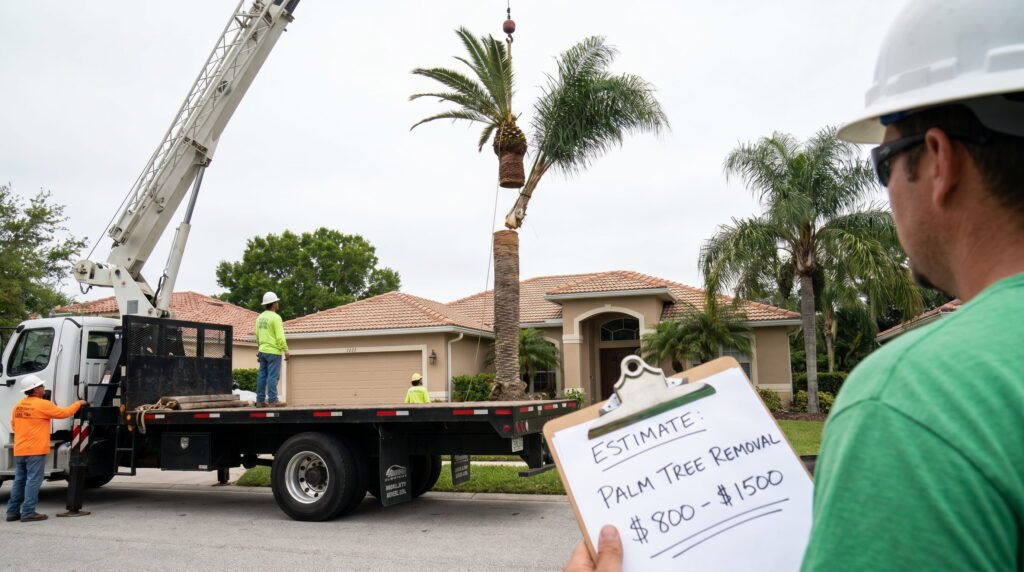
Most homeowners get their first palm tree removal quote and immediately think there’s been a mistake. A single tree — just standing in your yard — can cost anywhere from $100 to over $1,800 to remove. That’s not a typo, and it’s not a contractor trying to overcharge you. It’s just the reality of how complex palm tree removal can be.
The problem is that most people have no idea what drives that price. Height matters, but so does location, tree condition, stump removal, permits, and debris hauling. Without knowing those factors upfront, you walk into every contractor conversation blind.
This guide breaks it all down. You’ll learn the average palm tree removal cost by height, the seven factors that push your quote up or down, the hidden add-ons most companies don’t mention, and how to use a palm tree removal cost calculator to build a solid budget before you call anyone. Let’s get into it.
How Much Does Palm Tree Removal Cost?
The short answer: most homeowners pay between $200 and $1,500 for a single palm tree removal, with the national average sitting around $410 to $825 depending on the source. But the range is wide — and it’s wide for a reason.
Palm Tree Removal Cost by Height
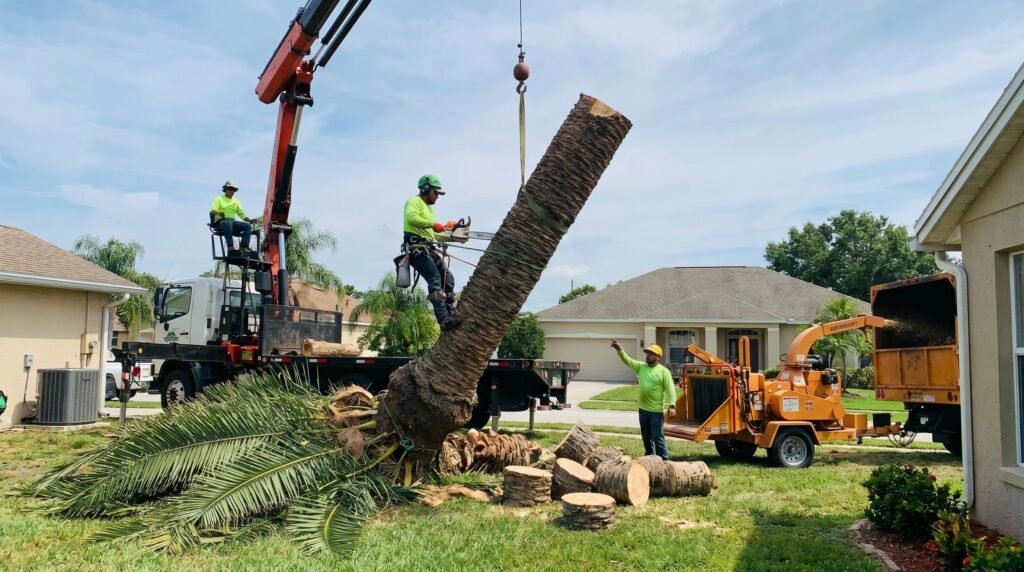
Height is the single biggest driver of your final bill. Taller trees need bigger equipment, more labor hours, and more careful rigging. Here’s what you can realistically expect to pay based on tree height, according to data compiled by Angi:
| Tree Height | Estimated Cost |
|---|---|
| Up to 15 feet | $100 – $200 |
| 15 to 30 feet | $150 – $450 |
| 30 to 60 feet | $200 – $950 |
| 60 to 80 feet | $300 – $1,200 |
| Over 80 feet | $1,100 – $1,500 |
Small palms under 15 feet can usually be removed with a chainsaw and a rope — no heavy equipment needed. Once you cross 30 feet, crews need bucket trucks or scaffold lifts, which adds significantly to the bill. At 60 feet and above, crane-assisted removal may be required, pushing costs toward the upper end of the range.
If you want a per-foot estimate for budgeting, a useful rule of thumb is $30 to $60 per foot for accessible palms under 35 feet, and $60 to $120 per foot for taller or more complex jobs.
How Does Palm Tree Removal Compare to Other Trees?
Palm trees are actually on the more affordable end compared to large hardwoods. Removing an oak or pine tree of similar height typically runs $400 to $1,200 on average. That said, palm trees come with their own unique disposal challenge — more on that in the hidden costs section below.
What Factors Affect Your Palm Tree Removal Cost?
Height explains about 60% of the variation in quotes. The rest comes down to these factors, which experienced arborists consistently cite as the most impactful on final pricing.
Tree Height and Trunk Diameter
You already know height matters. Trunk diameter is the other physical variable that drives cost. Wider trunks mean more material to cut through, more weight to manage during the fall, and more debris to haul away. A 60-foot Canary Island Date Palm with a two-foot trunk will cost noticeably more to remove than a slender 60-foot Mexican Fan Palm.
Location and Accessibility
This is a bigger cost driver than most people expect. If your palm grows in an open yard with easy truck access, removal is relatively straightforward. But if it’s growing next to your house, near power lines, over a pool, or in a backyard with a narrow gate, the complexity jumps immediately.
When a tree can’t be dropped safely in one direction, crews have to cut it in sections from the top down and carefully lower each piece with ropes. That takes longer, requires more people, and costs more. Always describe your tree’s location clearly when getting quotes — it can mean a $300+ difference.
Tree Condition and Disease
A dead or diseased palm sounds easier to remove, but it’s often harder. Dead palms stay structurally solid for a long time (they don’t rot quickly the way other trees do), but they can also be unpredictable. If the trunk has internal rot or the tree is leaning, crews need to use specialty rigging systems to bring it down safely.
Diseased palms with conditions like fusarium wilt, lethal yellowing, or trunk rot add both safety complexity and labor time to the job. Expect to pay a premium — sometimes 20–30% above the base rate — for a tree in poor health.
Number of Trees and Emergency Jobs
Removing multiple palms at once usually reduces the cost per tree. Contractors can spread their setup time, equipment costs, and disposal trips across all the trees in a single visit, passing some of that efficiency on to you.
Emergency removal, on the other hand, costs significantly more — often 200 to 300% above standard rates. If a storm has knocked a palm onto your fence or a tree is leaning dangerously toward your house, expect to pay a premium for same-day or after-hours service.
Hidden Add-On Costs to Budget For
The quote you receive for palm tree removal usually covers just the tree itself — not everything that comes with the job. Here are the add-ons that catch homeowners off guard most often.
Stump Removal and Grinding
Stump removal is almost never included in the base removal quote. If you want the stump gone, you’ll typically pay an extra $80 to $350 depending on the stump’s diameter and the removal method. Stump grinding — where a machine chips the stump down below ground level — is the most common approach and runs $100 to $250 for most residential jobs.
If you want the roots fully excavated (which is rarely necessary unless you’re doing concrete work nearby), expect to pay $75 to $150 per hour for that additional digging.
Permits — Do You Need One?
This depends entirely on where you live, and it’s not something to skip over. Many municipalities — especially in Florida, California, and other warm-weather states where palms are native — require permits before you can remove certain protected species.
The general rule, according to state-by-state permit research, is that dead or hazardous trees usually don’t require a permit, but healthy palms over a certain height or trunk diameter often do. In Miami-Dade County, for example, any tree with a trunk diameter of five inches or more at 4.5 feet above ground requires a removal permit. Permit costs typically run $40 to $200 depending on your county.
Before you schedule anything, search “[your city] + tree removal permit” or ask your contractor — most licensed arborists know the local rules and can help you avoid fines.
Debris Hauling and Cleanup
Here’s a cost most homeowners don’t anticipate: palm trees can’t be mulched and spread like regular tree debris. Their high-acid, fibrous fronds don’t break down cleanly in a chipper, and many disposal sites charge premium rates to accept them. Research from arborists suggests debris disposal can add up to 37% on top of a baseline removal estimate.
If your quote includes cleanup, confirm exactly what that covers — frond removal, trunk sections, and site cleanup are all separate line items at some companies. You can sometimes save $100–$200 by hauling the debris yourself if you have access to a truck.
How to Use a Palm Tree Removal Cost Calculator
A palm tree removal cost calculator lets you plug in your tree’s height, location type, condition, and any add-ons to generate a ballpark estimate before you contact a single contractor. It doesn’t replace a professional quote — but it tells you what a fair quote looks like, so you’re not starting from zero.
What Information You’ll Need
Before you use any cost calculator, gather these details:
- Tree height (pace it off or use a height estimator app)
- Trunk diameter (rough measurement at chest height)
- Location — is it near the house, a fence, power lines, or in an open yard?
- Tree condition — healthy, declining, diseased, or already dead?
- Number of trees you need removed
- Whether you need stump grinding included
- Your city or zip code — regional labor rates vary significantly
With this information ready, you’ll get a much more accurate estimate from both online tools and in-person contractors.
How to Compare Contractor Quotes Against Your Estimate
Once you have a ballpark figure, get at least three quotes from licensed, insured contractors in your area. According to guidance from home improvement experts at Bob Vila, price variation between companies for identical jobs can be significant — shopping around consistently saves homeowners hundreds of dollars.
Use your calculator estimate as a baseline. If a quote comes in dramatically higher, ask the contractor to walk you through their pricing line by line. If it’s dramatically lower, verify they’re insured and check whether stump removal and cleanup are included.
DIY vs. Professional Palm Tree Removal — Is It Ever Worth It?
For palms under 15 feet tall that sit in open, accessible areas well away from structures, DIY removal is genuinely feasible. You’ll need a chainsaw, protective gear, and help from at least one other person to manage the fall direction and debris.
For anything taller than 15 feet, the honest answer is no — professional removal is the safer choice. Palm trunks are dense and fibrous, the crown at the top is extremely heavy, and the tree falls fast. Without the proper rigging and safety setup, you risk serious injury or property damage that far exceeds what you’d save on labor.
The exception: if you want to handle cleanup and debris hauling yourself after the pros bring the tree down, that’s a smart way to save $100–$300 in disposal fees.
How to Save Money on Palm Tree Removal: 5 Proven Tips
You don’t have to pay top dollar. Here’s how to keep your palm tree removal cost as low as possible without cutting corners on safety.
1. Get at least three quotes. Prices vary significantly between companies for the exact same job. Three quotes takes an afternoon but can save you $200–$400.
2. Schedule in the off-season. Some tree services offer lower rates during slower winter months when demand drops. If your removal isn’t urgent, timing it right pays off.
3. Bundle multiple trees. If you have two or three palms that need to come down, scheduling them as a single job lets the crew spread setup and equipment costs — and gives you negotiating leverage for a bundled discount.
4. Handle debris yourself. Ask for a quote with and without debris removal. If you can haul fronds and trunk sections to a disposal site yourself, you can cut a meaningful chunk from the total.
5. Ask about the stump separately. Don’t assume stump grinding is included. Get the stump price as a separate line item, and if budget is tight, leave the stump for a future project — it’s not urgent and can be done any time.
Start With a Number, Not a Guess
Palm tree removal costs range from $100 for a small backyard palm to $1,500+ for a towering specimen near your home. The biggest variables are height, location, tree condition, and whether you need stump grinding and debris hauling included.
The smartest move before calling any contractor is to build your own baseline estimate. Know what your tree’s specs suggest you should pay, then compare that against the quotes you receive. That’s how you spot a fair price — and how you avoid paying $400 more than you should.
For related home improvement budgeting, use the Concrete Price Calculator on ToolCalcPro to estimate costs for any hardscaping or patio work you’re planning once the tree is gone. And if you’re updating your yard lighting after the palm comes down, the General Lighting Calculator can help you plan exactly how many fixtures you’ll need.
Have you recently had a palm tree removed? Drop your total cost and city in the comments — it helps other homeowners know what to expect in your area.