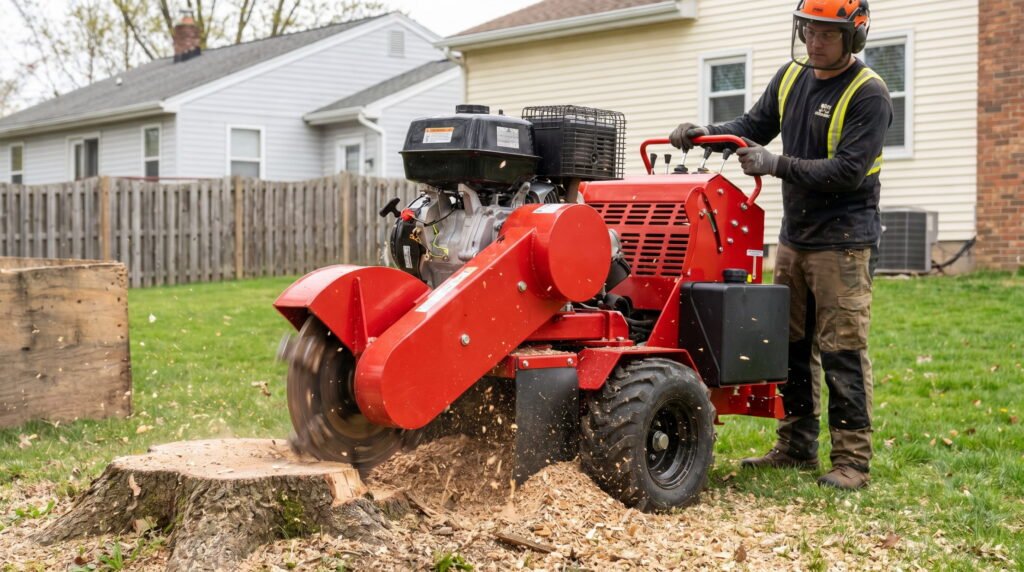
You’ve cut down a tree. Now you’re staring at a stump that’s too big to ignore and too stubborn to pull out by hand. Before you call three contractors and get three wildly different quotes, you need a number to anchor on.
This guide is your stump grinding cost calculator — no tool required. You’ll learn exactly how contractors price these jobs, what drives the cost up or down, and how to run a quick estimate before anyone shows up with equipment.
How to Calculate Stump Grinding Cost Yourself
Contractors use one of two pricing models: per inch of diameter or hourly rate. Most residential jobs use the per-inch method, which makes it easy to estimate.
The Per-Inch Formula
Measure the widest point of your stump at ground level. That’s your diameter. Then plug it into this simple formula:
Estimated cost = diameter (inches) × $2–$6
A 12-inch pine stump runs about $24–$72 for the grinding itself. A 36-inch oak? You’re looking at $72–$216 — before the minimum fee kicks in.
The Minimum Fee Rule
Here’s the catch: most companies charge a flat minimum of $100–$160, regardless of stump size. That covers travel, equipment transport, and setup. So even a tiny 6-inch stump rarely costs less than $100 once you factor in the minimum.
Quick Reference by Stump Size
| Stump Diameter | Estimated Range |
|---|---|
| 6 inches | $100–$160 (minimum fee applies) |
| 12 inches | $100–$160 (minimum fee applies) |
| 18 inches | $108–$160 |
| 24 inches | $120–$175 |
| 36 inches | $180–$250 |
| 48 inches | $240–$350 |
| 60+ inches | $300–$800+ |
What Affects Stump Grinding Cost?
The per-inch estimate gives you a starting point. These five factors push the final number higher or lower.
Tree Species: Hardwood vs. Softwood
Not all stumps are equal. A pine stump grinds in 20 minutes. An old oak might take two hours.
Softwoods — pine, cedar, fir — have lighter wood density. They’re fast to grind and land at the low end of any quote. Hardwoods — oak, maple, walnut, hickory — are dense and slow the machine down significantly. Expect to pay $50–$150 more per hardwood stump compared to softwood of the same size.
If you’re not sure what species you have, tell the contractor before they quote. It matters.
Number of Stumps
The first stump is always the most expensive because the crew shows up, sets up equipment, and does the job. Each additional stump on the same visit typically runs $30–$70, far less than the first.
If you have multiple stumps across your property, schedule them together. You’ll pay one setup fee instead of several.
Site Access
A stump in the middle of an open backyard is easy money for any crew. A stump behind a narrow fence gate, on a steep slope, or wedged between garden beds is a different job entirely.
Poor access adds labor time and sometimes forces crews to use smaller equipment that works more slowly. This typically adds $50–$150 to the quote. Before you call, take photos from multiple angles so the contractor can give you an accurate number upfront.
Root Complexity
Standard stump grinding cuts the stump down a few inches below grade and leaves the deep roots to decompose naturally. But if you have visible surface roots spreading across the lawn, grinding those back adds cost.
Deep root removal — full excavation of the root system — is a separate service running $75–$150 per hour. You need this only if you’re building a foundation, installing deep landscaping, or planting a new tree in the exact same spot.
Debris Removal and Add-Ons
Most quotes don’t automatically include hauling away the wood chip pile. Debris removal typically adds $2–$4 per inch of diameter, or a flat $50–$200. Ask what’s included in writing before work starts.
Other add-ons to watch for:
- Soil fill: Filling the void left behind costs $50–$100+
- Permits: Some municipalities require permits for stump grinding near utility lines. Permit fees range from $75–$450 depending on your city.
- Contractor markup: If a general contractor oversees the job rather than a specialist doing it directly, add 13–22% to the subtotal.
How Much Does Stump Grinding Cost on Average?
Most homeowners pay between $131 and $438 for a single stump grinding job, with the national average landing around $272. That number covers a single medium-sized stump with standard cleanup included.
Here’s what the cost breakdown looks like by job type:
- Single residential stump: $120–$400
- Multiple stumps (per additional stump): $30–$60 each
- Extra-large hardwood stump (48″+): $300–$800
- Hourly rate (large plots, heavy-duty equipment): $100–$200/hr
- Complete stump removal (with root excavation): $300–$1,000
Stump grinding is almost always more cost-effective than full stump removal, since complete removal requires excavating the entire root system. Unless you’re building new construction directly over the area, grinding is the right call.
Stump Grinding vs. DIY: Is Renting Worth It?
Renting a stump grinder sounds like a smart way to save money. Run the numbers first.
Stump grinder rentals run $178–$364 per day on average, and a DIY job typically takes one to three full days depending on the stump. Add safety gear (goggles, gloves, ear protection, steel-toed boots) and fuel, and the savings shrink fast.
The bigger issue is operator experience. Stump grinders are heavy machines with aggressive cutting teeth. An inexperienced operator can damage buried utility lines, crack nearby pavement, or injure themselves. The cost of a mistake often exceeds the cost of the professional service.
DIY makes sense if you have three or more stumps on an open, accessible property with no utility concerns. For one or two stumps in a typical residential yard, hiring a licensed pro almost always costs less once you factor in everything.
What to Ask Before You Call 811
Before any stump grinding work starts — DIY or professional — call 811. That’s the national “Call Before You Dig” hotline. A crew will mark buried utility lines at no charge, protecting you from accidental damage to gas, water, or electrical lines.
How to Get the Best Price on Stump Grinding
A few practical moves can trim your quote by 15–25%.
Book in Winter
Tree care services see lower demand in winter months, and scheduling during this period can save you 10–20% compared to peak summer rates. If your stump isn’t an urgent safety issue, waiting until January or February is worth it.
Bundle With Tree Work
If you’re also having a tree trimmed or removed, negotiate stump grinding into the same job. The crew is already on-site with equipment. Many companies give significant discounts when stump grinding is bundled with other tree services.
Get Three Quotes — With Line Items
Don’t accept a single number over the phone. Ask each contractor for a written estimate that breaks out grinding, debris removal, soil fill, and any permit fees separately. When you compare quotes, you’re comparing the same services — not guessing why one price is lower than another.
Check Licensing and Insurance
A company that doesn’t carry liability insurance leaves you responsible for any damage to utilities or property. Verify coverage before signing anything. Most reputable tree services are licensed, bonded, and insured and will confirm this without hesitation.
What Happens After the Stump Is Ground?
The grinder leaves a pile of wood chips and a depression in the soil where the stump used to be. You have a few options for what comes next.
Leave the chips: Wood chip mulch can stay in place and decompose over one to three years. It’s free organic matter for the soil, though it doesn’t look tidy right away.
Fill and re-seed: Mix topsoil into the remaining chips, level the area, and seed it with grass. This is the cleanest option if you want a lawn back. Topsoil runs $10–$50 per yard, and sod costs $1–$2 per square foot if you want instant green.
Plant something new: You can plant a shrub or perennial bed once the area is filled in. Avoid planting a new tree in the same spot until all roots from the old tree are fully removed, since leftover roots compete with new plantings and can carry disease.
If you’re planning a hardscape project — a patio, walkway, or concrete pad — over the old stump area, make sure the soil has fully settled first. Sunken ground from decomposing roots creates uneven slabs that crack prematurely. For larger concrete projects on a reclaimed site, use the Concrete Price Calculator on ToolCalcPro to estimate material costs before calling contractors.
Is Stump Grinding Worth the Cost?
For most homeowners, yes — and here’s why the math works.
An untreated stump takes three to ten years to rot on its own. During that time, it sits in your yard collecting termites, carpenter ants, and fungi. Some of those pests don’t stay in the stump. They migrate toward your home. A single termite treatment costs $300–$1,500 depending on the infestation size.
Beyond pest risk, a stump is a genuine safety hazard. It’s easy to trip over, impossible to mow around cleanly, and an obstacle in any landscaping plan you have for the yard.
At $120–$400 for a professional grind, stump removal costs less than one pest treatment and gives you the yard space back immediately.
Frequently Asked Questions About Stump Grinding Costs
How much does stump grinding cost per inch?
Contractors typically charge $2–$6 per inch of diameter, measuring at the base of the trunk rather than the cut surface. Most companies apply a minimum service fee of $80–$160 even for small stumps.
Does stump grinding include root removal?
No. Standard stump grinding cuts the stump down several inches below ground level and leaves the deep roots in place to decompose over time. Full root removal is a separate service and costs $75–$150 per hour. You only need full root removal if you’re building over the area or replanting a tree in the same spot.
How long does stump grinding take?
A small softwood stump takes 15–30 minutes. A large hardwood stump can take two to three hours. Your contractor’s hourly rate matters more for big jobs, which is why some companies switch to hourly billing on stumps over 48 inches.
Will stump grinding damage my lawn?
Some surface disturbance is normal — the grinder throws wood chips and the machine wheels can leave tracks in soft ground. Most crews clean up the chips and leave the area ready for topsoil. Ask in advance whether cleanup is included or an add-on.
Can I get a permit waived for stump grinding?
Permits are typically required only when grinding near buried utility lines, protected tree species, or in municipalities with specific ordinances. Your contractor handles the permit process in most cases, though you pay the fee. Call your local building department if you’re unsure whether your property requires one.
The Bottom Line
Calculating stump grinding cost comes down to four numbers: stump diameter, tree species (hard or soft), number of stumps, and what add-ons you need. Run the per-inch formula, add the minimum fee, and adjust for any access or debris removal charges. That estimate puts you in a position to evaluate any quote you receive.
Most homeowners pay $120–$400 per stump. If your quote lands significantly higher with no clear reason, ask the contractor to explain the breakdown line by line.
Ready to plan the rest of your yard project? If stump removal is the first step toward a new patio or concrete feature, check the Concrete Price Calculator to get a materials estimate before the first contractor call. Having numbers for both projects means no surprises when the invoices arrive.
Got a quote that seems off? Drop your stump diameter and location in the comments — happy to help you sense-check the number.