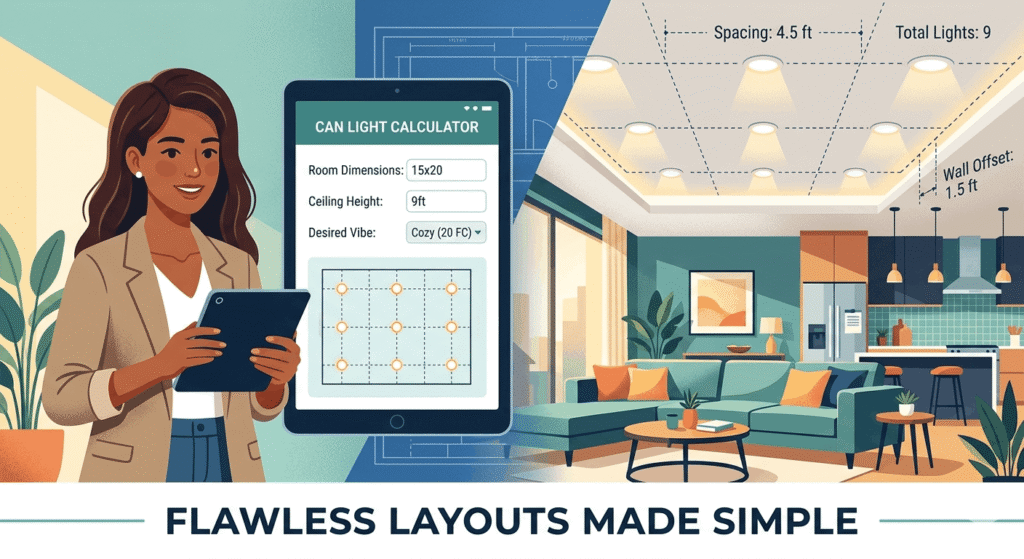
Ever stared at your ceiling wondering why the lights feel uneven or too dim? A can light calculator ends that frustration by giving you precise recessed lighting layouts tailored to your space. In this guide, we’ll walk through how to use one for flawless results, covering spacing, placement, and real-room examples.
What Is a Can Light Calculator?
Think of it as your personal lighting architect. These tools crunch room dimensions, ceiling height, and light needs to spit out how many recessed cans (those sleek downlights) you need and where to put them. No more guessing or hiring expensive designers upfront.
They factor in basics like foot-candles—units of light intensity. A cozy living room might aim for 20 foot-candles; a busy kitchen counter needs 70 or more. I’ve used dozens in renovations, and they cut waste by 20-30% by avoiding overkill.
Homeowners love them for DIY projects, while pros rely on them for quick bids. For a standard 10×12 bedroom, it might recommend 5-7 lights on an 8-foot ceiling.
Core Formula Behind Can Light Calculators
Most follow a simple math: Multiply room length by width, then divide by a spacing number tied to ceiling height. For 8 feet high, use 1.5 as your multiplier—say, for a 15×20 room: (15×1.5) x (20×1.5) / 36 (beam area) ≈ 9-10 lights.
Beam angle tweaks it: Narrow 30-degree spreads for art highlights need tighter grids; wide 60-degree ones cover more ground. Tools also adjust for LEDs, which pack more punch than old incandescents.
Real talk: This stems from physics—the inverse square law means light fades fast from height. Calculators bake that in, suggesting wall offsets of 1.5-2 feet to prevent ugly shadows.
Step-by-Step Guide to Your Can Light Layout Calculator
Step 1: Size Up the Room
Measure length, width, and height precisely. Note obstacles like joists or fans. Always add a 6-inch wall buffer—I’ve seen too many installs ruined by edge glare.
Step 2: Pick Your Light Goals
General ambient? Task lighting over sinks? Input foot-candles: 10-20 for bedrooms, 50+ for workspaces. Choose can size—4-inch for subtle, 6-inch for punchy.
Step 3: Run the Numbers
Plug in details. A 12×16 kitchen on 9-foot ceilings? Expect 10-12 lights, spaced 4 feet apart in offset rows. Sketch it out—apps often visualize grids.
Step 4: Refine and Test
Tweak for furniture. Mock it with tape on the floor or a phone app’s AR view. Dimmers later let you dial mood without rewiring.
Mastering Can Light Spacing Calculator Rules
Spacing rule of thumb: Half the ceiling height. 10 feet up? Max 5 feet between cans. But layer it—first row 2 feet from walls, then every 4-5 feet.
In rectangles, zigzag rows prevent stripes. For hallways, linear every 6-8 feet. I’ve fixed botched jobs where tight spacing caused hotspots; proper overlap is key.
Adjust for slope: On vaulted ceilings, halve spacing toward peaks. Pro tip: Use 90+ CRI LEDs for true colors—calculators assume this now.
Smart Can Light Placement Calculator Tactics
Placement beats quantity. Kitchens: Cluster over islands, wash cabinets from edges. Bedrooms: Frame the bed, skip direct overhead.
Bathrooms demand vanity uplight—offset 2 feet forward. Living rooms? Wall grazing at 30 degrees highlights textures.
Quick Room Layout Table
| Room | Foot-Candles | Spacing | Key Placement Tips |
|---|---|---|---|
| Kitchen | 30-70 | 4 ft | Counters, perimeter cabs |
| Living Room | 10-30 | 5 ft | Staggered, art walls |
| Bedroom | 10-20 | 5-6 ft | Bed perimeter, reading nooks |
| Bathroom | 20-70 | 4 ft | Mirror offset, shower center |
| Dining Room | 20-40 | 5 ft | Table center, chandelier hybrid |
Advanced Recessed Lighting Layout Tips
Layer everything: Cans for base, pendants for focus, strips for coves. Trim matters—open for spread, lensed for control.
Energy-wise, hit 50-65 lumens per square foot. Test installs with a $20 lux meter app—aim for evenness, no more than 2:1 bright-to-dark ratio.
Pain point: “It’ll look like airport dots!” Nah—right spacing blends into wash. Mix sizes for interest.
Link idea: See our recessed can installation checklist for wiring safety.
Top Free Can Lighting Layout Calculators
Try FES Lighting’s tool for beam tweaks or Omni’s quick math. Mobile apps like Light Planner simulate 3D. Print PDFs for your sparky.
No app? Excel sheet with the formula works—I’ve templated dozens.
FAQ
How many recessed lights for a 20×10 room?
8-12 on standard ceilings, spaced 4 feet in 3 rows. More for tasks, fewer for ambient.
Ideal spacing for can lights?
Ceiling height / 2, offset from walls by 1.5 feet. Stagger for even coverage.
Works for vaulted ceilings?
Yes—tighten spacing 20% and angle beams down. Test with mocks.
Beam angle impact?
Narrow (30°) for spots, wide (60°) for rooms. Match to use.
LED vs halogen in calcs?
LEDs need fewer—input 800+ lumens per can for spot-on counts.
You’ve got the blueprint for killer recessed lighting. Measure up, run the can light calculator, and mock your layout today. Next, dive into our LED selection guide or chat with a local pro for custom tweaks—your perfect glow awaits.