What Is the Health Triangle? (Definition & Purpose)
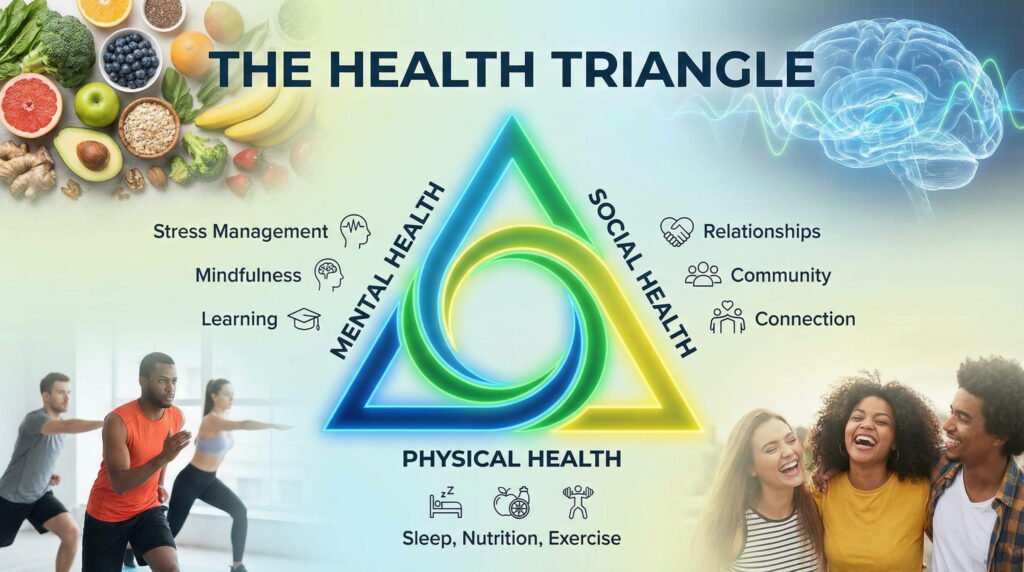
The Health Triangle is a simple yet powerful wellness model that shows how your overall health depends on three equally important sides: physical, mental (emotional), and social health. Rather than focusing on just one area, this model teaches that true well-being comes from balancing all three dimensions. When one side is weak or neglected, the entire triangle becomes unstable—just like a real triangle with one short side.
The health triangle definition in simple terms: it’s a visual tool used by health educators, especially in USA schools, to explain that health isn’t just about not being sick. It’s about thriving physically, emotionally, and in your relationships. The triangle shape symbolizes balance and interconnection—each side supports the others, and all must be strong for you to stand tall.
Health Triangle Definition in Simple Terms
To define health triangle clearly: it’s a three-part framework that breaks down total health into physical, mental/emotional, and social well-being. Think of it as a checklist for a healthy life. If you exercise regularly (physical), manage stress well (mental), and have supportive friendships (social), your triangle is balanced.
This model is widely taught in USA middle and high school health classes because it’s easy to understand and apply. Unlike complex medical models, the health triangle gives students and adults a clear way to assess where they might need to improve.
Why the Triangle Shape Represents Health
The triangle is used because it’s one of the strongest geometric shapes—stable only when all three sides are equal. In health terms, this means ignoring one area (like social connection) can weaken your entire well-being, even if you’re physically fit.
For example, someone who runs marathons but feels lonely and depressed has an unbalanced triangle. The shape reminds us that health is holistic, not one-dimensional. This visual makes it easier to explain the health triangle to students, patients, or anyone starting a wellness journey.
The 3 Sides of the Health Triangle
Every person’s health triangle rests on three foundational sides. Understanding each one helps you identify where you excel and where you need work.
1. Physical Health Triangle
Physical health refers to how well your body functions. It includes nutrition, exercise, sleep, hygiene, and avoiding harmful habits like smoking or excessive drinking. When your physical health triangle side is strong, you have more energy, stronger immunity, and lower disease risk.
In the USA, many health programs emphasize physical health through school PE classes, workplace wellness challenges, and public campaigns like “Move Your Body.” Simple actions—walking 30 minutes a day, drinking water, getting 7–8 hours of sleep—strengthen this side.
2. Mental (Emotional) Health Triangle
Mental health (often called emotional health in the triangle model) covers your thoughts, feelings, and ability to handle stress. The mental health triangle side includes managing anxiety, staying optimistic, building resilience, and seeking help when needed.
Mental health is now a major focus in USA schools and workplaces. According to the CDC, 1 in 5 US adults experiences mental illness yearly. Activities like journaling, meditation, therapy, and hobbies strengthen this side of your triangle.
3. Social Health Triangle
Social health is about your relationships and how you interact with others. A strong social health triangle means you have supportive friends, family, or community, and you can communicate well, set boundaries, and show empathy.
Loneliness is a growing public health issue in the USA, linked to higher depression and heart disease risk. Joining clubs, volunteering, calling a friend weekly, or joining faith groups all boost your social side. Remember: humans are wired for connection.
Health Triangle Examples in Daily Life
Concrete health triangle examples make the model real and actionable.
Real-Life Examples for Students
A high school student who balances the health triangle might:
- Physical: Play soccer 3x/week, eat fruits/veggies, sleep 8 hours
- Mental: Practice deep breathing before exams, talk to a counselor when stressed
- Social: Join the debate club, call a friend daily, help a classmate
Imbalance example: A student who studies 10 hours/day, skips meals, isolates in their room, and feels anxious has a wobbly health triangle. Over time, this leads to burnout, poor grades, and illness.
Real-Life Examples for Working Adults
A working professional’s balanced triangle:
- Physical: Gym 3x/week, meal prep healthy lunches, limit caffeine
- Mental: Meditate 10 minutes daily, take mental health days when needed
- Social: Weekly dinner with friends, join a run club, video-call family
Unbalanced example: A CEO who works 80 hours/week, eats takeout daily, never exercises, and hasn’t seen friends in months may be successful but has a collapsed health triangle. This often leads to adrenal fatigue, depression, or heart issues.
Why the Health Triangle Is Important for Overall Wellness
How Imbalance Affects Your Health
When one side of your health triangle is weak, it pulls down the others. Poor physical health (no sleep, bad diet) worsens mental health (irritability, anxiety). Weak social health (loneliness) increases stress and weakens immunity.
Research shows that chronic loneliness is as harmful as smoking 15 cigarettes daily. Similarly, untreated mental health issues can lead to physical problems like high blood pressure. The triangle shows why isolation or neglect in any area is dangerous.
Benefits of Balancing All Three Sides
A balanced health triangle leads to:
- Higher energy and productivity
- Better relationships and communication
- Lower risk of chronic disease
- Improved mood and resilience
- Longer, more fulfilling life
In the USA, schools and companies using the health triangle model report better student outcomes and lower employee burnout. It’s a simple framework with powerful results.
How to Balance Your Health Triangle (Actionable Tips)
Tips for Physical Health
- Walk or cycle 30 minutes daily
- Eat 5 servings of fruits/veggies
- Sleep 7–9 hours nightly
- Limit processed sugar and alcohol
- Get annual check-ups
Tips for Mental Health
- Practice mindfulness or meditation 10 min/day
- Write in a journal nightly
- Set realistic goals and celebrate wins
- Talk to a therapist when overwhelmed
- Limit social media scrolling
Tips for Social Health
- Call or text a friend 3x/week
- Join a club, sports team, or volunteer group
- Practice active listening in conversations
- Set healthy boundaries
- Attend community events monthly
Health Triangle vs. Other Wellness Models (Brief Comparison)
Unlike the wellness pyramid (which prioritizes basic needs first) or holistic health models (which may include spiritual health), the health triangle is simpler and more accessible. It doesn’t rank one side above another—all three are equally important.
This simplicity makes it ideal for USA schools, healthcare pamphlets, and workplace wellness programs. While more complex models exist, the triangle’s clarity helps people quickly assess and improve their health.
FAQs About the Health Triangle
Q1: What is the health triangle?
The health triangle is a wellness model with three equal sides: physical, mental (emotional), and social health. It shows that total well-being requires balance among all three.
Q2: What are the 3 sides of the health triangle?
The 3 sides of the health triangle are:
- Physical health
- Mental/emotional health
- Social health
Q3: What are the three parts of the health triangle?
The three parts of the health triangle are the same as the sides: physical, mental/emotional, and social health.
Q4: What does a triangle have to do with your health?
The triangle represents balance and stability. Just as a real triangle collapses if one side is short, your health suffers if one area is neglected.
Q5: What are the three components of the health triangle?
The three components are physical, mental/emotional, and social health.
Q6: Why is the health triangle important?
It’s important because it teaches holistic wellness. Focusing only on exercise or only on friendships isn’t enough. True health needs all three sides.
Conclusion: Start Balancing Your Health Triangle Today
The Health Triangle is more than a school diagram—it’s a lifelong tool for total wellness. By understanding the 3 sides of the health triangle—physical, mental, and social—you can identify gaps and take action today.
Start small: add 10 minutes of walking (physical), journal for 5 minutes (mental), or text a friend (social). Over time, these tiny changes build a strong, balanced triangle that supports a happier, healthier life in the USA and beyond.