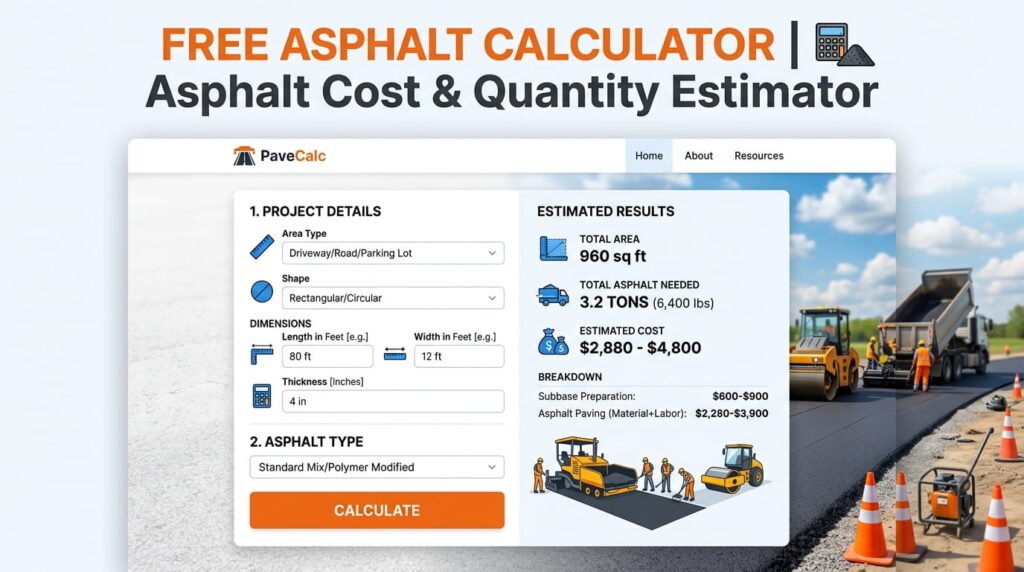
Planning a driveway, parking lot, or road project? Getting accurate material estimates and cost projections can save you thousands of dollars and prevent costly mistakes. This asphalt driveway cost calculator guide is designed for homeowners, contractors, and property managers who need reliable calculations for their paving projects.
Our comprehensive tool functions as both an asphalt tonnage calculator and complete cost estimator, helping you determine exactly how much material you’ll need and what it will cost. We’ll walk you through the essential measurements and specifications required for precise estimates, then provide a step-by-step tutorial on using our asphalt calculator for your paving project.
You’ll also learn about different material options, including how to use our asphalt millings calculator for budget-friendly alternatives, plus get detailed cost breakdowns and budgeting strategies for various project types from residential driveways to commercial parking areas.
Understanding Asphalt Calculator Benefits and Features
Save Time with Instant Calculations
Modern asphalt driveway cost calculators deliver results in seconds, transforming what used to be hours of manual calculations into a quick digital process. Instead of measuring areas by hand, converting units, and crunching numbers on paper, you simply input your project dimensions and receive immediate estimates for both material quantities and costs.
Professional contractors often spend 30-45 minutes calculating estimates for each project. With an automated calculator, you get the same level of detail in under two minutes. This speed advantage becomes even more valuable when you’re comparing different project scenarios or adjusting specifications on the fly.
The instant nature of these tools means you can make real-time decisions during project planning. Whether you’re standing in your driveway with a tape measure or sitting at your kitchen table reviewing quotes, you have immediate access to accurate calculations that help move your project forward.
Eliminate Costly Material Overages and Shortages
Material miscalculations represent one of the biggest budget killers in paving projects. Ordering too much asphalt typically costs homeowners an extra 15-25% of their budget, while ordering too little creates delays, additional delivery fees, and potential quality issues from mixing different batches.
An asphalt tonnage calculator prevents these expensive mistakes by providing precise material requirements based on your exact measurements. The calculator accounts for standard compaction rates, waste factors, and industry best practices to deliver quantities that align with real-world conditions.
Consider a typical driveway project: manually calculating requirements might suggest 8 tons of asphalt, but the actual need could be 7.2 tons or 8.6 tons depending on thickness requirements and site conditions. This precision saves hundreds of dollars on material costs and prevents the frustration of project delays.
Get Professional-Grade Accuracy for DIY Projects
Home improvement enthusiasts often worry about matching the calculation accuracy that professional contractors achieve. Quality asphalt calculators for your paving project use the same formulas and industry standards that paving professionals rely on daily.
These calculators incorporate crucial factors that DIY calculators might miss:
- Compaction ratios specific to different asphalt types
- Waste allowances for irregular shapes and cutting
- Thickness variations for proper drainage and durability
- Base preparation requirements that affect total material needs
The built-in expertise means you don’t need years of paving experience to generate reliable estimates. The calculator essentially puts professional knowledge at your fingertips, helping you plan projects with confidence and communicate effectively with contractors.
Access Multiple Measurement Units and Formats
Flexibility in measurement units eliminates conversion headaches and reduces calculation errors. Professional-grade calculators support various input formats because different people naturally think in different measurements.
| Measurement Type | Common Units Available |
|---|---|
| Area | Square feet, square yards, square meters |
| Thickness | Inches, centimeters, millimeters |
| Weight | Tons, pounds, kilograms |
| Volume | Cubic yards, cubic feet, cubic meters |
Asphalt millings calculators particularly benefit from this flexibility since recycled asphalt projects often involve mixed measurement systems. You might receive dimensions in feet but thickness specifications in inches, or need to convert between metric and imperial systems when working with different suppliers.
This adaptability extends beyond basic conversions. Advanced calculators let you switch between different calculation methods – area-based estimates for simple rectangles, or more complex algorithms for irregular shapes and varying thickness requirements. The result is accurate estimates regardless of how you naturally measure and think about your project space.
Essential Measurements Required for Accurate Estimates
Length and Width Dimensions of Your Project Area
Getting accurate length and width measurements forms the foundation of any reliable asphalt calculator for your paving project. Start by measuring the longest points of your project area in feet, even if the space isn’t perfectly rectangular. For driveways, measure from the garage door or house connection point to the street edge. Parking areas require measurements from property line to property line or building edge to designated boundaries.
Use a measuring tape or wheel for precision, and always round up to the nearest half-foot when in doubt. Weather conditions and ground settling can affect final dimensions, so adding a small buffer prevents material shortages. Digital measuring tools and smartphone apps can help verify your manual measurements, especially for larger commercial projects.
Record both dimensions clearly and double-check your math. A simple mistake in measurement can throw off your entire asphalt tonnage calculator results, leading to costly material overages or project delays due to insufficient supplies.
Desired Asphalt Thickness for Different Applications
Asphalt thickness directly impacts both material quantities and long-term durability. Residential driveways typically require 2-3 inches of asphalt over a properly prepared base. Light traffic areas like walkways can work with 2 inches, while driveways supporting heavier vehicles need the full 3-inch thickness.
Commercial applications demand greater thickness specifications:
| Application Type | Recommended Thickness | Traffic Load |
|---|---|---|
| Residential Driveway | 2-3 inches | Light vehicles |
| Commercial Parking | 3-4 inches | Regular cars/trucks |
| Heavy Truck Areas | 4-6 inches | Commercial vehicles |
| Industrial Roads | 6+ inches | Heavy machinery |
Your asphalt driveway cost calculator will multiply the thickness by your area measurements to determine total cubic footage needed. Remember that thicker applications cost more upfront but provide better longevity and reduce maintenance expenses over time. Climate conditions also influence thickness requirements – areas with freeze-thaw cycles benefit from thicker applications to prevent cracking.
Accounting for Irregular Shapes and Multiple Areas
Real-world paving projects rarely involve perfect rectangles. Curved driveways, angled parking spaces, and oddly shaped lots require creative measurement approaches to ensure your asphalt millings calculator provides accurate estimates.
Break complex shapes into smaller, manageable sections. Measure curved areas by dividing them into triangles and rectangles, then calculate each section separately. For circular or curved sections, measure the radius and use standard area formulas, or approximate using multiple rectangular sections.
Multiple project areas need individual calculations before combining totals. A property might include a main driveway, side parking pad, and walkway connection – each requiring separate measurements and potentially different thickness specifications.
Helpful techniques for irregular areas:
- Use spray paint to mark measurement points
- Take photos with dimensions noted for reference
- Create a simple sketch with all measurements labeled
- Consider hiring a surveyor for complex commercial projects
- Add 5-10% extra material for waste and irregular cuts
Digital mapping tools can help visualize irregular spaces, but ground-level measurements remain the most reliable method for feeding accurate data into your asphalt calculator system.
Step-by-Step Guide to Using the Asphalt Calculator
Input Your Project Dimensions Correctly
Getting accurate measurements is the foundation of any successful paving project. Start by measuring the length and width of your project area in feet or meters, depending on your calculator’s settings. For rectangular driveways, this process is straightforward – simply multiply length by width to get your square footage. However, irregular shapes require breaking the area into smaller rectangles or using more complex calculations.
When using an asphalt driveway cost calculator, double-check your measurements with a tape measure rather than estimating. A difference of just a few feet can significantly impact your material costs and project budget. For curved driveways or walkways, consider dividing the area into sections and calculating each separately.
Always account for any obstacles like trees, existing structures, or utility boxes that won’t need paving. Subtract these areas from your total square footage to avoid ordering excess materials.
Select Appropriate Asphalt Thickness Settings
Asphalt thickness directly affects both material quantity and project durability. Most residential driveways require 2-3 inches of asphalt, while commercial applications typically need 4-6 inches. Your asphalt tonnage calculator will automatically adjust material estimates based on the thickness you select.
Consider these thickness recommendations:
- Residential driveways: 2-3 inches for light vehicle traffic
- Commercial parking lots: 3-4 inches for moderate traffic
- Heavy-duty applications: 4-6 inches for trucks and frequent use
- Walkways and paths: 1.5-2 inches for pedestrian traffic only
Thicker applications cost more upfront but provide better longevity and resistance to cracking. Climate factors also matter – areas with freeze-thaw cycles benefit from slightly thicker applications to prevent frost damage.
Review and Verify Your Calculated Results
Once you’ve entered your dimensions and thickness, carefully review the calculator’s output. Most asphalt calculators for your paving project provide multiple units of measurement, including tons, cubic yards, and square feet coverage. Cross-reference these numbers to ensure they align with your project scope.
Check that the calculator accounts for compaction factors, as loose asphalt settles approximately 25% during installation. Quality calculators automatically include this adjustment, but basic tools might not. If your results seem unusually high or low compared to contractor estimates, double-check your inputs.
Pay attention to weight calculations when planning material delivery. Standard dump trucks carry 10-15 tons, so larger projects may require multiple deliveries or larger vehicles.
Export or Save Your Estimates for Future Reference
Modern calculators offer various export options to help you organize your project planning. Save your estimates in PDF format for contractor discussions or create spreadsheet exports for detailed budget tracking. Many tools allow you to save multiple scenarios with different thickness settings or project phases.
When using an asphalt millings calculator for alternative materials, save both traditional asphalt and recycled asphalt estimates for comparison. This documentation proves valuable when seeking multiple contractor bids or applying for permits.
Include project notes with your saved estimates, such as delivery access limitations, preferred installation dates, or special site conditions. These details help contractors provide more accurate quotes and timeline estimates.
Understanding Asphalt Material Quantities and Specifications
Tons vs Cubic Yards: Which Measurement Matters
When working with an asphalt tonnage calculator, you’ll encounter two primary units of measurement that can initially seem confusing. Cubic yards measure volume – the actual space your asphalt will fill, while tons measure weight – how much the material actually weighs. Most suppliers sell asphalt by the ton, but your project dimensions are typically measured in cubic yards.
The conversion between these measurements depends on the asphalt density, which typically ranges from 2.2 to 2.5 tons per cubic yard for standard hot mix asphalt. This means one cubic yard of asphalt weighs approximately 4,400 to 5,000 pounds. Your asphalt driveway cost calculator needs both measurements because suppliers quote prices per ton, while contractors plan projects using volume calculations.
Different asphalt types have varying densities:
- Hot Mix Asphalt (HMA): 2.2-2.5 tons per cubic yard
- Recycled Asphalt Pavement: 1.8-2.2 tons per cubic yard
- Cold Mix Asphalt: 2.0-2.3 tons per cubic yard
- Asphalt Millings: 1.6-2.1 tons per cubic yard
Hot Mix Asphalt vs Cold Mix Requirements
Hot mix asphalt represents the gold standard for most paving applications. This material gets heated to 300-350°F during production, creating optimal binding between aggregate particles and asphalt cement. Hot mix requires immediate application while still warm, making it perfect for driveways, parking lots, and road surfaces that need long-term durability.
Cold mix asphalt offers different advantages and applications. This material can be applied at ambient temperatures, making it ideal for temporary repairs, remote locations, or situations where hot mix delivery isn’t practical. Cold mix typically costs less initially but may require more frequent maintenance over time.
When using an asphalt calculator for your paving project, consider these key differences:
| Aspect | Hot Mix Asphalt | Cold Mix Asphalt |
|---|---|---|
| Application Temperature | 300-350°F | Ambient |
| Compaction Requirements | Immediate | Extended time window |
| Durability | 15-20 years | 3-7 years |
| Cost per Ton | Higher | Lower |
| Weather Dependency | High | Low |
Your project type determines which material works best. New driveway construction typically requires hot mix for maximum longevity, while pothole repairs or temporary access roads work well with cold mix solutions.
Compaction Factors That Affect Final Quantities
Compaction dramatically affects how much material your project actually needs. Loose asphalt occupies significantly more space than properly compacted asphalt, meaning your initial volume calculations need adjustment factors. Most asphalt millings calculator tools account for this by applying compaction ratios.
Standard compaction reduces asphalt volume by 20-25%. This means if you calculate needing 10 cubic yards of loose material, you’ll actually need 12-13 cubic yards to achieve the proper compacted thickness. Different materials have varying compaction rates:
- Fresh Hot Mix: 20-25% volume reduction
- Asphalt Millings: 25-30% volume reduction
- Cold Mix: 15-20% volume reduction
- Recycled Materials: 30-35% volume reduction
Proper compaction depends on several factors that affect your final quantities. Soil conditions underneath your asphalt impact how much settling occurs. Soft or poorly drained soils may require additional base material, effectively increasing your total asphalt needs. Weather conditions during installation also play a role – cooler temperatures may require slightly more material to achieve proper density.
Equipment type influences compaction effectiveness. Vibratory rollers achieve better compaction than static rollers, potentially reducing the amount of extra material needed. Hand tamping, while suitable for small repairs, typically requires 10-15% more material than mechanical compaction to reach the same density levels.
Your calculator should factor in a 5-10% waste allowance beyond compaction requirements. This accounts for material handling, minor calculation errors, and the reality that asphalt delivery comes in specific increments that may slightly exceed your exact needs.
Comprehensive Cost Estimation and Budget Planning
Current Asphalt Material Pricing Per Ton
Asphalt prices fluctuate significantly based on crude oil costs, seasonal demand, and regional supply chains. Currently, hot mix asphalt ranges from $85 to $150 per ton, with standard residential-grade materials typically falling between $95-$120 per ton. Premium mixes containing polymer modifiers or specialty aggregates can push costs to $130-$180 per ton.
When using an asphalt tonnage calculator, factor in these price variations by checking with local suppliers for current rates. Bulk purchases for larger projects often secure better pricing – orders exceeding 50 tons frequently receive 10-15% discounts. Cold mix asphalt, commonly used for repairs, costs $120-$200 per ton but requires less specialized equipment for application.
Asphalt millings calculator users should note that recycled asphalt typically costs 30-50% less than virgin materials, ranging from $45-$75 per ton. However, millings require proper binding agents and may need additional compaction to achieve desired durability.
Labor Costs and Equipment Rental Considerations
Professional installation costs vary dramatically by project scope and accessibility. Basic labor rates range from $3-$7 per square foot for standard driveways, while commercial projects with heavy equipment requirements can reach $8-$15 per square foot.
Equipment rental represents a significant expense for DIY projects. Essential machinery includes:
- Asphalt roller rental: $200-$400 per day
- Plate compactor: $50-$100 per day
- Skid steer loader: $250-$450 per day
- Paving machine (large projects): $800-$1,500 per day
Labor productivity affects overall costs substantially. Professional crews typically lay 150-300 tons per day, while inexperienced teams may handle only 50-100 tons daily. Weather conditions, site preparation quality, and material delivery scheduling all impact labor efficiency and final costs.
Additional Materials: Primer, Sealers, and Edge Treatments
Successful asphalt projects require several supporting materials beyond the primary mix. Tack coat primer ensures proper bonding between asphalt layers and existing surfaces, costing $0.15-$0.30 per square foot. Skip this step and risk premature failure and costly repairs.
Sealcoating extends pavement life significantly, typically costing $0.20-$0.50 per square foot for materials. Quality sealers contain sand additives for traction and UV protection to prevent oxidation. Plan for resealing every 2-3 years to maintain optimal performance.
Edge treatments prevent lateral movement and cracking. Options include:
| Treatment Type | Cost per Linear Foot | Durability |
|---|---|---|
| Concrete curbing | $8-$15 | 20+ years |
| Asphalt edging | $3-$6 | 8-12 years |
| Gravel shoulder | $1-$3 | 5-8 years |
Base preparation materials like geotextile fabric ($0.50-$1.20 per square foot) and aggregate base ($25-$45 per ton) significantly impact long-term performance and should factor into any asphalt driveway cost calculator estimates.
Regional Price Variations and Local Supplier Options
Geographic location dramatically influences asphalt project costs. Urban areas typically offer competitive pricing due to multiple suppliers and shorter hauling distances, while rural locations may face 20-40% higher costs due to transportation expenses.
Regional cost variations include:
High-cost regions (Northeast, California): $110-$170 per ton
Moderate-cost regions (Southeast, Midwest): $85-$130 per ton
Lower-cost regions (Texas, parts of South): $75-$115 per ton
Local supplier relationships prove crucial for project success. Established suppliers offer consistent quality, flexible delivery scheduling, and technical support. Many provide volume discounts and seasonal pricing programs that can reduce costs significantly.
When planning your asphalt calculator for your paving project, contact 3-5 local suppliers for current pricing. Ask about minimum order quantities, delivery fees, and seasonal availability. Spring and fall typically offer the best pricing and contractor availability, while summer months see premium pricing due to high demand.
Consider proximity to asphalt plants – deliveries beyond 25 miles often include substantial transportation surcharges that can add $15-$30 per ton to material costs.
Common Project Types and Their Specific Requirements
Driveway Installation and Resurfacing Projects
Residential driveways represent the most common application for asphalt calculators, with homeowners needing precise measurements to budget their projects effectively. An asphalt driveway cost calculator proves invaluable when planning new installations or resurfacing existing surfaces.
Standard residential driveways typically require 3-4 inches of asphalt thickness for optimal durability. Single-car driveways average 10-12 feet wide by 20-25 feet long, while double-car driveways measure approximately 20-24 feet wide by 20-25 feet long. When using an asphalt calculator for your paving project, factor in these dimensions along with any curves, slopes, or irregular shapes.
New driveway installations demand proper base preparation, often requiring 4-6 inches of compacted gravel beneath the asphalt layer. Resurfacing projects need different calculations since they involve applying 1.5-2 inches of new asphalt over existing pavement. The calculator helps determine whether complete removal and replacement offers better long-term value compared to overlay options.
Climate considerations significantly impact driveway specifications. Northern regions experiencing freeze-thaw cycles benefit from thicker applications, while southern areas may use standard thickness. Proper drainage planning prevents water accumulation that leads to premature cracking and deterioration.
Parking Lot Construction and Repair Work
Commercial parking lots demand higher load-bearing capacity and different thickness requirements compared to residential applications. An asphalt tonnage calculator becomes essential for large-scale commercial projects where material quantities reach significant volumes.
Heavy-duty parking lots serving trucks and delivery vehicles require 4-6 inches of asphalt over properly prepared aggregate base. Standard car parking areas typically need 3-4 inches, while light-duty applications like employee parking may use 2.5-3 inches. The base layer usually consists of 6-8 inches of compacted stone for commercial applications.
Repair work calculations differ from new construction. Patching damaged sections requires careful measurement of affected areas, while full-depth repairs need base material calculations. Crack sealing and surface treatments use different material quantities that standard calculators may not address.
Traffic patterns influence design specifications. High-traffic areas like entrance/exit zones need reinforced construction, while perimeter parking areas handle lighter loads. Consider separate calculations for different zones within the same project to optimize material usage and control costs.
Walkway and Pathway Applications
Pedestrian walkways and recreational paths have unique requirements that differ significantly from vehicular applications. These projects typically use thinner asphalt applications, usually 2-2.5 inches over a prepared base.
Residential walkways connecting driveways to front entrances average 3-4 feet wide, while commercial sidewalks range from 5-8 feet depending on pedestrian volume. Asphalt millings calculator tools help determine quantities for eco-friendly pathway projects using recycled asphalt materials.
Pathway projects often involve irregular shapes and curves that challenge standard rectangular calculations. Break complex layouts into manageable sections, calculating each segment separately for accuracy. Consider extra material for waste and compaction – typically 5-10% additional coverage.
Base preparation for walkways requires 2-4 inches of compacted gravel, less than vehicular applications but critical for preventing settlement and cracking. Proper grading ensures water runoff away from adjacent structures.
| Project Type | Asphalt Thickness | Base Depth | Width Range |
|---|---|---|---|
| Residential Driveway | 3-4 inches | 4-6 inches | 10-24 feet |
| Commercial Parking | 3-6 inches | 6-8 inches | Variable |
| Pedestrian Walkway | 2-2.5 inches | 2-4 inches | 3-8 feet |
Getting the right amount of asphalt for your project doesn’t have to be guesswork anymore. With the right measurements and a reliable calculator, you can avoid the headache of ordering too little and having to make emergency runs to the supplier, or worse, overordering and watching your budget disappear into unused materials. The key is understanding what information you need upfront and how different project types affect your material requirements.
Take advantage of free asphalt calculators to make your next paving project smoother and more cost-effective. Start by gathering your project dimensions, determine your specific asphalt type requirements, and always add a small buffer to your final calculations for unexpected needs. Your wallet and your project timeline will thank you for the extra planning effort.