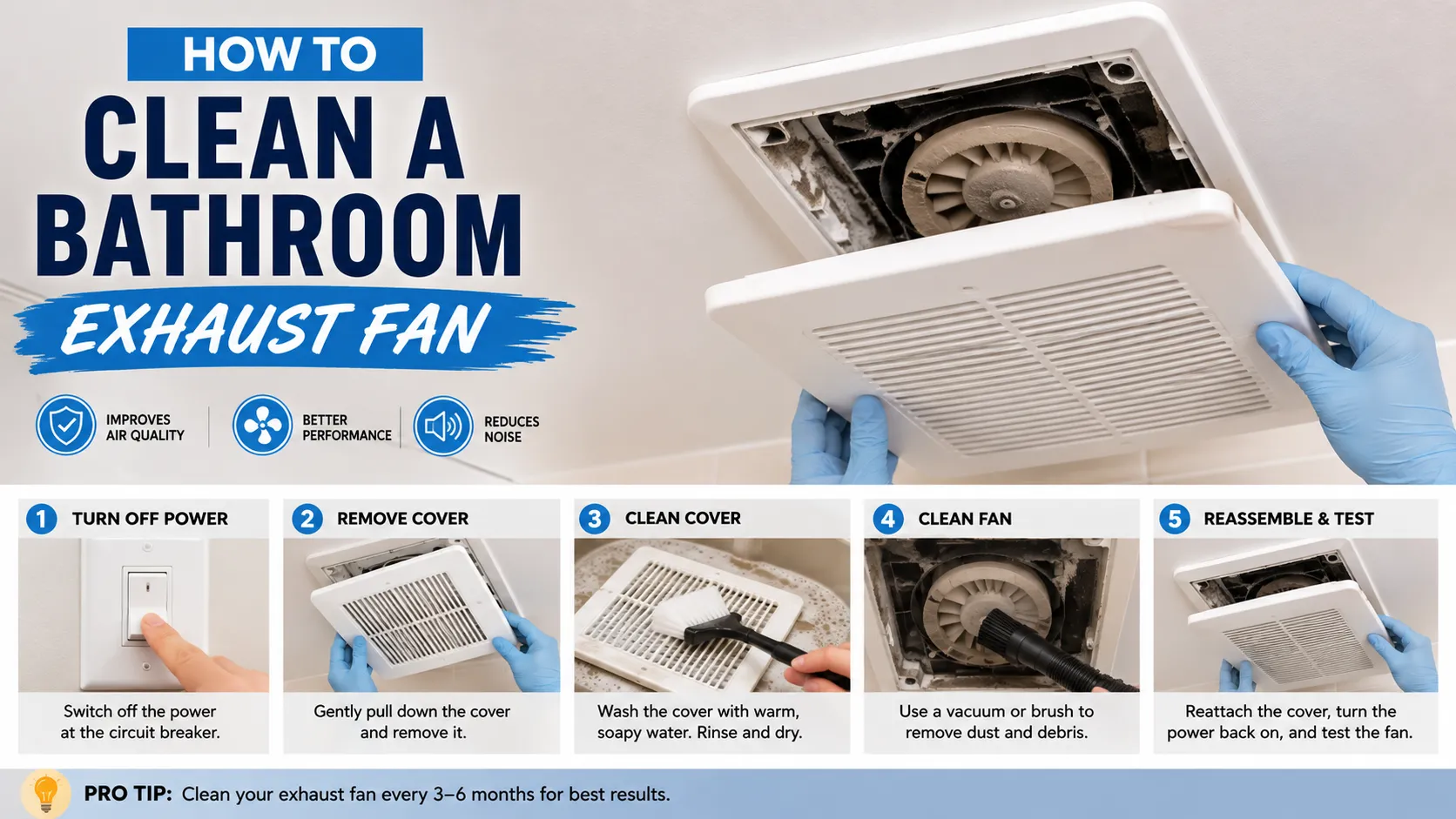
Clean a bathroom exhaust fan in under 30 minutes: cut power at the breaker, pull down the vent cover, wash it in warm soapy water, vacuum the fan blades and housing with a brush attachment, then reassemble. Do this every 6–12 months. A dust-clogged fan loses airflow and struggles to clear steam, which is usually the first sign something’s wrong.
Most people ignore this fan until it starts rattling or the bathroom stays foggy long after a shower. By then there’s a felt-like layer of dust on every blade. It’s not a hard job. It’s just one nobody remembers to do.
What You’ll Need
You probably already own most of this.
| Tool | Why |
|---|---|
| Screwdriver (magnetic tip helps) | Some covers are screwed in, not clipped |
| Vacuum with crevice + brush attachment | Pulls dust off blades without scratching them |
| Dish soap | Cuts through the greasy film that builds up on the cover |
| Microfiber cloth | For wiping parts you can’t submerge |
| Compressed air can | Optional, useful for tight motor housing |
| Step stool | Bathroom fans are almost always out of easy reach |
Why Do Bathroom Fans Get So Dirty So Fast?
Steam is the reason. Dust that would just blow off a dry surface elsewhere in the house sticks to a bathroom fan because the air passing through it is damp every single day. That moisture turns loose dust into a paste that clings to the blades and cakes onto the motor housing.
It’s a slow build. You won’t notice it week to week. Then one day the fan sounds different, or the mirror stays fogged for ten minutes after your shower instead of two, and you realize it’s been over a year.
How Often Should You Clean a Bathroom Exhaust Fan?
At least once a year, according to the Home Ventilating Institute. Treat that as a floor, not a target. If the bathroom sees heavy daily use, twice a year is closer to right.
Here’s a faster check than counting months on a calendar. Turn the fan on and hold a single square of toilet paper against the grille. If it stays stuck, airflow is fine. If it drops, the fan is either clogged or the motor’s weakening, and only cleaning it tells you which.
How Do You Clean a Bathroom Exhaust Fan?
- Cut the power. Flip the wall switch, then turn off the breaker too. Vent fans wire into the same circuit as bathroom lights more often than people expect, and a stray flip mid-clean isn’t a risk worth taking.
- Remove the vent cover. Most pull straight down: squeeze the metal mounting clips on either side and it drops free. Some newer covers use screws or spring-loaded tabs instead, so check the edges before you pull.
- Wash the cover, but only if it doesn’t have a light or sensor built in. Soak it in warm water with a few drops of dish soap, scrub with an old toothbrush, rinse, and set it on a towel to dry completely before it goes back on.
- Vacuum the fan blades and motor housing. Use the brush attachment. Dust on these blades isn’t loose. It’s often baked on from months of steam, so expect to spend real time here. For grime that won’t lift with the vacuum alone, an old toothbrush or the serrated edge of a plastic knife breaks it loose without scratching the blades. Skip metal scrapers or wire brushes; they’ll gouge the plastic.
- Wipe everything down with a damp microfiber cloth. This catches what the vacuum missed.
- Reassemble and restore power. Clip or screw the cover back in, flip the breaker, then the switch. Run it for a minute and listen. Quieter is the goal.
Total time, start to finish: about 30 minutes for a fan that hasn’t been touched in a year or two. Budget closer to 45 if the blades are heavily caked, since scrubbing each one by hand can eat 10–15 minutes on its own.
How Do You Clean a Bathroom Exhaust Fan Without Removing It?
You can, but only partway. Run a vacuum with a crevice tool through the grille to pull out loose dust, then wipe whatever surface you can reach with a damp cloth. Run the fan for a few minutes afterward to clear anything you loosened but didn’t fully remove.
This works fine as a quick maintenance pass between real cleanings, say a five-minute touch-up at the three-month mark. What it can’t do is reach the fan blades or the motor housing, where the actual buildup lives. Skip the full teardown every time and you’re managing surface dust while the fan keeps losing airflow underneath it.
Is It Safe to Clean a Bathroom Fan That Has a Light?
Not by submerging it. If your fan cover includes a light, a sensor, or (increasingly) a built-in speaker, water and electronics don’t mix. Disconnect the wiring at the connector before removing the cover, then clean it dry: vacuum first, wipe with a barely damp microfiber cloth second, and let it air dry fully before reconnecting anything.
Plain covers with no light are the only ones safe to soak in the sink.
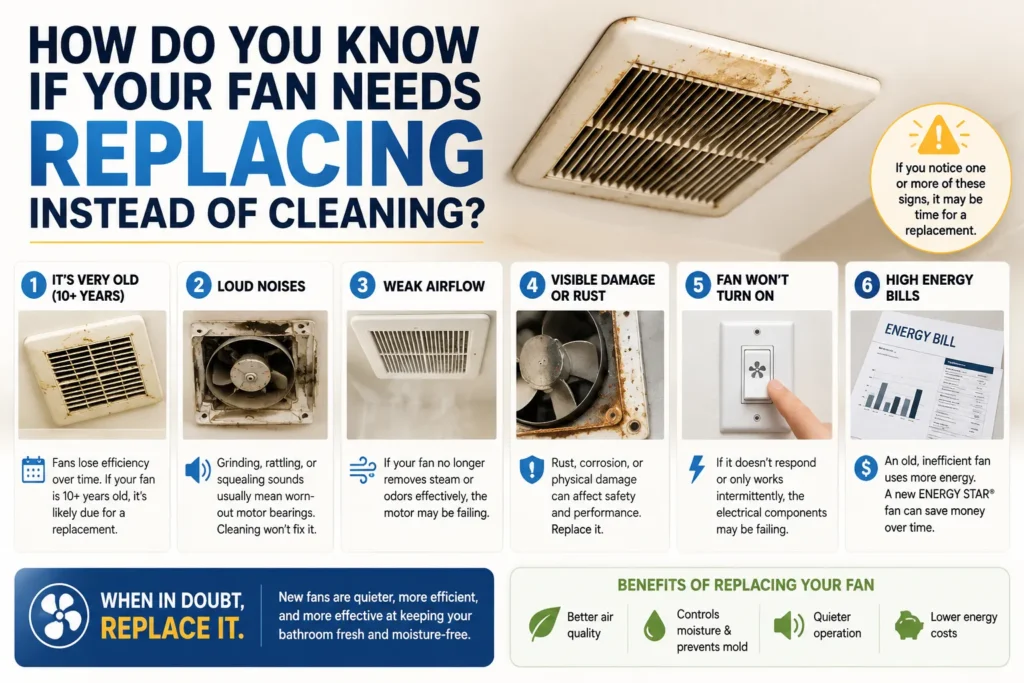
How Do You Know If Your Fan Needs Replacing Instead of Cleaning?
Cleaning fixes airflow. It doesn’t fix a dying motor.
Replace the fan if it’s still loud after a full clean, if you can see damage to the motor housing or blades, or if it’s 10 to 15 years old and still failing to clear steam. A fan that age has usually earned its retirement: a new one is quieter and moves noticeably more air for the same footprint.
A fan that can’t keep up with steam is often the first sign of bigger moisture problems: peeling paint, even mold behind the tile. If you’re already looking at a bigger fix, the Bathroom Remodel Cost Calculator breaks down what that actually runs before you call a contractor.
FAQ
How often should I clean a bathroom exhaust fan?
At least once a year. Twice a year if the bathroom sees heavy daily use.
How do I know if my bathroom fan needs cleaning?
Hold a piece of toilet paper against the running grille. If it doesn’t stay stuck, dust buildup is cutting your airflow.
Can I clean a bathroom exhaust fan without removing it? Partly. Vacuuming through the grille and wiping accessible surfaces works as a maintenance step, but it won’t reach the blades or motor. You still need a full removal every 6–12 months.
Is it safe to clean a bathroom fan that has a light?
Not by soaking it. Disconnect the wiring, then clean the cover dry with a vacuum and a damp cloth.
Can I wash the fan cover in water? Yes, if it’s a plain cover with no light, sensor, or speaker built in. Warm water and a little dish soap is enough.
Why is my bathroom fan still loud after cleaning?
Usually a motor issue, not a dust issue. Loose mounting screws can also cause rattling, so check those before assuming the motor’s failing.
How long does cleaning a bathroom exhaust fan take?
About 30 minutes for a fan that’s gone a year or more without attention. Closer to 45 if the blades are heavily caked.
When should I replace instead of clean my bathroom fan?
If it’s 10 to 15+ years old, still loud after cleaning, or visibly damaged, replacing it makes more sense than continuing to clean it.