Last updated: September 2026
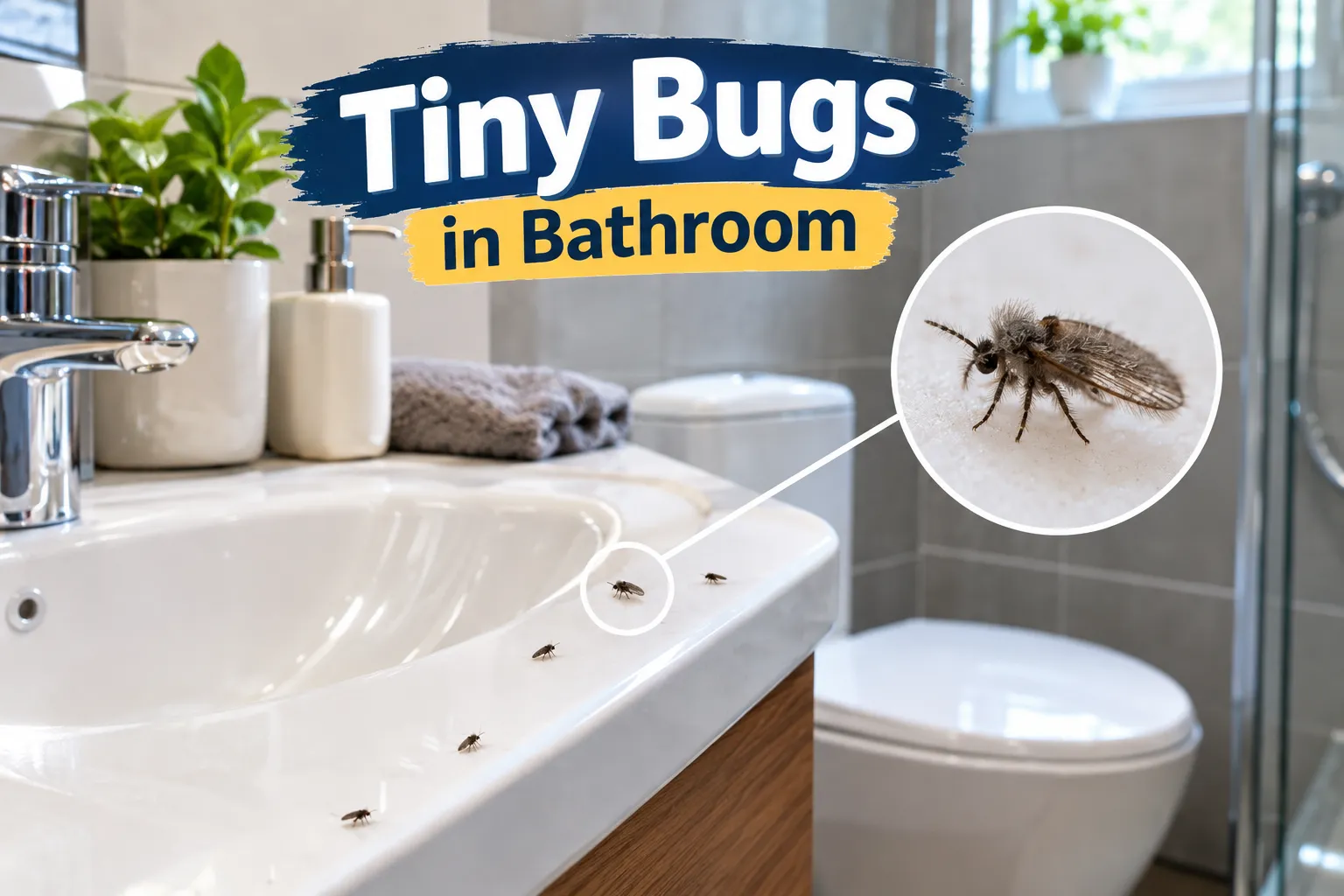
You flip on the bathroom light and something small skitters across the tile. Or hovers near the shower drain. Or clings to the grout like a speck of dirt that just… moved. Tiny bugs in the bathroom are almost never random. They show up because your bathroom is, structurally, the most humid room in your house, and humidity is exactly what six common indoor pests are looking for. None of them bite. Most won’t damage a thing. But figuring out which one you’ve got tells you whether you’re dealing with a slow drain, an overwatered houseplant, or a leak you don’t know about yet.
Quick answer: Tiny bathroom bugs are almost always drain flies, fungus gnats, springtails, booklice, carpet beetle larvae, or mold mites, and every one of them is a moisture signal, not a dirt problem. Sort by movement first (jumps vs. flies vs. crawls), then narrow by color and wings. Fix the humidity and the specific source (drain biofilm, a damp bath mat, a slow leak) and most infestations clear up in one to two weeks without pesticide. A spreading mold patch, an unexplained leak, or fabric damage from larvae is when to call a professional instead of continuing to DIY.
What Are These Tiny Bugs in My Bathroom?
The tiny bugs turning up in your bathroom are almost always one of six species, and each one points to a specific moisture problem:
- Drain flies (moth flies): fuzzy, mothlike, living in the slime coating your drain pipes
- Fungus gnats: thin, dark, mosquito-shaped, usually arriving with a houseplant’s soil
- Springtails: wingless, jump when disturbed, thrive anywhere damp
- Booklice: pale, wingless, grazing on microscopic mold on walls and wallpaper paste
- Carpet beetle larvae: fuzzy brown “woolly bears,” feeding on hair, lint, and dead skin
- Mold mites: nearly invisible, appearing as moving dust on mildewed grout
Quick ID: Sort by Movement, Color, or Wings
By Movement
Movement narrows the field fastest. Only two of these six actually fly: drain flies and fungus gnats. Springtails don’t fly. They spring, using a forked tail-like structure called a furcula that flicks them several inches through the air the second you get close. Booklice and mold mites just crawl, slowly enough that most people mistake them for a stain that’s somehow relocating. Carpet beetle larvae crawl too, but with a visible, bristly texture that reads more like a tiny caterpillar than an insect.
By Color
Color is how a lot of people actually search for this: combined, there are more monthly searches for “black,” “brown,” “grey,” and “white” bathroom bugs than for any single species name. Here’s how the colors sort:
- Black or dark gray: drain flies, fungus gnats, and springtails, by far the largest color group
- Brown: carpet beetle larvae, older springtails, some booklice
- Pale, cream, or nearly clear: booklice, mold mites, young carpet beetle larvae
- White: mold mite clusters, which read as a patch of moving white dust rather than individual bugs
- Reddish-brown: certain carpet beetle species, occasionally confused with spider mites
By Wings
Wings split the group cleanly in half. Drain flies and fungus gnats fly, and they’re the ones you’ll find at a window or light fixture after dark. Springtails, booklice, carpet beetle larvae, and mold mites have no wings at all. If what you’re looking at doesn’t take off when you get close, you’ve already ruled out two of the six.
| Bug | Movement | Color | Wings | Size | Where you’ll find it | Bite / damage risk | DIY or call a pro |
|---|---|---|---|---|---|---|---|
| Drain flies | Flies, short hops | Gray to black, fuzzy | Yes, mothlike | 1/16″–1/4″ (poppy seed to rice grain) | On walls near drains, active at night | No bite; nuisance only | DIY |
| Fungus gnats | Flies, weak flier | Dark gray to black | Yes, clear and delicate | 1/16″–1/8″ (fruit-fly size) | Near houseplants, not drains | No bite; nuisance only | DIY |
| Springtails | Jumps via furcula | Dark gray, brown, some white | No | 1/16″–1/8″ (a printed period) | Grout lines, caulk, damp baseboards | No bite, no damage | DIY |
| Booklice | Crawls in fits and starts | Pale tan to nearly clear | No (indoor species) | 1/25″–1/13″ (a grain of salt) | Damp walls, wallpaper, new drywall | No bite; can spot stored paper/food | DIY |
| Carpet beetle larvae | Crawls only | Brown, banded, bristly | No (larval stage) | 1/8″–1/4″ (a short rice grain) | Bath mats, baseboards, lint | No bite; bristles irritate skin, damage fabric | DIY, unless spreading |
| Mold mites | Crawls, barely visible | White to tan | No | ~0.3mm (finer than ground pepper) | Directly on mold or mildew | No bite; can worsen allergies | DIY unless mold is extensive |
Bug-by-Bug Identification & Fixes
Drain Flies
Drain flies, also called moth flies, run 1/16 to 1/4 inch long with dense, hairy wings that give them a dusty, mothlike look. Ohio State University Extension entomologists note the adults hold those wings roof-style over the body at rest. They don’t breed in standing water you can see. They breed in the gelatinous biofilm that coats the inside of a drain pipe, which is why pouring bleach or a standard liquid cleaner down the drain rarely does anything: both run straight past that film without touching it.
The fix has two parts. First, confirm which drain is the source with a 24-hour tape test, a method Washington State University Extension recommends: press a strip of clear tape, sticky side down, over the drain opening overnight, then check it in the morning for trapped flies. Second, treat the source directly: scrub the upper 6–12 inches of pipe with a stiff brush, then apply an enzymatic gel cleaner (Green Gobbler is a common drugstore option) for several nights running. The bacteria in these gels digest the organic film itself, rather than just flushing water over it.
Fungus Gnats
Here’s the mix-up almost everyone makes: fungus gnats look like they belong in the drain-fly category, but an Ask Extension entomologist puts it plainly: fungus gnats do not come from drains. They breed in damp potting soil, and a bathroom infestation almost always traces back to a houseplant nearby, indoors or recently brought in from outside for the season. Adults measure 1/16 to 1/8 inch, resemble tiny mosquitoes with long legs, and University of Georgia Extension identifies a distinct Y-shaped vein pattern on the wings as a reliable ID feature. They’re weak fliers, drawn to windows and light fixtures.
If you’re seeing them and there’s no plant in sight, check for one just outside the bathroom door, or a bag of potting soil sitting in a closet. The fix is moisture management at the soil level, not the drain: let the top inch or two dry out between waterings, and use a yellow sticky trap to catch adults while the population winds down.
Springtails
Springtails are wingless, 1/16 to 1/8 inch, and get their name from a forked structure at the tip of the abdomen that launches them into short jumps. University of Kentucky Extension entomologists note they’re harmless (no bite, no property damage), but they can show up in genuinely startling numbers. Under ideal moist conditions, populations can reach tens of thousands per cubic foot of organic material, according to extension research on the species. They feed on mold, algae, and fungal film, which means a grout line or a damp baseboard is plenty of habitat.
Their presence is really a moisture alarm. University of Maryland Extension points to plumbing leaks and elevated humidity as the two conditions that reliably bring them indoors. Track down the actual leak (a slow drip at a supply line, condensation pooling on a toilet tank, a worn wax ring under the toilet) and the springtails go with it.
Booklice
Booklice (technically psocids) are pale, wingless, and tiny. Utah State University Extension lists them at 1/25 to 1/13 inch, roughly a grain of salt, visible mainly as small moving specks against a wall. They feed on microscopic mold, which is why they turn up on damp drywall, behind wallpaper, or in new construction where joint compound is still curing and releasing moisture. Penn State Extension is specific about the threshold: keeping relative humidity under 50% stops both the mold and the booklice that depend on it.
They move in a distinctive stop-start pattern rather than a smooth crawl, which is often the tell that separates them from a young carpet beetle larva at a glance. The fix is the same as springtails: find the damp spot, dry it out, and keep humidity below that 50% line with a fan or a small dehumidifier.
Carpet Beetles (Larvae)
Carpet beetles show up in bathrooms as larvae, not adults, and University of Maryland Extension describes them as fuzzy, banded, “woolly bear” shapes between 1/8 and 1/4 inch. They feed on hair, lint, dead skin, and any natural-fiber bath mat or towel left damp on the floor: not fabric in general, just the animal-based fibers and organic debris that accumulate faster in a bathroom than almost anywhere else in the house.
One detail worth knowing: they travel further than people expect. In one case logged with a university extension service, a homeowner kept finding a single larva on a bathroom mat despite there being no other fabric within 20 feet, a reminder that larvae can arrive via wall voids or a forgotten insect nest inside the structure, not just the nearest rug. Their bristly hairs can irritate skin on contact, so handle them with a tissue rather than bare fingers. Wash bath mats and towels on hot weekly, vacuum along baseboards, and if the problem persists despite a clean bathroom, check nearby vents or wall cavities for a dead insect or nest feeding the population.
Mold Mites
Mold mites (commonly Tyrophagus species) are close to invisible on their own, at roughly 0.3mm. Iowa State University Extension groups them with the broader “mold mite” family that includes cheese and grain mites, all sharing one requirement: they only appear where mold or mildew is already established. You won’t spot one mite. What you’ll spot is a faint, moving patch of white or tan dust clustered on a mildewed grout line or a shower corner that never quite dries.
Because they eat mold exclusively, a mold mite cluster is a more reliable mold indicator than the visible staining itself: you can have an active colony well before it’s obvious to the eye. Cleaning the mold thoroughly removes their food source and usually ends the problem in one pass. If the mites keep coming back in the same spot, the moisture behind that mold hasn’t actually been fixed yet.
Tiny Bugs in the Bathroom Sink or Drain, Specifically
Not every tiny bathroom bug comes from the drain, even though it feels that way when you spot one near the sink. Drain flies genuinely do breed inside the pipe. Fungus gnats, despite looking similar at a glance, almost never do. Their source is soil, not plumbing. The tape test above is the fastest way to settle which one you’re dealing with before you spend a week treating the wrong thing.
There’s a second drain-adjacent question worth answering directly: can bugs come up through the toilet? Rarely through the bowl itself, but yes, through a dry P-trap. Every drain relies on a small reservoir of water in its trap to block both sewer gas and small pests from coming back up. In a bathroom that doesn’t get used often (a guest bath, a basement half-bath), that water evaporates over weeks, opening a path that was otherwise sealed. Running water in every drain in the house at least once a week, even ones you don’t use, keeps that seal intact.
Often Mistaken For…
- Ants: carpet beetle larvae moving along a baseboard get called ants more than any other bug on this list. The giveaway is body shape: ants have a pinched waist, larvae don’t.
- Fleas: springtails jump, and that single behavior is the top reason people assume fleas. The real difference is bite marks. Fleas need a blood meal and leave itchy welts; springtails don’t bite at all.
- Roaches: a cluster of drain flies near a floor drain, or a larger carpet beetle larva, sometimes gets reported as “baby roaches.” Roach nymphs have long antennae and move fast; nothing on this list does either.
- Specks of dirt: this one belongs to booklice and mold mites specifically. Until the “dirt” moves, or you catch it under a phone camera zoomed in, there’s genuinely no visual difference.
Why Your Bathroom Keeps Attracting Them
None of these six bugs showed up because your bathroom is dirty in the usual sense. They showed up because a few specific conditions stack on top of each other in a way that a normal cleaning routine doesn’t reliably reach. Steam from every shower raises humidity well above the rest of the house. Soap scum, skin cells, and hair build an organic film inside drain pipes that no amount of surface wiping touches. An exhaust fan that shuts off the moment the water does, instead of running another 20 minutes, leaves that humidity hanging in the air. And any stray organic material sitting in an already-humid room, a bunched-up damp mat, a stack of magazines, a plant just outside the door, gives one of these species exactly the food source it needs.
How to Get Rid of Tiny Bathroom Bugs for Good
- Confirm the source. Run the 24-hour tape test on any suspect drain before treating anything.
- Treat drains directly. Scrub the pipe with a brush, then run an enzymatic gel cleaner nightly for about a week if drain flies are confirmed.
- Extend your exhaust fan’s run time. A cheap timer switch that keeps it running 20–30 minutes post-shower does more for humidity than almost any other single fix.
- Add a small dehumidifier if the bathroom has no window or the fan alone isn’t cutting it. The EPA’s mold guidance targets relative humidity below 60%, ideally between 30% and 50%, the same range that stops springtails, booklice, and mold mites from sustaining a population.
- Wash bath mats and towels on hot, weekly, and don’t leave them bunched up damp on the floor.
- Address houseplants if fungus gnats are the culprit: let soil dry between waterings, or move the plant out of the bathroom entirely.
- Recheck in one to two weeks. Once the moisture source is actually gone, most of these six clear up in that window without any pesticide.
If the moisture problem turns out to be bigger than a fan and a dehumidifier can fix (failing grout, a subfloor that’s staying damp no matter what), that’s a renovation question rather than a pest one. ToolCalc Pro’s bathroom remodel cost calculator is a reasonable place to get a ballpark before calling a contractor.
When to Call a Professional
DIY works for the large majority of tiny bathroom bug problems, but a few signs mean it’s time to bring in someone else:
- You’re still seeing 10 or more new bugs a day after two full weeks of fixing the moisture and treating the source
- A mold patch has grown past roughly the size of a sheet of paper
- Carpet beetle larvae have damaged more than one fabric item, suggesting an established population rather than a stray
- You’ve run the tape test, checked the obvious spots, and still can’t pin down where they’re coming from
At that point you’re looking at a mold remediation call or a pest control visit, not a bigger bottle of drain cleaner.
FAQ
What are the tiny mites in my bathroom? Almost certainly mold mites, roughly 0.3mm, visible only as a moving patch of dust on an already-mildewed surface. Clean the mold thoroughly and they typically go with it.
What are the tiny, flea-like bugs in my bathroom? Springtails. They jump the way fleas do, but they don’t bite, and they don’t need a blood host to survive. A damp grout line is all they need.
What are the tiny bugs that look like specks of dirt? Booklice or mold mites. Both are pale and nearly motionless until disturbed. If the “dirt” moves when you get close, it’s one of these two.
How do I get rid of little bugs in my bathroom? Identify which of the six it is (movement plus color gets you most of the way), then fix the specific moisture source behind it: drain biofilm, an undersized exhaust fan, or a damp bath mat, rather than reaching for spray first.
Why do I still see bugs after I’ve cleaned? Surface cleaning doesn’t reach inside drain pipes or the interior of a grout line, which is where the actual food source lives. Wiping the counter doesn’t touch it; an enzymatic drain treatment or a dehumidifier does.
Are bathroom bugs dangerous to my health? None of the six bite. Carpet beetle larvae hairs can irritate skin on contact, and mold mites can aggravate allergies since they’re tied to active mold growth, but none of these transmit disease.
Can bugs come up through the toilet? Rarely through the bowl itself, but yes, through a dry P-trap in a drain that doesn’t get used often. Running water in every drain weekly keeps that seal from drying out.
Should I use bug spray on them? Not as a first move. Spray kills the adults you can see but does nothing about drain biofilm or the humidity problem underneath, so the population comes right back within days.
When should I call a professional? When the population hasn’t dropped after two weeks of fixing moisture and treating the source directly, or when there’s a mold patch or a leak you can’t locate on your own.