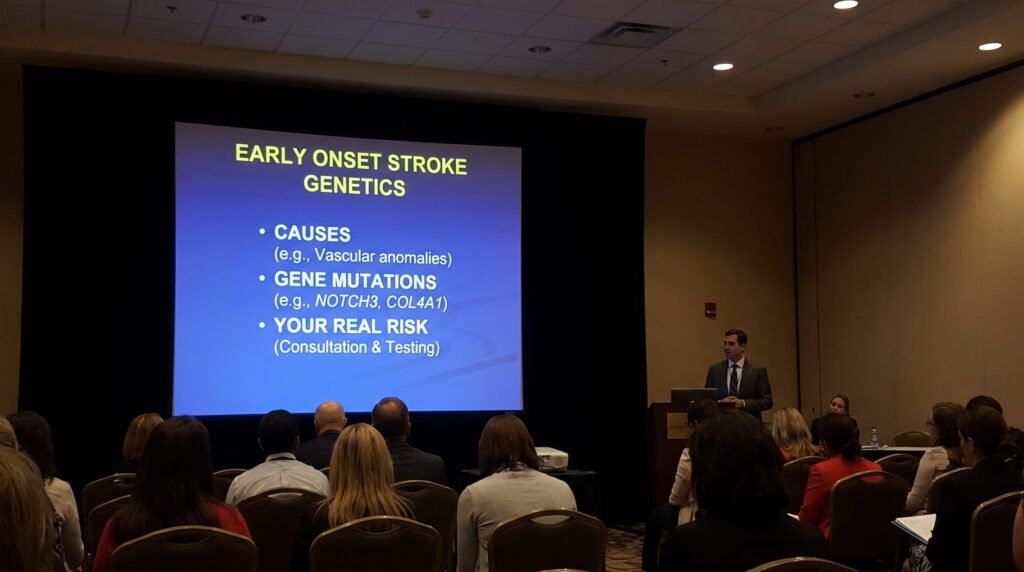
Most people think of stroke as something that happens to people in their seventies. So when it happens to a 34-year-old, doctors and patients alike are caught off guard. In many of those cases, genetics is the explanation no one looked for.
Early onset stroke — defined as stroke occurring between ages 15 and 49 — follows different rules than the kind your cardiologist warns you about at your annual physical. Traditional risk factors like atherosclerosis and atrial fibrillation are less common in young patients. Inherited gene mutations step in to fill that gap.
This guide covers what the research actually says about the genetic causes of early onset stroke, which mutations matter most, and what it means for you or someone in your family.
What makes early onset stroke genetically different?
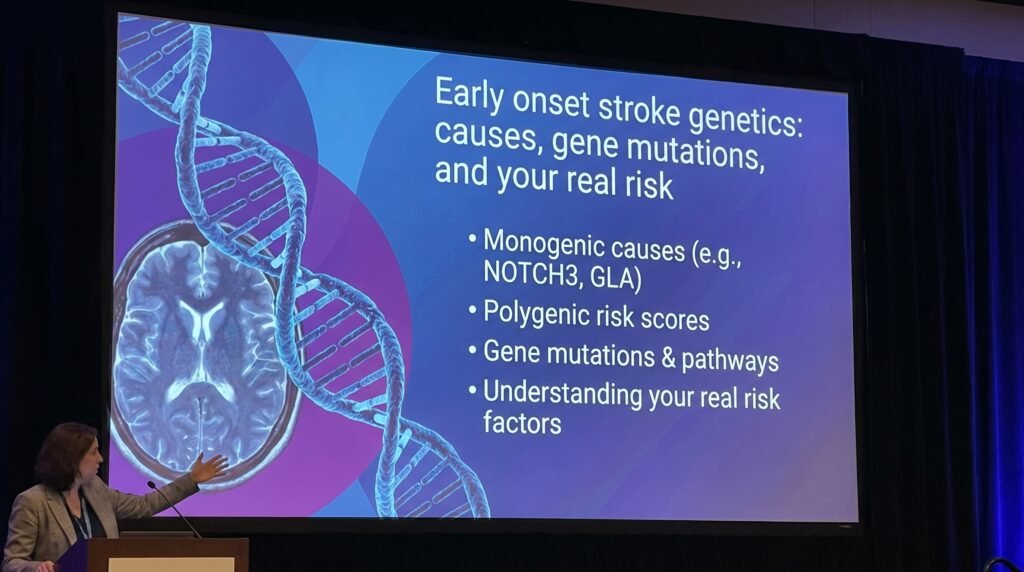
Late-onset stroke is mostly driven by accumulated damage — years of high blood pressure, smoking, or diabetes wearing down blood vessel walls. Early onset stroke, by contrast, sits much closer to a person’s DNA.
Incidence rates for ischemic stroke in the 15-to-45 age range run at roughly 10 per 100,000 person-years among people of predominantly European ancestry. Black adults in this same age group face rates about twice as high. PubMed Central
The heritability data is striking. Twin studies have estimated heritability of 32% for stroke death and 17% for stroke hospitalization, and having a first-degree relative with stroke was associated with a 30% to 76% increase in personal stroke risk across 9 cohort studies, 27 case-control studies, and 3 twin studies. AHA Journals In the Framingham Study, a parental history of ischemic stroke before age 65 more than doubled offspring risk after adjusting for other factors.
One key difference between early and late onset stroke is the distribution of stroke subtypes. In young adults, there is a higher proportion caused by other determined causes — such as arterial dissection — rather than the classic atherosclerotic and cardioembolic mechanisms that dominate in older patients. PubMed Central
Monogenic disorders account for up to 7% of strokes in young adults. European Stroke Organisation That may sound small, but it translates to thousands of preventable cases per year where genetic testing would have changed the diagnosis, the treatment, and the outcome.
The three major genetic causes of early onset stroke
CADASIL: the most common inherited stroke disorder
CADASIL stands for Cerebral Autosomal Dominant Arteriopathy with Subcortical Infarcts and Leukoencephalopathy — a mouthful, but the key word is dominant. You only need one copy of the mutation to develop the disease.
CADASIL is caused by a mutation in the NOTCH3 gene, which affects the small blood vessels in the white matter of the brain. Signs typically appear between ages 20 and 40, though some individuals don’t show symptoms until later. National Institute of Neurological Disorders and Stroke
Roughly 85% of people with CADASIL develop transient ischemic attacks or strokes. The mean age at first ischemic episode is about 46 years, with a range from 30 to 70. Importantly, these strokes typically occur in the absence of traditional cardiovascular risk factors — no hypertension, no smoking history, no diabetes. Wikipedia
One finding that should change how clinicians approach young stroke patients: in CADASIL cohorts, mutation carriers who smoked had strokes on average 10 years earlier, while hypertension was associated with a doubling of stroke risk. AHA Journals The genetic predisposition is fixed. The modifier variables aren’t.
Characteristic MRI findings usually emerge by age 30 and help confirm diagnosis via genetic testing or skin biopsy. No disease-modifying therapies currently exist — treatment focuses on reducing cardiovascular risk factors. NCBI
Fabry disease: frequently missed, specifically treatable
Fabry disease is caused by mutations in the GLA gene and follows X-linked inheritance, meaning sons of carrier mothers have a 50% chance of inheriting it.
Fabry disease may account for roughly 1% of all strokes in young people, including 3% to 5% of cryptogenic strokes ResearchGate — strokes where doctors can’t identify a cause. That means a meaningful portion of “unexplained” young strokes may be Fabry disease waiting for the right genetic test.
What makes Fabry disease different from CADASIL is that a treatment exists. Enzyme replacement therapy can slow disease progression if started early. That makes prompt diagnosis directly consequential, not just academically interesting.
CARASIL and other monogenic conditions
CARASIL (Cerebral Autosomal Recessive Arteriopathy with Subcortical Infarcts and Leukoencephalopathy) is caused by HTRA1 mutations. It is clinically similar to CADASIL but tends to present a decade earlier — in the third or fourth decade of life — and comes with systemic symptoms including hair loss, arthropathy, and spinal degeneration. PubMed Central
Other conditions that show up in young stroke workups: MELAS (a mitochondrial disorder that produces stroke-like episodes), Moyamoya disease (which has both genetic and acquired forms), sickle cell anemia, and Factor V Leiden mutation, which increases clotting risk. Factor V Leiden and conditions like familial hypercholesterolemia — where high cholesterol is present from birth — raise the risk of early heart disease and stroke in carriers. Mount Nittany Health
Common genetic variants: not just rare diseases
Monogenic disorders get the most attention, but they’re not the whole picture. Recent research has confirmed that low-frequency genetic variants — those with allele frequency below 5% — may contribute to risk of both large vessel and small vessel stroke. AHA Journals
Genome-wide association studies (GWAS) have identified variants in genes like FOXF2, GUCY1A3, and GCH1, each linked to different stroke subtypes through mechanisms involving blood vessel development, platelet inhibition, and endothelial function. These aren’t single-gene knockout mutations. They’re risk modifiers — genes that raise the probability of stroke when combined with environmental exposures like smoking or uncontrolled blood pressure.
Think of it this way: single-gene disorders like CADASIL are more like a loaded gun. Common variants are more like a gradual incline — the risk accumulates quietly until something tips it over.
Frequently asked questions about early onset stroke and genetics
Can a genetic mutation cause stroke without any other risk factors?
Yes. This is one of the most important clinical points in early onset stroke research. CADASIL strokes, for example, commonly occur in people with no hypertension, no diabetes, and no smoking history. If a young person has a stroke and the standard workup comes back clean, a genetic cause deserves serious investigation.
Does family history of stroke mean I carry a stroke gene?
Not necessarily. Family history raises your statistical risk — research shows that having a first-degree relative with stroke may increase your risk by up to 30%, with that risk climbing further when relatives had strokes at younger ages or when multiple family members were affected. Mount Nittany Health But shared lifestyle factors and environment contribute to family clustering too. Genetic testing, not family history alone, is what identifies specific mutations.
When should genetic testing for stroke be considered?
Doctors typically recommend genetic testing only for people with strong family patterns of stroke or those who have experienced strokes at unusually young ages. Mount Nittany Health A stroke before age 50 with no clear vascular cause — especially combined with a family history — is a reasonable trigger for genetic evaluation. The specific panel tested depends on clinical presentation: NOTCH3 sequencing for suspected CADASIL, GLA testing for Fabry disease, and mitochondrial DNA analysis for MELAS.
Can you prevent stroke if you carry a genetic mutation?
You can’t change your DNA, but you can change what it interacts with. The CADASIL data is instructive: carriers who smoked had their first stroke a decade earlier than nonsmoking carriers. Managing blood pressure, avoiding smoking, and getting regular neurological monitoring doesn’t eliminate the risk but it meaningfully delays and reduces it. For Fabry disease specifically, enzyme replacement therapy makes treatment — not just prevention — a real option.
What researchers are still working on
Single-gene disorders can cause rare hereditary conditions where stroke is the primary manifestation, but recent research also suggests common and rare genetic polymorphisms can influence risk through other mechanisms — including atrial fibrillation, which has nearly tripled as a stroke-related factor over the past three decades. AHA Journals
The GEOS study — Genetics of Early Onset Stroke — enrolled 830 cases of first-ever ischemic stroke in adults aged 15 to 49 specifically to map these relationships. Work like this is slowly shifting early onset stroke from an unexplained category to a diagnosable, sometimes treatable one.
Pharmacogenomics is another emerging area. Genetic variants in CYP2C19, for example, affect how patients metabolize clopidogrel — a common antiplatelet drug used after stroke. Someone with a loss-of-function variant may get little benefit from the standard dose, making genetic testing relevant not just for diagnosis but for choosing treatment.
What to do with this information
If you or someone in your family had a stroke before 50, or if multiple close relatives have had strokes, ask a neurologist specifically about monogenic stroke disorders. A standard stroke workup doesn’t include genetic testing by default.
If you’re a researcher or clinician working with stroke probability data, the Binomial Distribution Calculator at ToolCalcPro can help you quickly model inheritance probabilities for autosomal dominant conditions like CADASIL — useful for counseling families about transmission risk. For analyzing correlations in clinical datasets, the Correlation Coefficient Calculator handles Pearson and Spearman calculations without needing statistical software.
The genetics of early onset stroke is no longer a research curiosity. It’s a clinical question that affects diagnosis, treatment decisions, and the next generation in the family. The sooner it gets asked, the better the outcomes tend to be.
Have a question about stroke genetics or how to use ToolCalcPro’s tools in your research workflow? Leave it in the comments below.